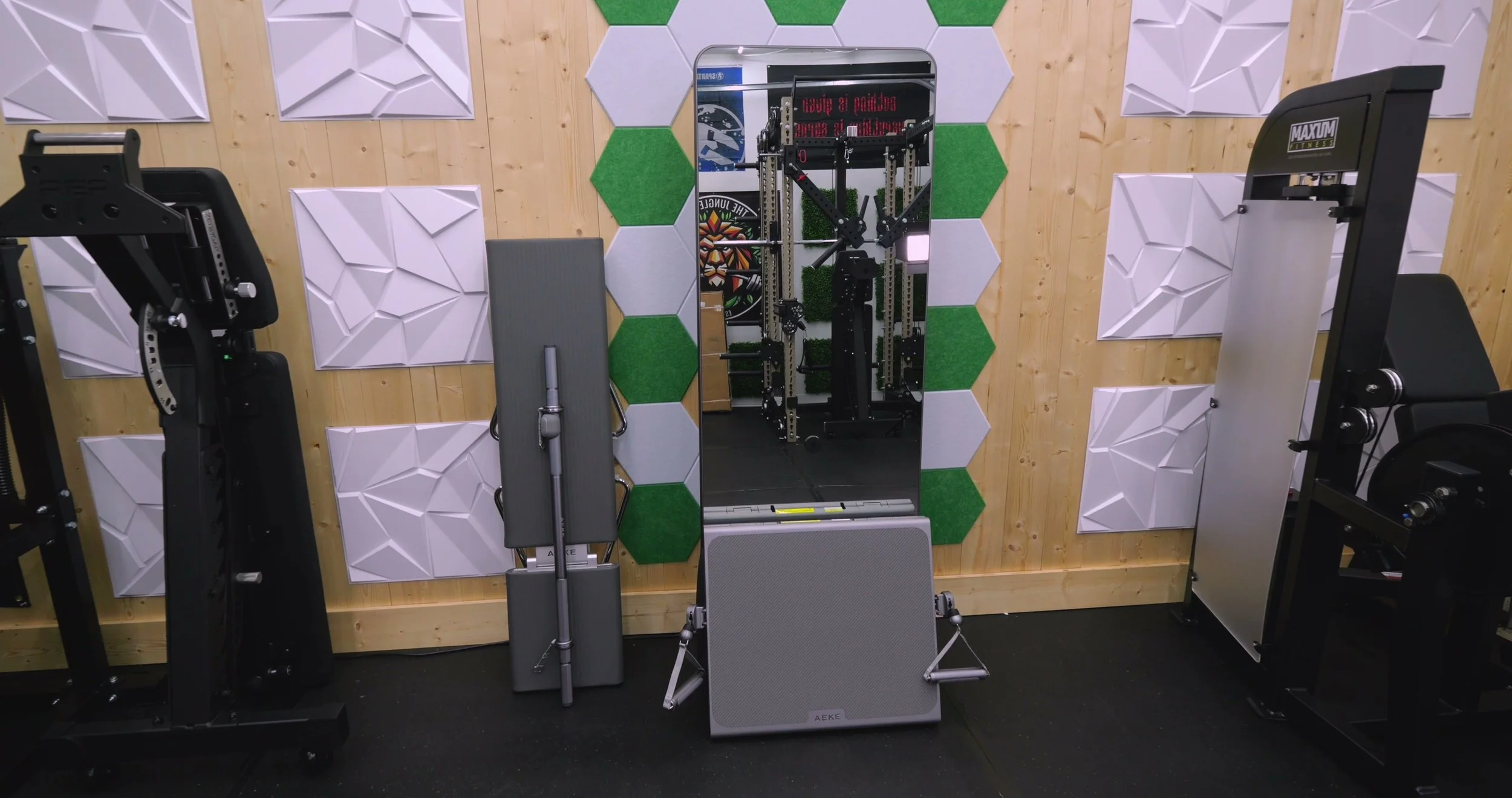
This product was in-house tested by Michael at The Jungle Gym Reviews.
AEKE nails the “guided at-home coach” experience with a bright 43-inch 4K touchscreen, camera-based form feedback, and a system that learns your strength and habits over time. The biggest tradeoff is that the resistance setup is limited to two ground-level cable exits, which reduces exercise angles compared to systems with adjustable arms or higher pulley paths. It’s best for beginners or intermediate users who want structured coaching, feedback, and accountability at home—especially in a shared living space. If you’re primarily a strength-training person who cares about cable feel, attachment freedom, and multiple pulling angles, you’ll likely feel boxed in.
Quick Specs
Screen: 43-inch, 4K touchscreen
Price (as described): ~$3,800–$3,900 (as configured)
Resistance Per Side: Up to 110 lb per side
Total Resistance (with connected bar): Up to 220 lb total
Resistance Modes: Constant, Concentric, Eccentric, Rolling, Elastic
Cable Exits: Two, ground-level only
Form Tracking: Built-in camera with real-time feedback
Included Accessories: Wrist cuffs, ankle cuffs, heart rate monitor, connected bar, adjustable bench, smart scale
Bench Angles: 30° to 90° (seat stays flat)
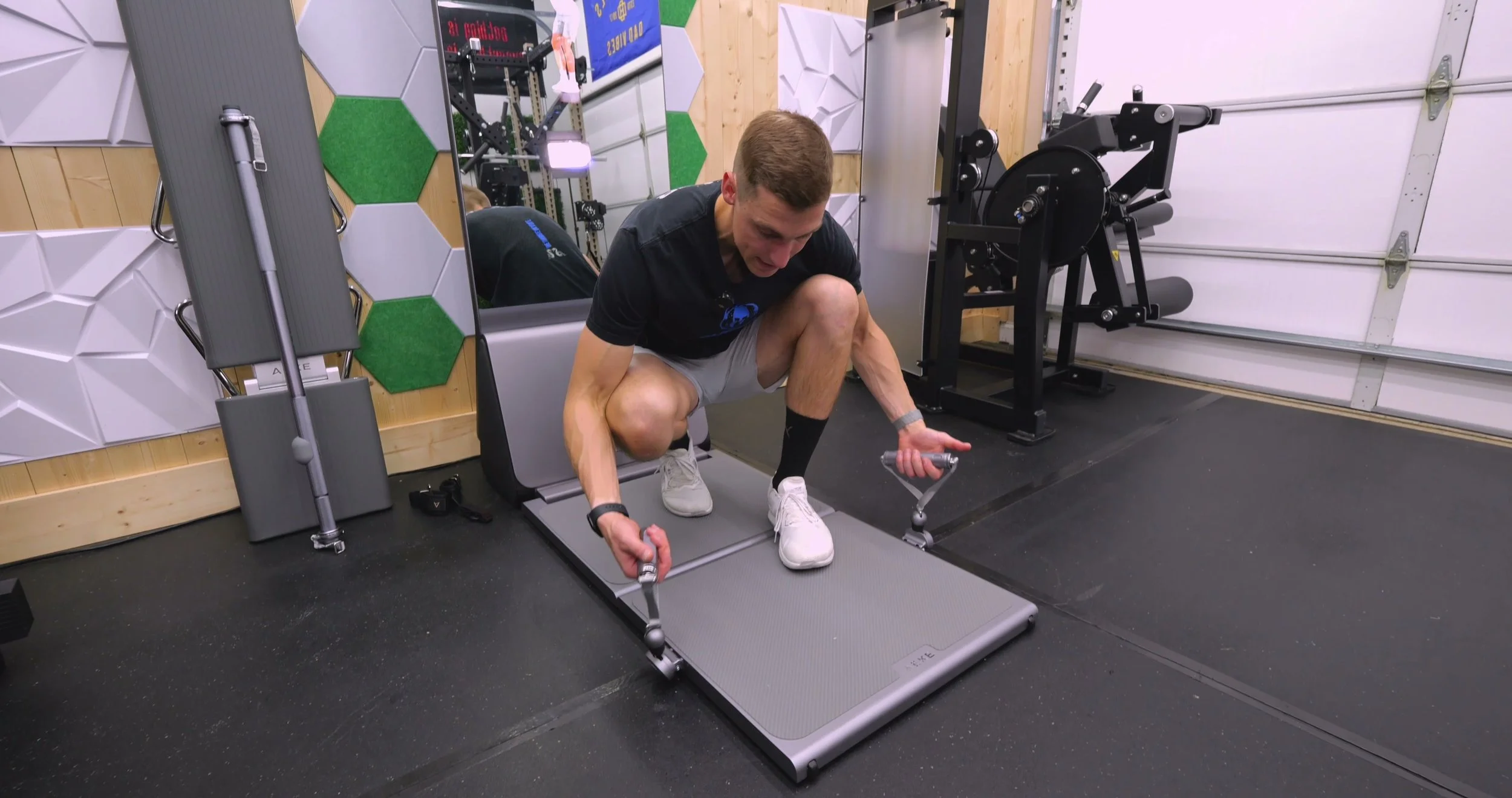
Footboard: Auto-folding/unfolding (approx. 15–30 seconds)
Mobility: Has wheels for repositioning
Where to Buy the AEKE Home Gym
Check current pricing and what’s included in the latest package before buying.
My Real-World Experience
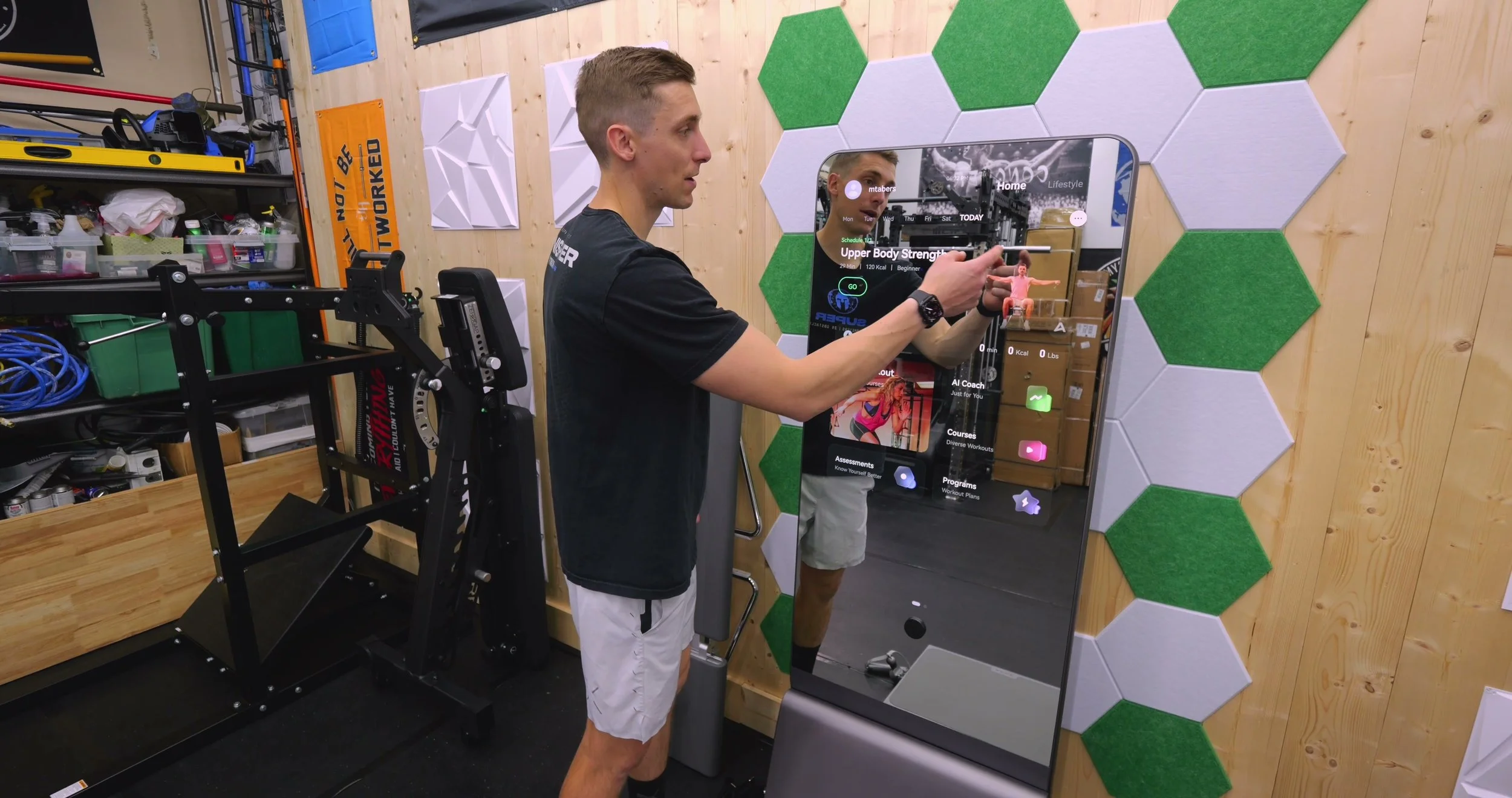
The AEKE feels like a product designed to live in your house first—and be gym equipment second. The profile is narrow when stored, the footboard auto-unfolds with a button, and the whole thing looks like a premium smart mirror / TV setup. In a bright studio, the screen is easy to see without cranking brightness, and touch responsiveness feels like using a modern phone.
The auto-folding footboard is convenient, but it’s not instant. It takes roughly 15–30 seconds to unfold, and you need to keep the area clear. I also learned quickly to make sure the handles aren’t in the wrong place because they can get caught underneath.
The “coach” side is real. Between the camera, the scale integration, and the way it asks for your goals, available time, and training preferences, the system is built around generating and adapting training rather than just letting you freestyle. The form feedback concept is genuinely useful for people who don’t want to guess whether their rows or flyes are on track.
Where it starts to feel less ideal for me is the strength-training workflow. The weight selection interface is good when you’re setting things up—but once the weight is activated, you lose the ability to scroll quickly downward and you’re stuck tapping “minus” repeatedly if you want to drop weight. That becomes annoying fast during normal strength training where you might want to make quick changes between warmups, work sets, and back-off sets.
The smart handle button is also a love/hate thing. It’s convenient because you can engage/disengage weight without touching the screen, but the button placement made me accidentally hit it while gripping. That’s not something I want happening mid-set.
The system ramps weight on smoothly when you activate it, which is a genuinely nice touch. You’re not getting yanked into resistance the moment you grab the handles.
One other real-world thing: you have to respect the platform. If you step off and try to pull heavy weight, the unit can lift or tip because the foot plate isn’t self-locking in the way some people will assume. In practice, that means you’re either standing on it or you’ve got the bench placed so your bodyweight keeps it planted.
Training Use Cases
The AEKE makes the most sense for guided sessions, assessments, and structured progression—especially if you like being told what to do rather than building your own programming from scratch.
It has multiple resistance modes (constant, concentric, eccentric, rolling, elastic), which is a real advantage of electronic resistance. Those modes can make familiar movements feel different and can create progression without just “add weight forever.”
The exercise library is deep, and while I initially assumed it might feel gimmicky, there are a lot of movements and variations most people wouldn’t think to do on their own. For beginners or casual lifters, that has real value.
Where it becomes limiting is pulling angle variety. The cables only exit from the bottom. They move in one general direction. AEKE does a good job tailoring programming around that constraint, but if you’re used to machines with adjustable arms or higher pulley points, you’ll feel that limitation immediately—especially for high-to-low, low-to-high, and movements where you want the cable path to start higher up.
Attachment compatibility is also not “normal cable machine” friendly. The quick-connect bracket style means you can’t just clip on any random carabiner attachment without getting creative.
Tradeoffs & Limitations
The big limitation is geometry: two cable exits from the floor means fewer natural pulling angles than systems with adjustable arms or multiple height positions.
Cable feel is another thing. It’s not bad, but it’s not as refined as what I’d call “snappy” from a good weight stack, and it didn’t feel as polished to me as some other electronic systems I’ve used. I also think the weight selection UX could be improved, especially the inability to quickly scroll down once weight is active.
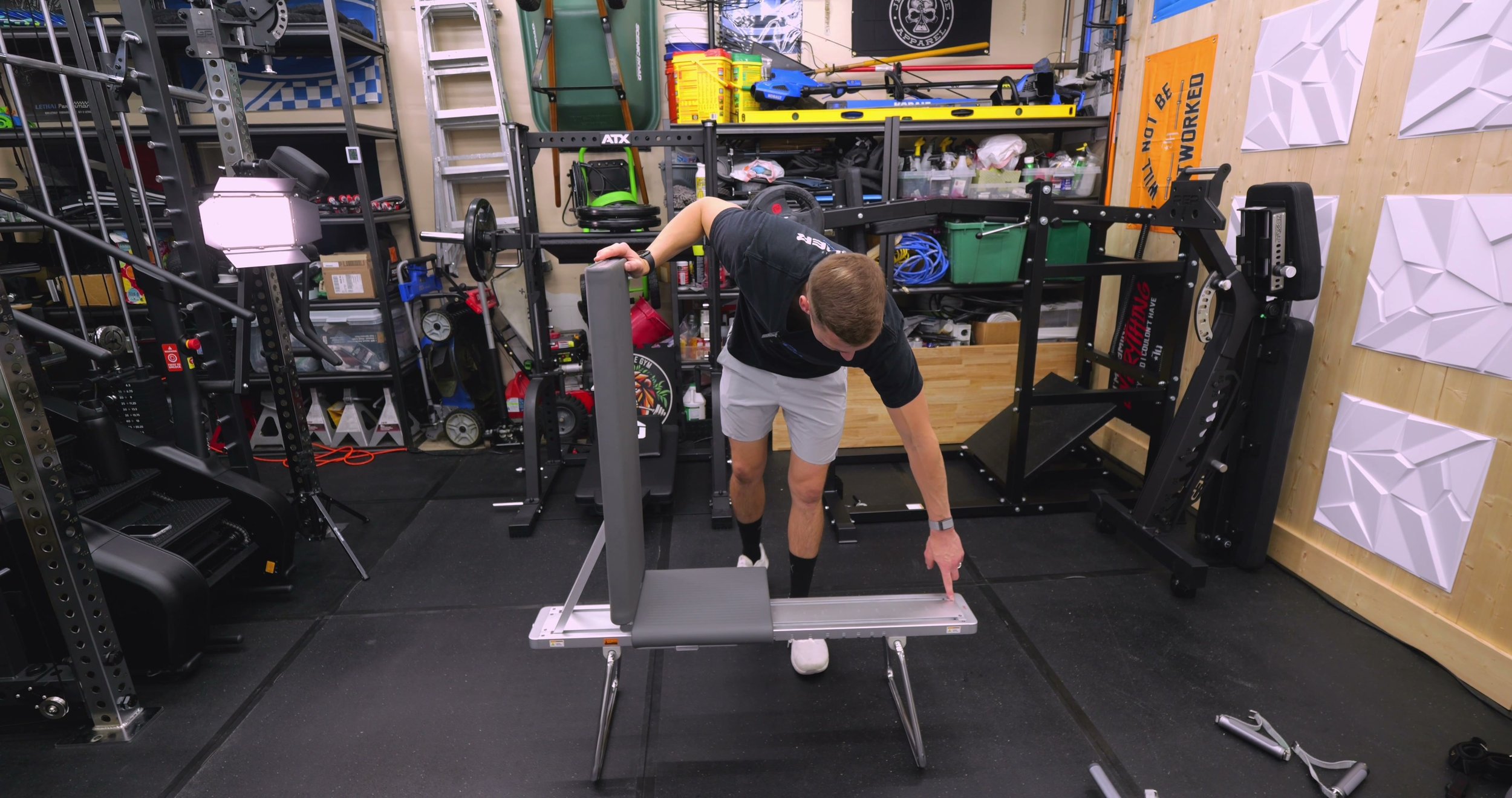
The included bench fits the storage concept, but comfort is not its strength. It has minimal padding and feels utilitarian—almost box-like. It folds away nicely and will probably hold up well, but heavy pressing on it isn’t comfortable in the way a strength-focused adjustable bench is.
Finally, the platform dependency matters. If you don’t understand that you need to be on the foot plate or anchored with bodyweight, you can get surprised when pulling heavier resistance.
Value & Alternatives
At roughly $3,800–$3,900, the value comes down to whether you’re buying a strength machine or buying a coaching system that includes resistance training.
If you want a coach-like experience with assessments, feedback, and guidance—especially if you’d otherwise spend a lot on personal training—this kind of product can make sense for the right person.
If your priority is strength training versatility, multiple pulling angles, and a more traditional cable feel, I’d be looking harder at other smart systems that are more strength-training oriented. In my experience, cable exit height options and arm adjustability are the difference between “this is a guided machine” and “this replaces a chunk of my gym.”
Who Should Buy This
People who want a guided, coached fitness experience at home.
Beginners and intermediate users who want feedback, structure, and progression without building their own programming.
Anyone who needs a minimalist, living-room-friendly footprint and wants something that doesn’t look like gym equipment.
Who Should Skip It
Strength-focused lifters who want more cable angles and movement variety.
Anyone who expects standard cable attachment compatibility without workarounds.
People who want a comfortable, strength-training-first bench experience.
Final Verdict
AEKE is most compelling as an AI-guided home coach with resistance training built in. If you want a strength-training-first machine, the cable geometry and overall workflow limitations are hard to ignore.
Affiliate Disclosure
Some links may be affiliate links. If you purchase through them, I may earn a small commission at no additional cost to you.