Titan Fitness Selectorized Wall & Rack Mounted Cable Pulley Tower Review
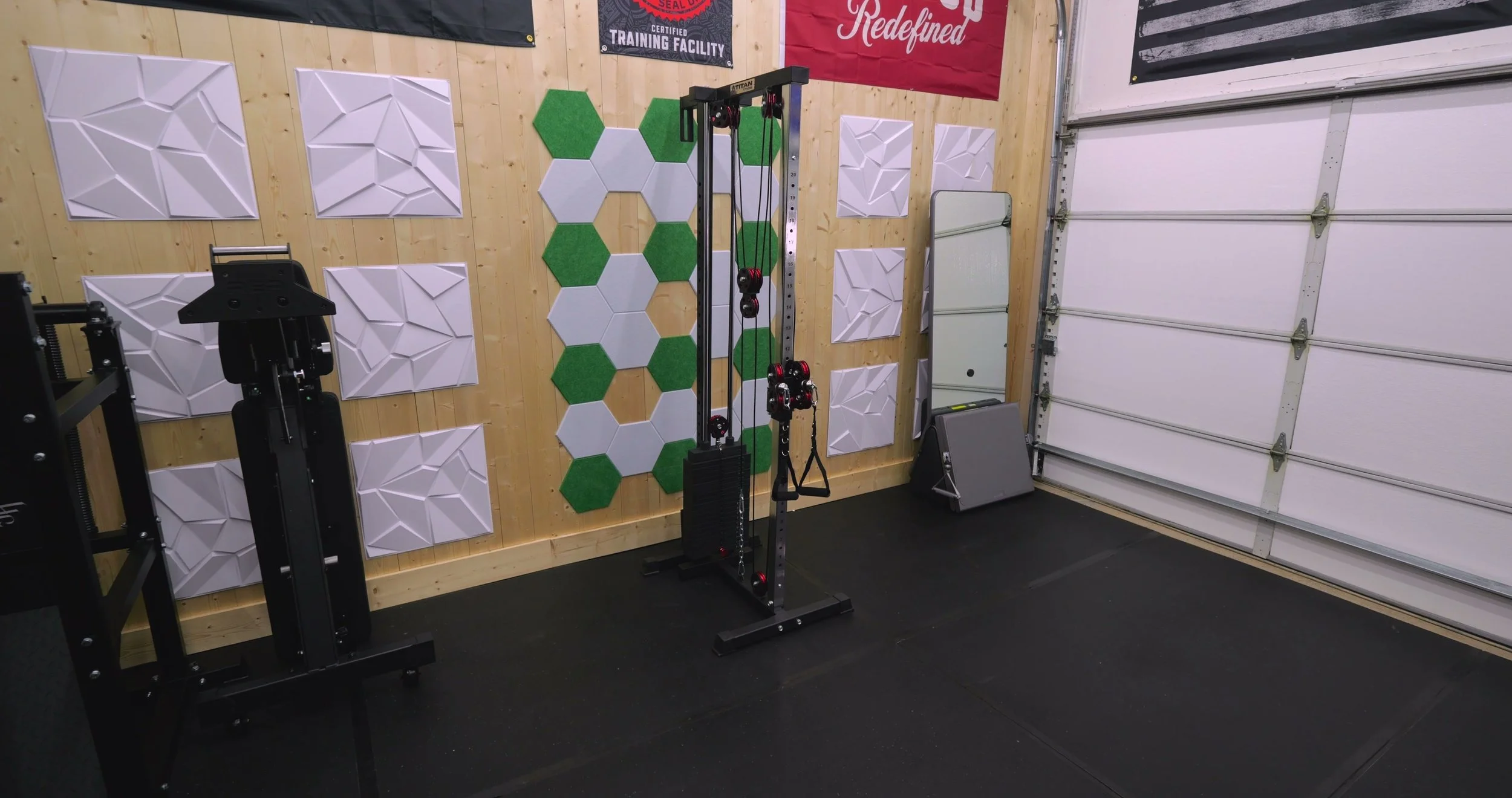
This product was in-house tested by Michael at The Jungle Gym Reviews.
If you want a compact cable tower and you’re mainly doing heavier cable work, this can get the job done—especially when you link both sides for 1:1. The problem is that the selectorized version doesn’t feel “selectorized-smooth”; at light loads it has noticeable friction and drag that makes it feel closer to a budget plate-loaded unit than a $1,000 machine. It’s best for people who want a simple cable column for general use and can live without dedicated add-ons like a proper lat pulldown leg holder. If you’re picky about cable smoothness, or you want a “complete” ecosystem with attachments, I’d look elsewhere.
Quick Specs
Price: starting at $965
Resistance Method: weight stack (as shown) at 10 - 200LBS
Cable Ratio: 1:1 or 2:1 pulley ratio
Mounting: rack or wall mounted
Height Options: 82.5” or 89”
Footprint: 37”D x 25.5” W x 82.5” or 89”H
Where to Buy the Titan Fitness Selectorized Cable Tower
Check current price and availability on the official product page.
My Real-World Experience
On paper, this is exactly what a lot of home gym people want: a compact, wall- or rack-mounted cable solution with a selectorized 200 lb stack, plus the flexibility to run it in 2:1 or connect the cables for 1:1.
In practice, the first thing you notice is the cable feel—and for a selectorized system at this price, I wasn’t impressed.
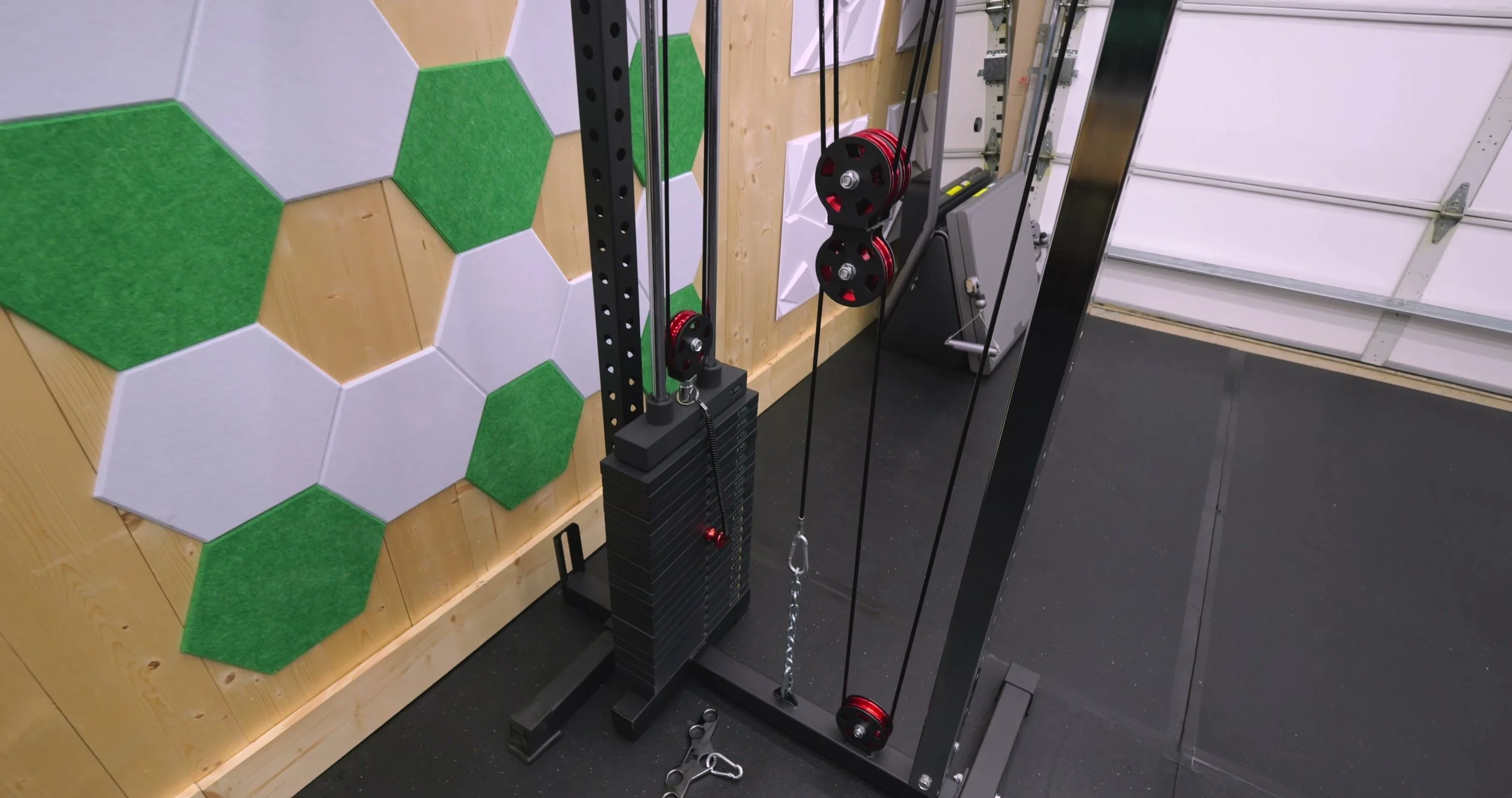
At light weight selections (like the bottom of the stack), the friction is obvious. In a 2:1 configuration, your “10 lb” selection effectively feels like about half of that at the handle, so you really notice the drag in the system. It’s not just slightly rough—it’s the kind of friction that makes you think, “Why does this feel like a plate-loaded machine?” The eccentric feels especially sticky, and you can see and hear the stack “float” in a way that just doesn’t feel premium.
A big part of that is the cable routing: there’s a lot going on—multiple pulleys, tighter bends, and a thick cable that (ironically) feels like it adds drag instead of refinement. Once you load it heavier, it becomes less noticeable, because the stack weight overpowers the friction. But it shouldn’t need that excuse at this price.
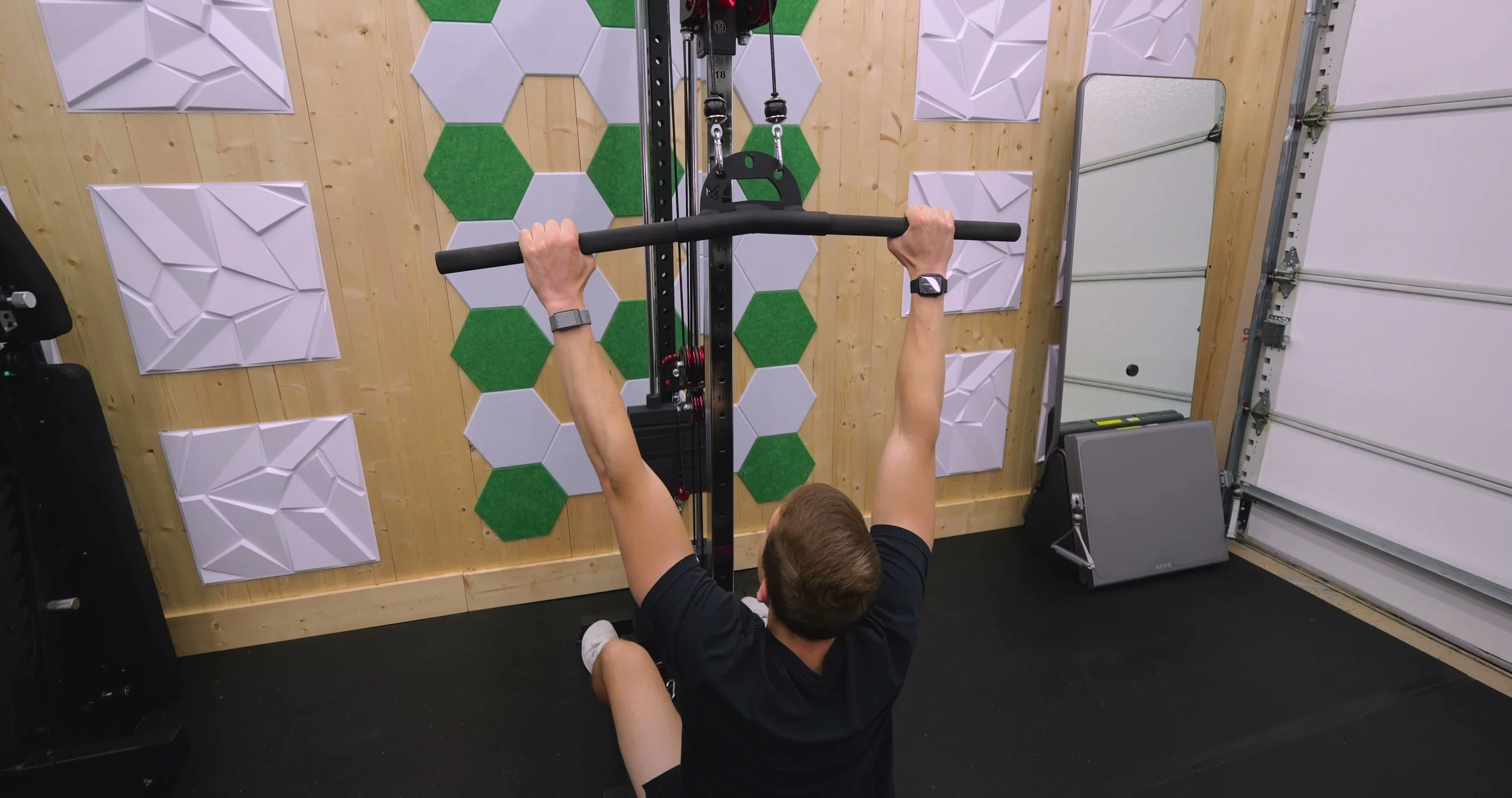
The height adjustability is practical. You have a numbered track of height positions, and you can get the pulley down low enough for certain movements. For lat pulldowns, though—especially if you’re tall—you end up needing to get low to avoid running into the cable stop. If you planned on doing “bench-seated lat pulldowns,” that’s not realistic on the shorter configuration.
Training Use Cases
This is a “single-stack cable column” which means it’s versatile, but it has natural limitations.
Curls / tricep work / lateral raises / light accessory work: Totally usable, but the friction at low loads is the biggest knock.
Lat pulldowns and low rows (1:1 linked): This is where it makes the most sense. Linking for 1:1 gives you access to the full stack, which is the point of owning a selectorized system.
General cable training in a small space: If you want cables without buying a full functional trainer, the form factor is the appeal.
Tradeoffs & Limitations
Here’s what would make me hesitate on the selectorized version specifically:
Not smooth at light weights. The friction and drag are very noticeable when the effective load is low (especially in 2:1).
Accessory ecosystem is weak. If you want to do heavy lat pulldowns, you eventually run into a real-world issue: you’ll start pulling yourself off the ground. Without a proper leg holder/roller attachment, you’re limited by bodyweight, not the stack.
Rack-mounting doesn’t solve the space problem. Mounting this to a rack still adds a large “tower footprint” to something that already has a footprint. If your goal is a clean, integrated rack solution, this isn’t it.
Titan doesn’t (currently) offer a true “drop-in rack stack” solution. Compared to racks that integrate a stack inside the rack footprint, this approach feels behind the curve.
Value & Alternatives
If Titan had priced this selectorized unit more aggressively, I’d be more forgiving. But in the ~$1,000 range, I expect a selectorized cable tower to feel meaningfully smoother than budget plate-loaded columns.
Where I land:
If you’re considering Titan’s selectorized version, I think it’s hard to justify unless you’re finding it at a truly compelling sale price and you’re mostly training heavier.
If you’re shopping Titan specifically, I actually think the plate-loaded version is easier to recommend on value alone, because you’re accepting compromises at a price that makes sense.
Category-level alternatives that tend to solve the real-world issues better:
Single-stack towers with a built-in low-row footplate and/or better add-on ecosystem (leg holders, seats, etc.)
Rack-integrated weight stack systems where the stack lives inside the rack footprint instead of becoming an extra tower bolted onto it
Who Should Buy This
You want a compact cable column for a wall-mounted setup
You mainly train heavier cable movements where friction is less noticeable
You like the idea of 2:1 for single handle work and 1:1 for pulldowns/rows
Who Should Skip It
You’re picky about smooth cable feel, especially for light accessory work
You want to do heavy lat pulldowns and need a proper leg holder solution
You already have a rack and want a clean integrated stack rather than adding a tower footprint
Final Verdict
Functionally, it works. Conceptually, it makes sense. But the selectorized version doesn’t feel like a $1,000 cable machine in the ways that matter—especially at lighter loads where a selectorized stack should shine. If you want the Titan ecosystem and you’re mainly chasing value, I’d look harder at the plate-loaded option or consider alternatives that offer better smoothness and a stronger attachment ecosystem.
Affiliate Disclosure
Some links may be affiliate links, which support the site at no additional cost to you.