Rogue Fitness Echo Rower Review
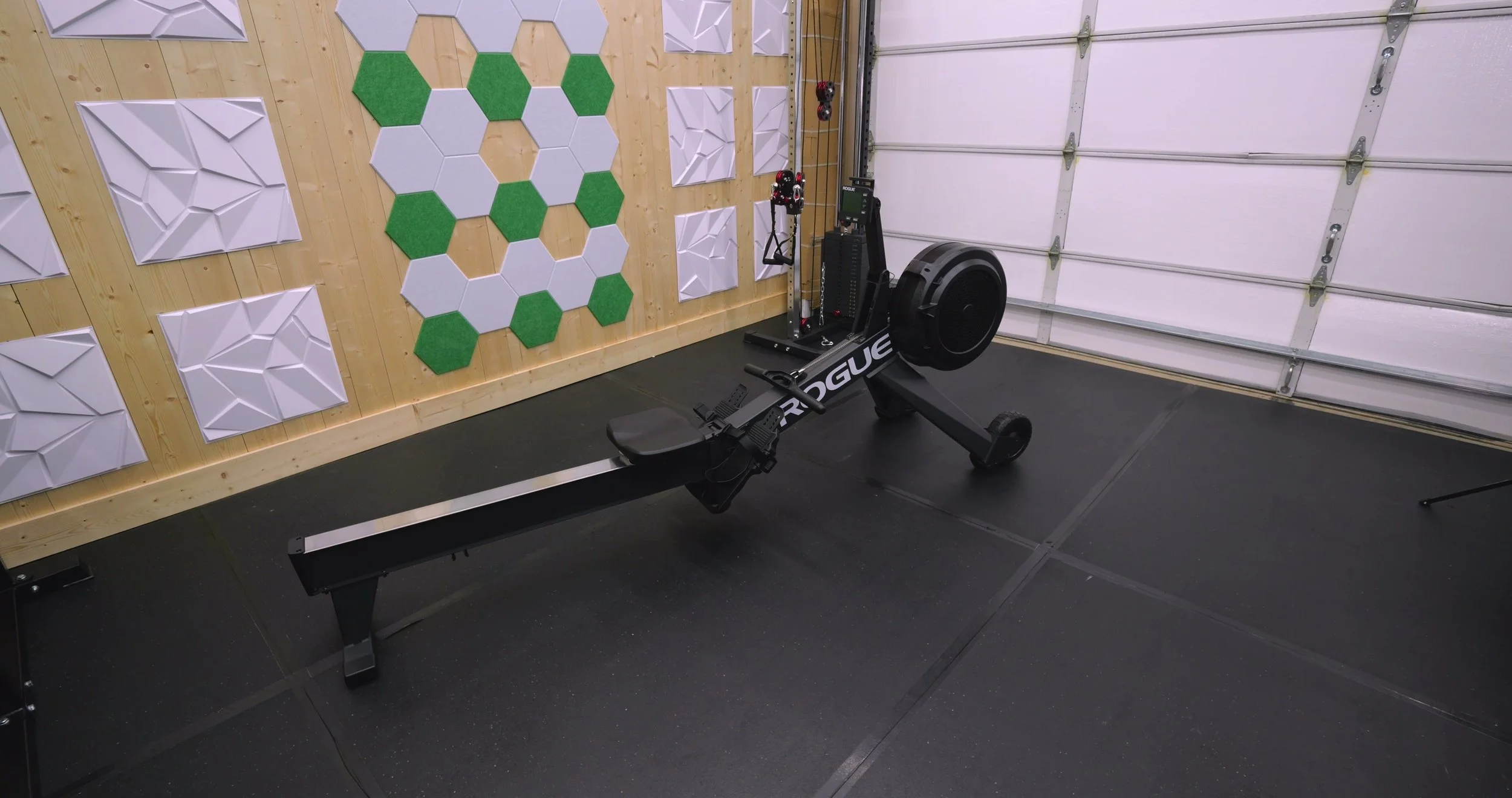
This product was in-house tested by Michael at The Jungle Gym Reviews.
If you want a rower that feels Concept2-familiar but you prefer Rogue’s heavier-duty, beefier build and some smart quality-of-life upgrades, the Echo Rower makes a lot of sense. It feels stable under hard pulls, it’s easy to move, and the monitor + connectivity is straightforward. The main downside for normal humans is the same as most air rowers: the seat is firm, and if you’re just chasing “cheap cardio,” you don’t need to spend this much.
Quick Specs
Price: ~$900 (as discussed)
Resistance Type: Air
Damper Range: 1–10
Monitor Size: 4.7-inch display
Connectivity: Bluetooth + ANT+
Weight: ~70–75 lb (as discussed)
Warranty: 2 years (moving parts), 5 years (frame) (as discussed)
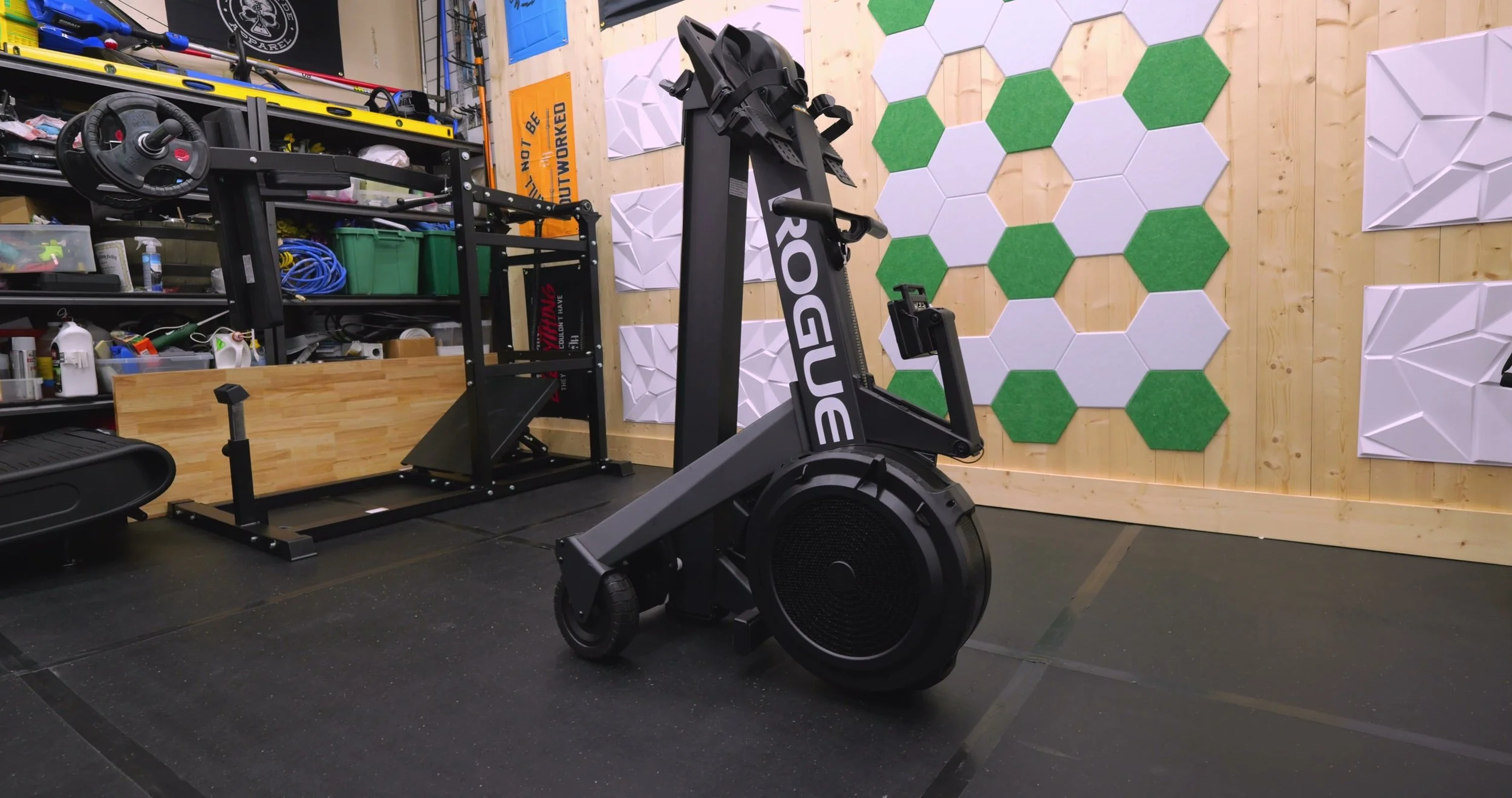
Storage: Upright / split-rail storage design
Mobility: Oversized turf tires
Where to Buy / Check Price
If you’re considering the Echo Rower, pricing and availability can move around.
My Real-World Experience
Let me get this out of the way: I’m not a rower. I’m not training for rowing performance, and I’m not pretending I have elite technique. I’m coming at this like an “active dad + strength/hypertrophy guy” who uses cardio for Zone 2 and occasional intervals—and wants equipment that feels solid, lasts, and doesn’t annoy me.
The first thing you notice with the Echo Rower is that it feels heavier and more planted than what many people are used to. When you’re pulling hard—especially during intervals—it doesn’t scoot around. Some of that is likely the overall build and weight, and some of it is simply Rogue doing Rogue things.
In terms of the actual rowing “feel” (pull and return), it’s very similar to what I remember from the Concept2. Where cheaper rowers tend to fall apart is the return and the overall smoothness—this doesn’t have that “cheap snap-back” vibe. It feels snappy and consistent.
The biggest comfort issue for me is the seat. It’s very firm, and if you’re not conditioned to sitting on a rower seat, it can get uncomfortable fast. My solution has been simple: a seat cover with a bit of cushion and grip. It helps you stay planted when you’re sweating and buys you a little comfort.
Where Rogue really wins on day-to-day usability is the stuff you touch every session:
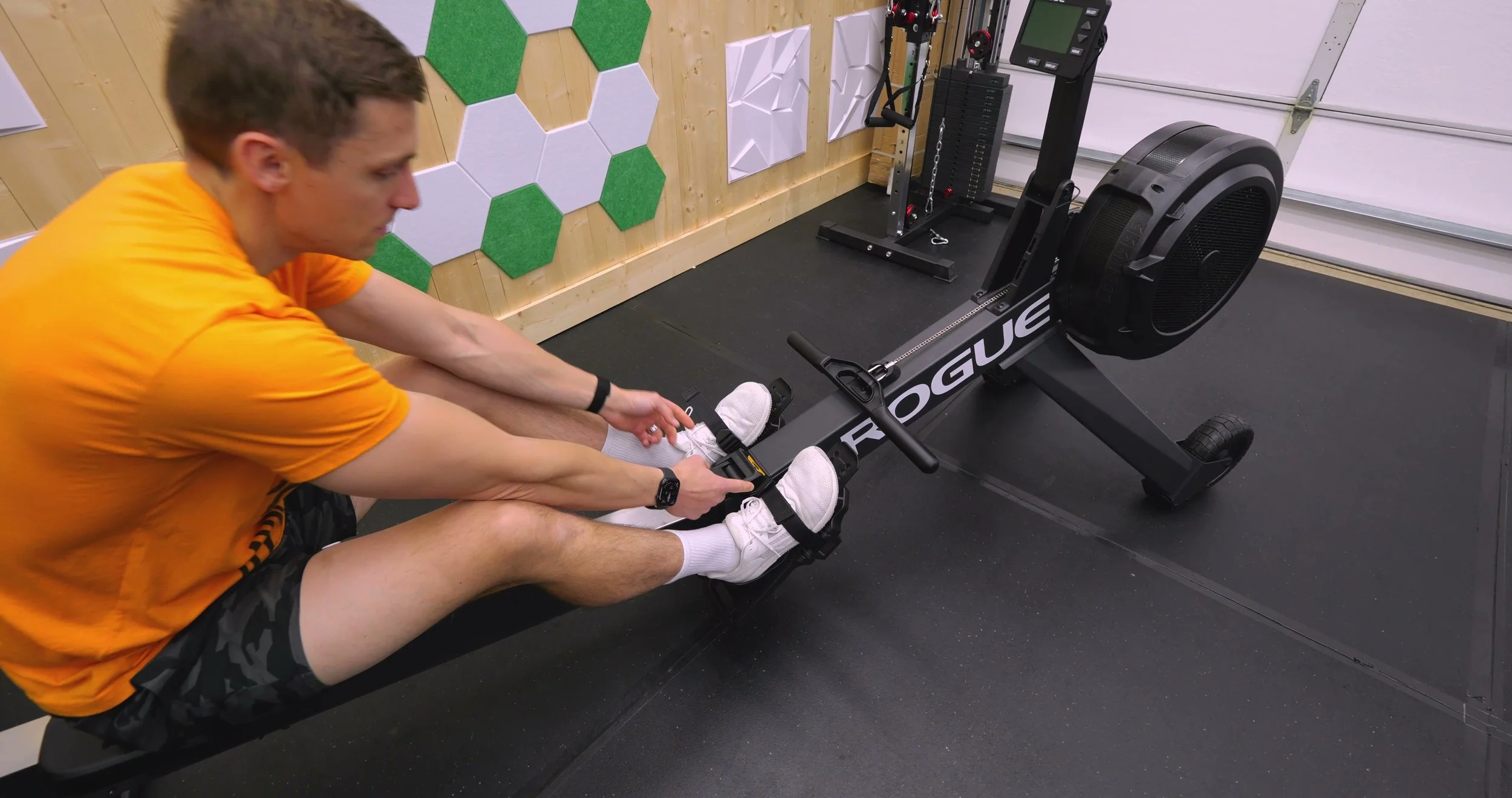
The quick-release split straps make getting in and out genuinely easier than traditional straps.
The chain height guide is a nice visual cue if you’re trying to keep your pull path consistent (especially if you’re still learning).
The turf tires make it easy to move and reposition in a home gym without wrestling it.
Monitor, Apps, and Connectivity
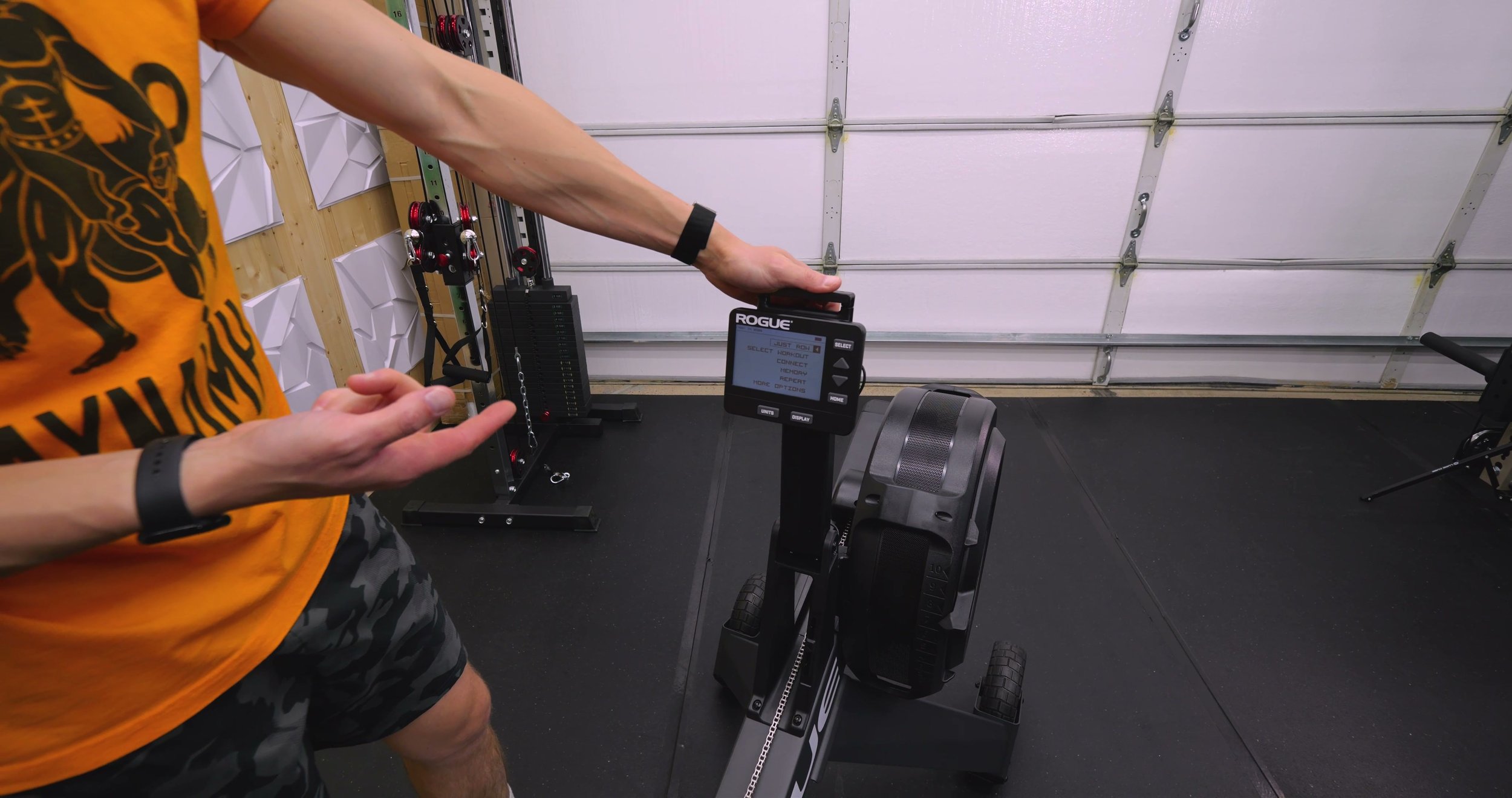
The monitor is a meaningful upgrade versus older, more basic consoles. It’s still utilitarian (in a good way), but it’s easier to live with:
Bluetooth + ANT+ support
Easier phone connection for tracking / pairing
Over-the-air style updates (as discussed)
A simple phone slot so your phone has a home while you row
For casual home use, that’s all I really want: it connects, it tracks, it doesn’t fight me.
Storage and Footprint in a Home Gym
Like other split-rail rowers, the Echo Rower can be stored more compactly. It also has design touches that help protect the unit and the floor when you stand it up. In the real world, the key is that it’s easy enough to move and store that you’ll actually do it, rather than leaving it permanently in the way.
Rogue Echo Rower vs. Concept2
For me, the big decision isn’t “can it row?”—they both can. It’s more about:
Do you want the more overbuilt Rogue feel and a few modern usability tweaks?
Or do you want the more time-tested baseline standard you see everywhere?
If you’re already spending roughly this much money, you’re mostly picking based on preference and what matters to you: familiarity, ecosystem, durability confidence, and day-to-day details.
Rogue Echo Rower vs. Budget Rowers
If your goal is “I just need to get on and row sometimes,” you don’t have to spend this much. The difference you’re paying for is primarily:
Long-term durability
Better overall feel
Support and warranty confidence
Less ‘cheap rower weirdness’ over time
And based on your own experience, some budget rowers can be fine… until they’re not.
Pros
Feels stable and planted (especially during hard intervals)
Pull/return feels Concept2-like in real use (as discussed)
Quick-release straps are genuinely convenient
Turf tires make it easy to move
Monitor + connectivity are solid and modern
Cons
Firm seat (most people will want a cushion)
If you’re truly casual, it’s a lot of money versus budget options
Not as time-tested as Concept2 (your main “unknown” is long-term history)
Final Verdict
If you want a premium air rower and you like Rogue’s design language—beefy, stable, overbuilt, and practical—the Rogue Fitness Echo Rower is an easy recommendation. It rows the way you’d want it to row, it’s easier to live with day-to-day than many alternatives, and it feels like it’s built for abuse even if you’re only doing a few sessions per week.
If budget is the main priority, there are cheaper options that can work—but if you’re already in the “buy once, cry once” tier, this is a strong pick.