Vesta Pioneer Series Power Rack Review
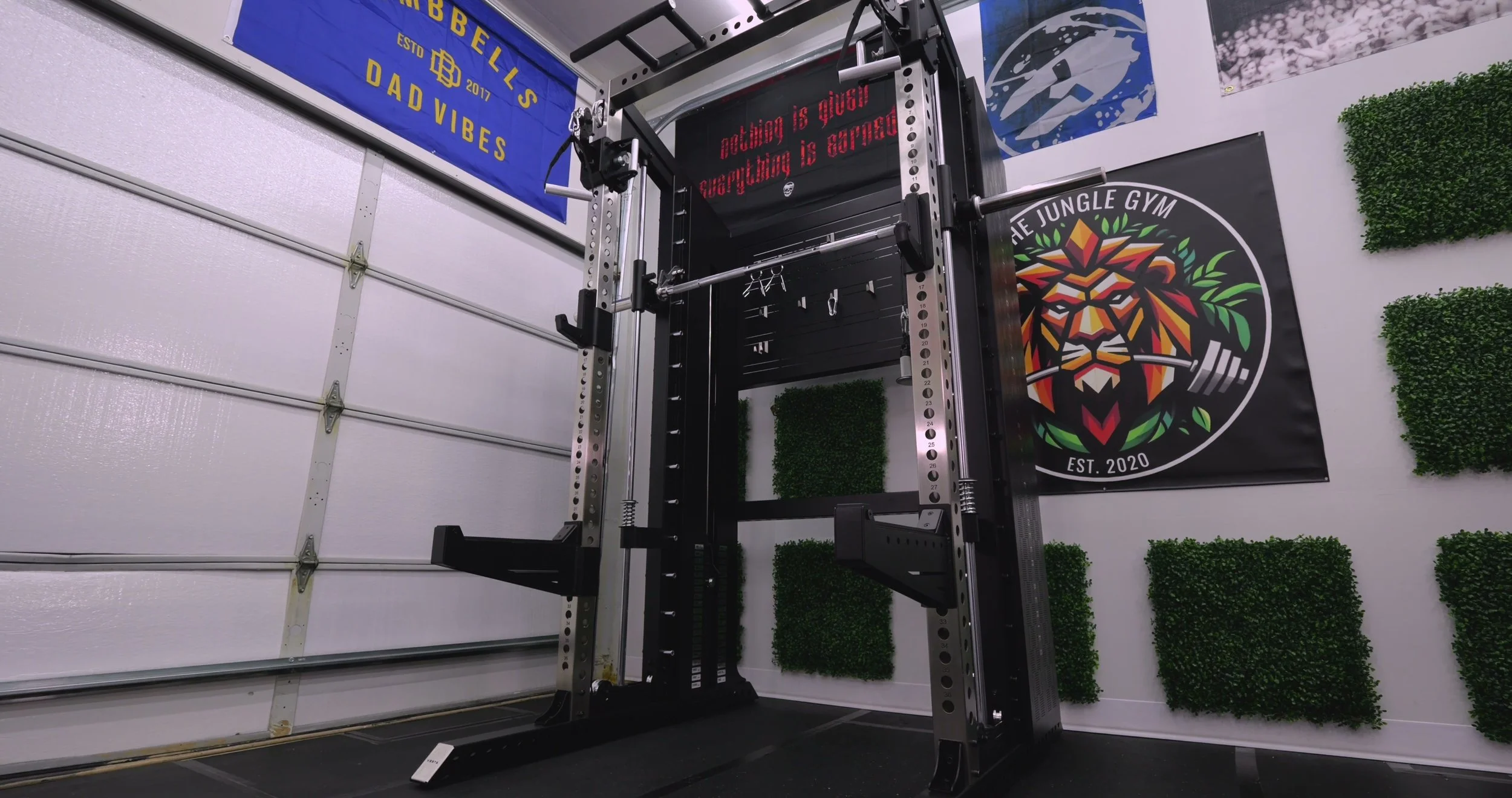
This product was in-house tested by Michael at The Jungle Gym Reviews.
The Vesta Pioneer Series is one of the best-looking all-in-one racks I’ve used, and it actually feels premium in the details—especially the Smith machine, which is shockingly smooth and quiet. The biggest tradeoff is that the functional trainer setup has real limitations if you want heavy, full-range lat pulldowns or heavy belt squat loading, mostly because of the 2:1 stacks and how the shrouds and rear crossmember restrict adding plates. If your priority is a compact, premium-looking all-in-one with a great Smith and solid cable feel for normal training, it makes a lot of sense. If you’re chasing heavy cable work and full stretch lat pulldowns out of the box, you’re going to be fighting the geometry.
Quick Specs
Rack Size: 3x3 (metric), 1” holes (approx. 25mm as described)
Height Tested: 91” version
Other Height Option Mentioned: 87” version with 21mm holes
Steel Mentioned: 11-gauge steel
All-In-One Config Mentioned: Rack + Smith + dual functional trainer
Price Mentioned (rack + Smith + FT): $4,400
Price Mentioned (rack only): ~$2,000
Footprint Mentioned: 59” deep x 49” wide
Inside Width Mentioned: 43”
Functional Trainer Stacks: Dual 200 lb stacks
Pulley Ratio Mentioned: 2:1
FT Weight Markings Mentioned: 10–200 lb in 10 lb increments (with note about pin placement)
Included Accessories Mentioned: J-cups, spotter arms, adjustable pull-up bar/handles, rear storage/pegboard-style panel
Where to Buy the Vesta Pioneer Series Power Rack
Check current pricing and the exact rack/Smith/functional-trainer configuration options before ordering.
My Real-World Experience
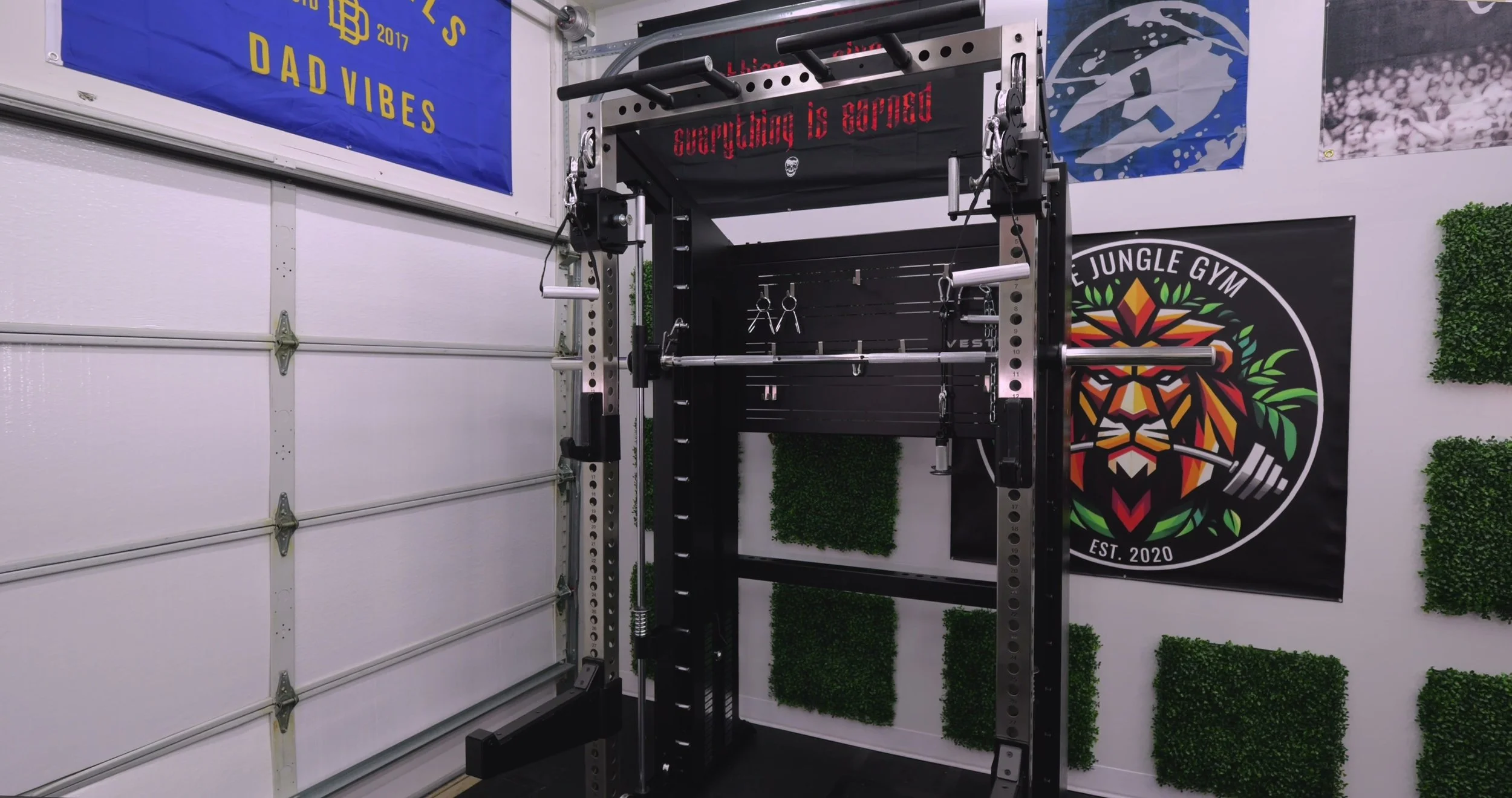
The first thing you notice with this rack is the design. It doesn’t look like every other rectangular import all-in-one. The rear section is sloped, the stainless front uprights pop, and even the small stuff—end caps, hardware, knobs, branding—feels like someone cared about aesthetics.
From a day-to-day use standpoint, the Smith machine is the highlight. It’s easily one of the smoothest I’ve used, and it’s unusually quiet. It has that “premium glide” feel without the loud bearing feedback you usually hear. The bar also has a light knurl, which I prefer on a Smith because you’re constantly re-racking and rotating—you don’t need aggressive grip texture for that.
The rack itself is compact for what it includes. I like that Vesta clearly tried to minimize how far everything sticks out, because with an all-in-one, once the Smith, shrouds, and safeties start pushing forward, things can feel bulky fast. Here, it stays pretty tidy.
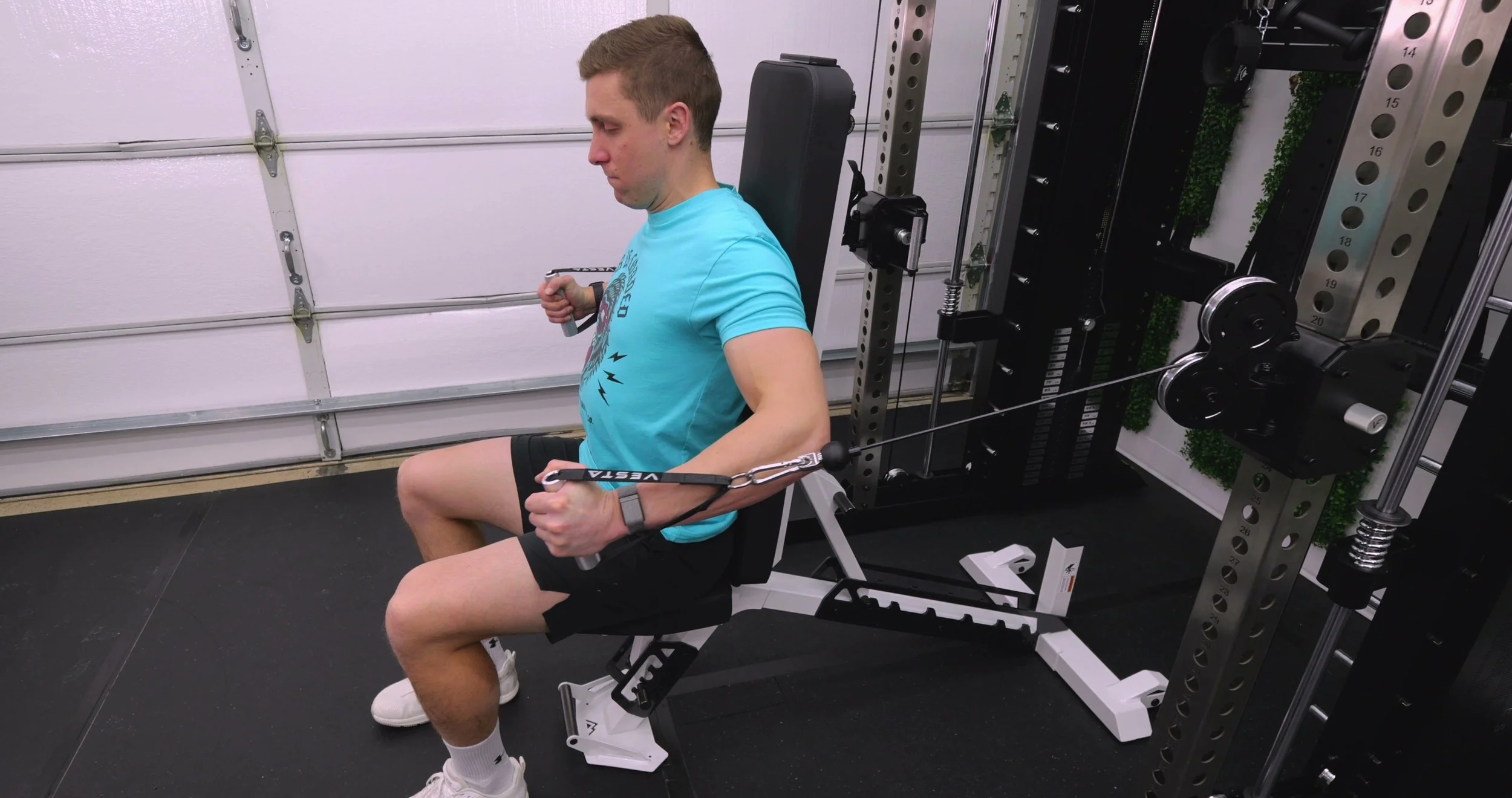
The functional trainer is solid for normal cable training. It’s smooth enough and the whole system feels reasonably tight. The one thing I didn’t love is the limited swivel range on the front cable arms. They don’t get out to 90 degrees, and that matters more than it sounds—certain inside-of-the-rack angles end up putting the cable against the bracket if you’re not starting far enough forward.
Training Use Cases
This rack makes the most sense when you’re using it as an all-in-one for:
Smith machine pressing and accessory work (where smoothness and ease of use matters)
General functional trainer training (flys, curls, pushdowns, rows, face pulls, etc.)
Barbell rack training with included J-cups and spotter arms
Space-efficient training where you want multiple stations without a massive footprint
Where it starts getting complicated is when you want it to behave like a heavy-duty cable tower for lat pulldowns and belt squats.
Tradeoffs & Limitations
There are a few limitations that matter, and they mostly stack on top of each other:
Lat pulldown range of motion is limited out of the box
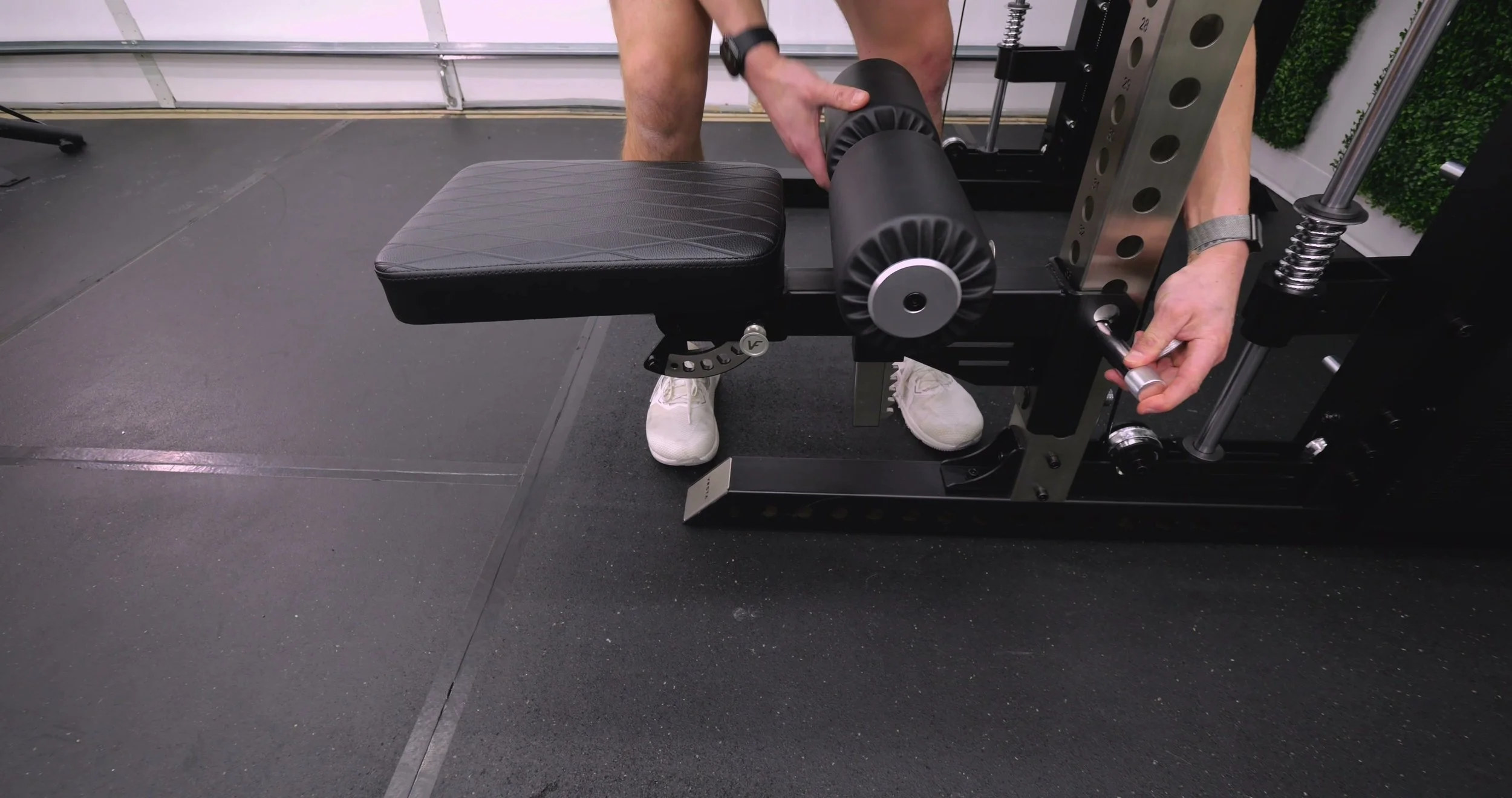
With a normal carabiner + attachment setup, I don’t get a full stretch at 6’2” while using the lat seat in its lowest usable position. I can “make it work,” but it’s not the range I want.
The system basically needs a lat pulldown extender for tall users
Using something like the Fringe Sport “Drew” style extender solves it by moving the pull point higher and farther out, which gives a natural path and full ROM. But that’s an extra purchase and not everyone wants to add another part just to make a primary movement feel correct.
2:1 stacks limit “heavy” work quickly
A 200 lb stack at 2:1 is effectively 100 lb in-hand. For a lot of people, that’s not enough for lat pulldowns or belt squats.
Adding plates is restricted by the shrouds and rear crossmember geometry
Even with a weight stack adder, the shroud pushes plates outward and limits how many you can load. Then, as the plates travel up, they can collide with the rear crossmember depending on plate diameter and setup. This turns “just add plates” into a frustrating puzzle.
All-in-one price, but not truly all-in-one heavy cable capability
The rack does a lot, but if your definition of “all-in-one” includes heavy lat pulldowns and heavy belt squats without workarounds, you’ll feel the constraint.
Value & Alternatives
At around $4,400 for the rack + Smith + dual functional trainer configuration, you’re paying for both functionality and finish. The premium look is real, the Smith machine is excellent, and the general cable feel is solid.
The issue is value changes depending on what you expect from the functional trainer side. If you’re buying this thinking “I’ll do heavy lat pulldowns and heavy belt squats on the stacks,” the 2:1 ratio plus the shroud/crossmember constraints make that tough—especially without extra add-ons or workarounds.
If you’re buying it because you want a compact, good-looking rack with a top-tier Smith feel and you’re mostly doing normal cable work, it’ll land better.
Who Should Buy This
You want a premium-looking all-in-one that doesn’t dominate your room
You care about Smith machine feel and use it a lot
Your cable work is mostly moderate loading and typical movements
You value included storage and thoughtful design details
Who Should Skip It
You want heavy lat pulldowns and belt squats without fighting the system
You’re tall and want full ROM lat pulldowns out of the box
You hate needing extenders, adders, or configuration tweaks for core movements
Final Verdict
The Vesta Pioneer Series rack nails the premium feel and packaging, and the Smith machine is the standout feature that genuinely feels better than most all-in-ones. The functional trainer is smooth and usable, but if heavy lat pulldowns and heavy belt squats are a priority, the 2:1 stacks and add-weight limitations are a real bottleneck. For the right buyer, it’s a beautiful, capable centerpiece. For strength-focused cable work, you may outgrow the limits quickly.
Affiliate Disclosure
Some links may be affiliate links. If you buy through them, I may earn a small commission at no extra cost to you.