Bulletproof VTS Versa Trolley System Review
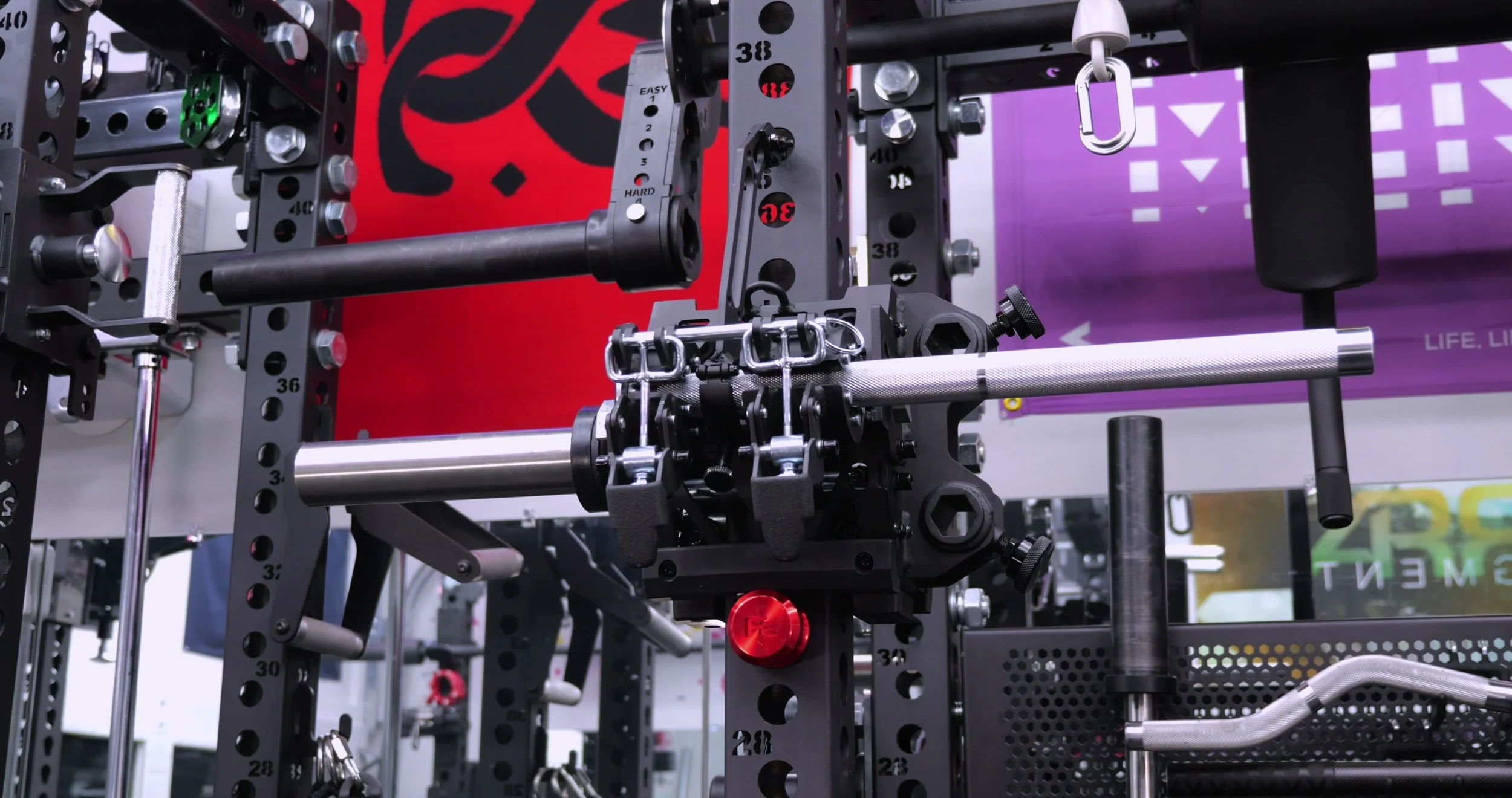
This product was in-house tested by Michael at The Jungle Gym Reviews.
The Bulletproof VTS is the closest I’ve felt to getting a real Smith machine inside the footprint of a normal power rack, without adding a dedicated Smith tower. When it’s dialed in, it’s smooth, stable, and surprisingly tight with a barbell connected, plus the unilateral “single-handle Smith” mode is genuinely useful. The biggest tradeoff is the setup and tuning curve: this is not a clamp-on-and-go accessory, and you’ll spend real time fitting rollers to your uprights and learning the workflow. If you like modular systems and want to cram maximum capability into a small rack footprint, it’s hard to beat—if you want plug-and-play simplicity, you’ll probably be happier with a traditional Smith setup.
Quick Specs
System Type: Upright-mounted roller trolley (Smith-style vertical travel)
Configuration: Two independent trolleys (one per upright)
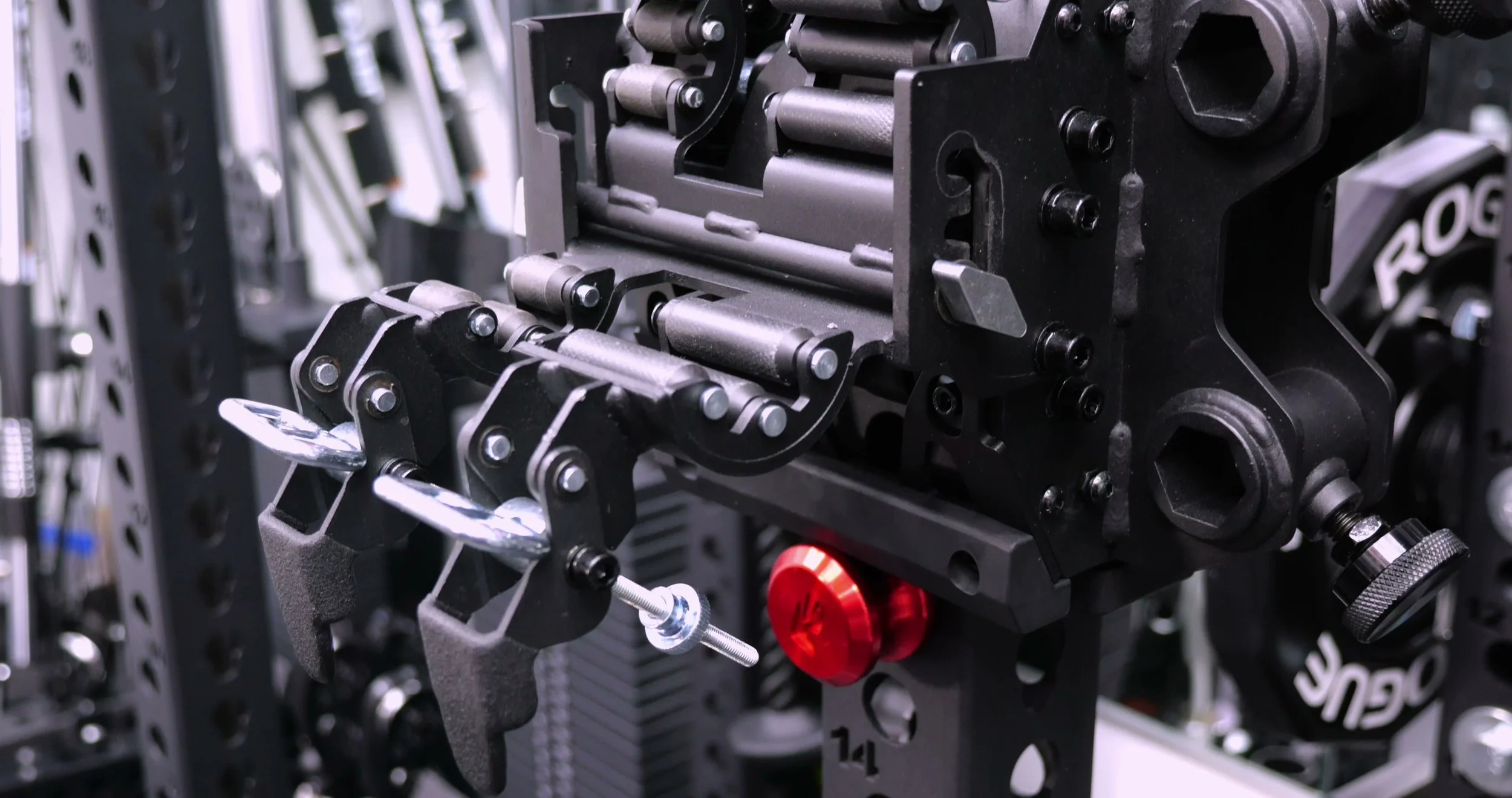
Rollers: Eight rollers per trolley (as described)
Per-Trolley Weight: 24 lb (not including handles)
Rack Compatibility Mentioned: 3x3, 2x3, 2x2 depending on version ordered
Hole Size Mentioned: Works on 1” racks; concerns mentioned with 5/8” hole racks when using latch-style re-rack
Base VTS Price Mentioned: $900
ISO Handles Price Mentioned: $130 (approx.)
Weight Horns Price Mentioned: $100–$120 (approx.)
Typical All-In Cost Mentioned: $1,150–$1,200 plus shipping (as described)
Where to Buy the Bulletproof VTS VersaTrolley System
Check current pricing, rack-size options, and handle packages based on your uprights and hole spacing.
My Real-World Experience
In my gym, the entire point of the VTS is simple: I want Smith machine capability without giving up space. I run a compact four-post rack with short crossmembers, and I’m constantly trying to stack capability—VTS, cable-style resistance, lever arms—without turning my garage into a commercial layout. The VTS actually fits that mission.
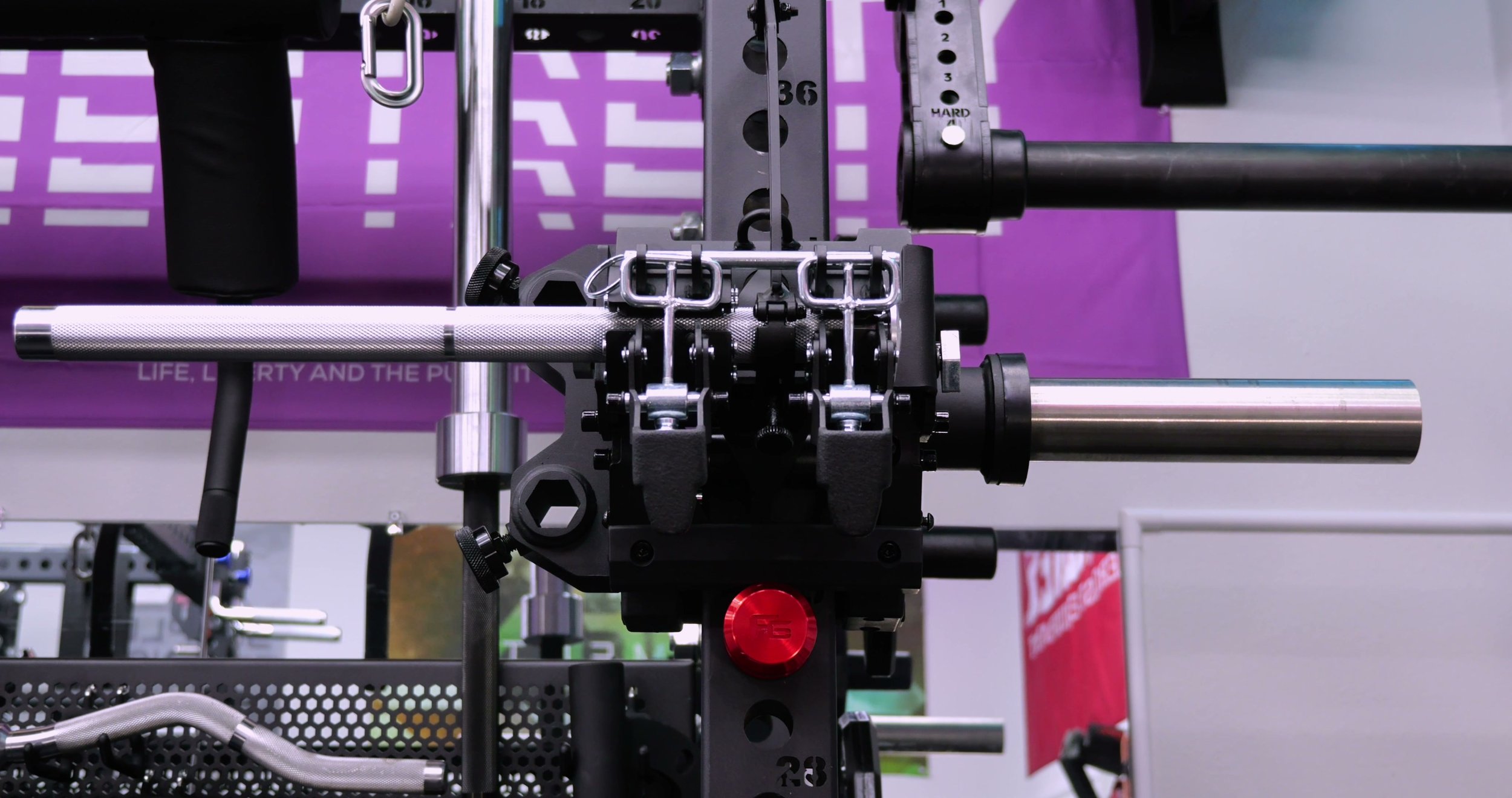
But I’m not going to pretend it’s effortless. The initial setup is real. You’re sliding the trolley onto the upright from the top, which means you’re removing the top cap and committing to it living on that post. Then comes the tuning: each roller has its own adjustment, and you’re basically trying to find the sweet spot where it “kisses” the upright without binding. Too tight and it’s sticky. Too loose and you introduce more play than you want. I’m used to tinkering, but even for me it was a multi-week process to get both sides feeling consistent top to bottom.
In my case, I also learned my upright wasn’t perfectly consistent—smooth in one section, stickier lower down—so dialing it in was a mix of micro-adjustments and actually training on it to see where friction showed up under load. Once it was set, though, the day-to-day experience got much better: it’s just there, ready to go, and the movement quality stays consistent.
Training Use Cases
Where I think the VTS shines is giving you two distinct modes that feel meaningfully different:
1) Unilateral Smith-style work (one handle per side)
This is the sleeper feature. Single-arm Smith patterns feel smooth and controlled, and it opens up pressing and pulling variations that you don’t get the same way with a normal bar path.
2) Connected bar mode (Smith machine feel with a straight bar)
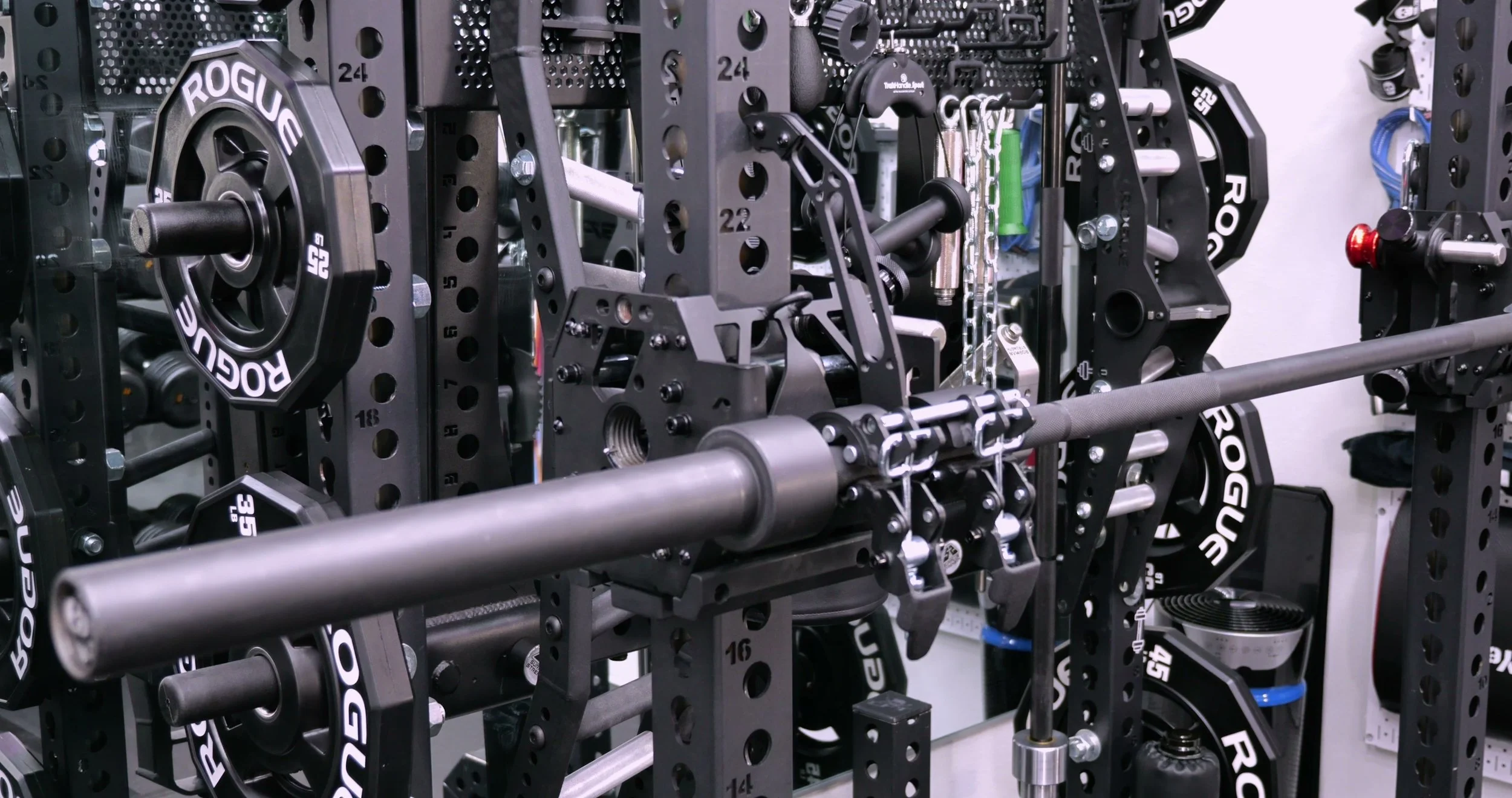
Once you clamp a bar into both trolleys and get the rotation tension set correctly, it honestly starts to feel like a legit Smith. What surprised me most is how little left-to-right slop there is when it’s connected, even unloaded—and it tightens up even more once you add plates.
I also like that the trolley gives you places to clip in for cable-style work. I’ve used it for curling in a way that feels like this hybrid between cable tension and a guided machine path. And with electronic resistance systems, the VTS gets even more interesting because you can set up pulling patterns against gravity in a fixed vertical track—something that’s hard to replicate cleanly in a typical home setup.
Tradeoffs & Limitations
The biggest tradeoff is that this is a “system,” not a simple attachment.
Setup and tuning curve: You’re fitting rollers to your uprights, not just bolting something on. If you hate tinkering, you’ll hate the early phase.
Workflow friction mid-workout: Swapping between handles and a bar, adjusting clamp tightness so the bar rotates correctly, setting latches evenly—none of it is hard, but it’s not as mindless as grabbing a fixed Smith bar.
Re-rack nuance: The latch-style re-rack depends on alignment. On my 1” hole rack, it’s been easy and consistent once installed correctly. I can see how smaller holes could make the “landing” less forgiving if something is slightly off.
Cost adds up fast: The VTS isn’t cheap, and once you add the handles, horns, and any bar solution, you’re squarely in dedicated Smith machine territory—except you’re trading that for footprint and modularity.
Value & Alternatives
If you’re comparing purely on price, the VTS lands in the same neighborhood as a lot of Smith options once you factor in handles and horns. The difference is what you’re buying:
A dedicated Smith machine is simpler and more “always ready.”
The VTS is a capability multiplier for a rack you already own—especially if your space is tight and you want to keep your rack usable for other attachments.
If your gym is a “small space, maximum function” situation, I think that’s where the VTS earns its keep.
Who Should Buy This
Buy the VTS if you want Smith-style training without dedicating floor space, you like modular ecosystems, and you’re willing to spend time dialing it in so it runs smoothly on your uprights.
Who Should Skip It
Skip it if you want plug-and-play, if you don’t want to tune roller tension, or if you know you’ll be annoyed by any mid-workout setup when switching between handle and bar configurations.
Final Verdict
For my style of home gym—compact rack, maximum capability—the VTS is the kind of system I’ll keep long-term. It’s not effortless at first, but once it’s fitted to your rack, it delivers a Smith-like experience with more flexibility than a dedicated Smith attachment, and it stays out of the way when you’re not using it.
Affiliate Disclosure
Some links may be affiliate links. If you buy through them, I may earn a small commission at no extra cost to you.