SMAI Vanta Series Smith Machine Attachment Review
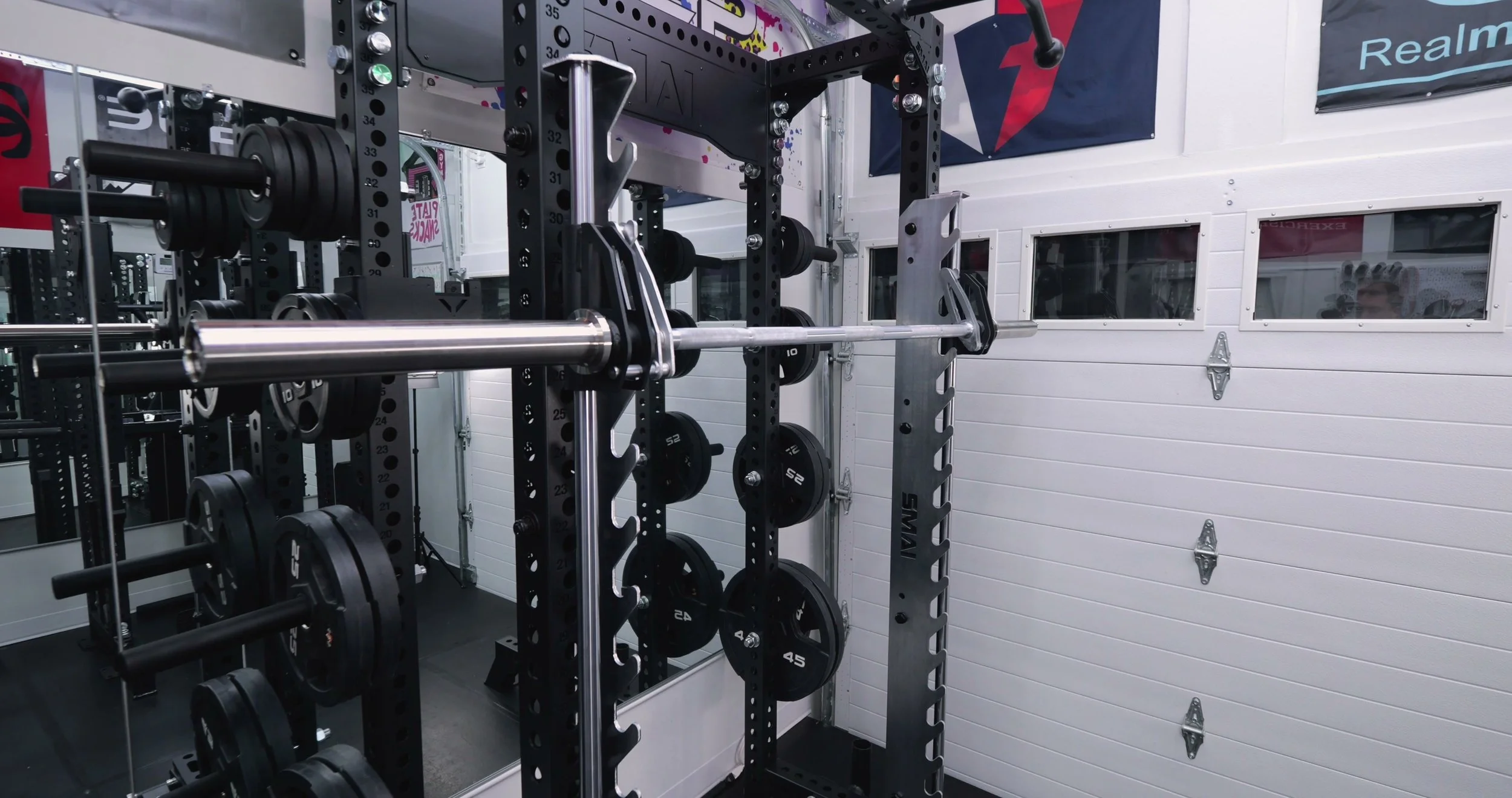
This product was in-house tested by Michael at The Jungle Gym Reviews.
This is one of the most flexible rack-mounted Smith attachments I’ve used because it covers 3x3 racks across 41” to 43” widths with one system. The big tradeoff is vertical travel—it’s designed to fit low-ceiling racks, which means tall users run out of overhead room and storage height. It’s best for home gyms that want a true Smith feel without dedicating floor space to a standalone machine. If you need full overhead pressing height or hate head-level obstructions, you’ll hesitate.
Quick Specs
Price: $799 base; ~$849–$899 with adapter kit
Vertical Track: 65”
Minimum Rack Space Required (vertical): 65.5”
Lowest Bar Height: ~16” to center of bar
Bar Diameter: 28mm (1 1/8” Imperial)
Total Bar Length: 80”
Barbell Weight: 33 lbs / 15 kg
Barbell Sleeve Diameter: 1.97” / 50mm (Olympic)
Barbell Sleeve Length: 14.5”
Knurling: Passive/mild with 3 marker positions
Total Unit Weight: 128 lbs
Guide Rail Diameter: 30mm (1 3/16”)
Bearings: Cylinder bearings on guide rail housing
Catcher Slots: 17 positions
Maximum Capacity: 1,100 lbs
Upright Compatibility: 3x3” / 75x75mm only
Hole Sizes: 1” (25mm) or 5/8”
Native Fit: 42.7”–43” interior width racks
With Adapter Kit: 41”–41.5” interior width racks
Warranty: 30-day warranty against manufacturing defects
Where to Buy the SMAI Vanta Series Smith Machine Attachment
Check price and availability on the official product page.
My Real-World Experience
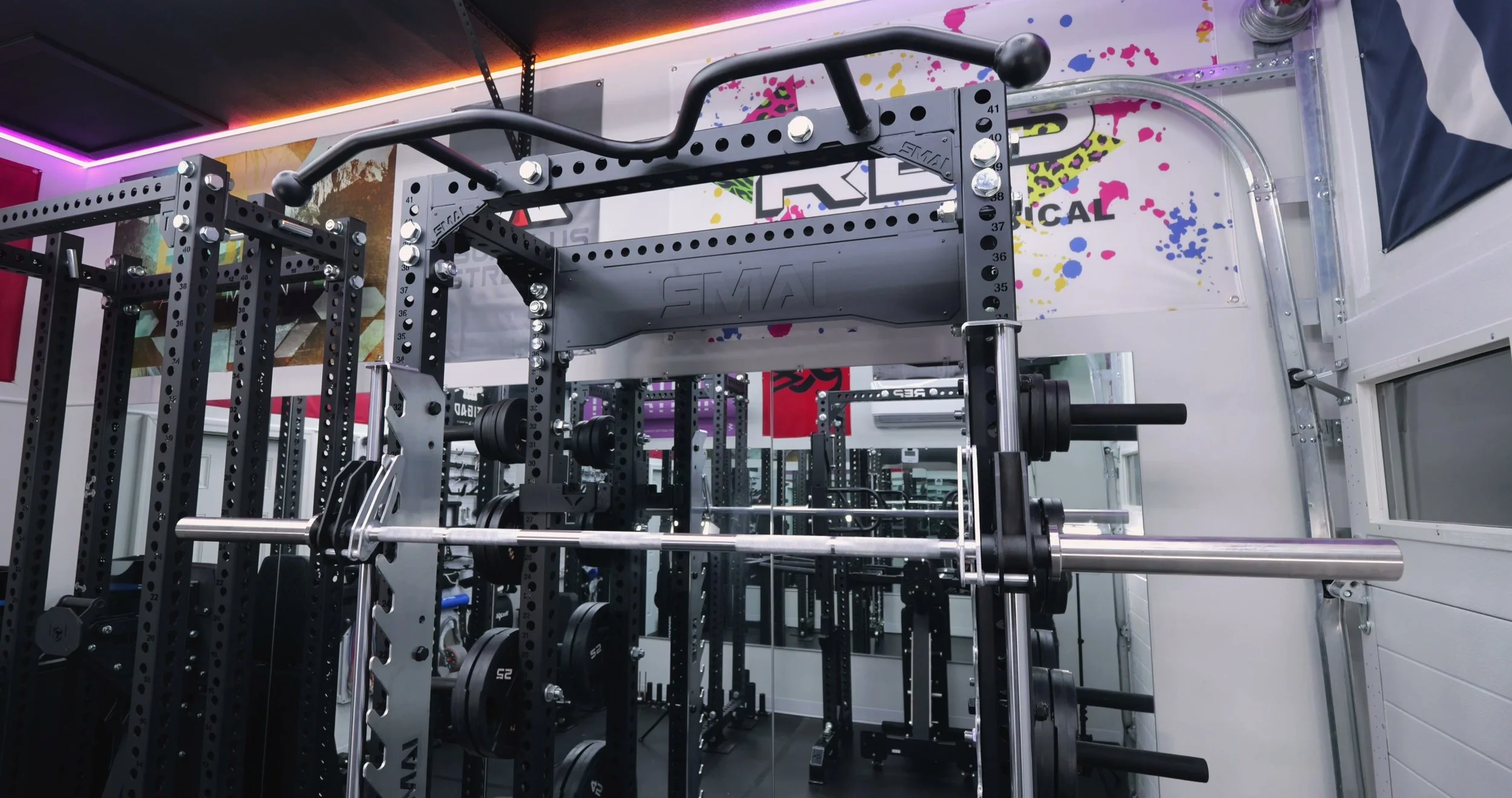
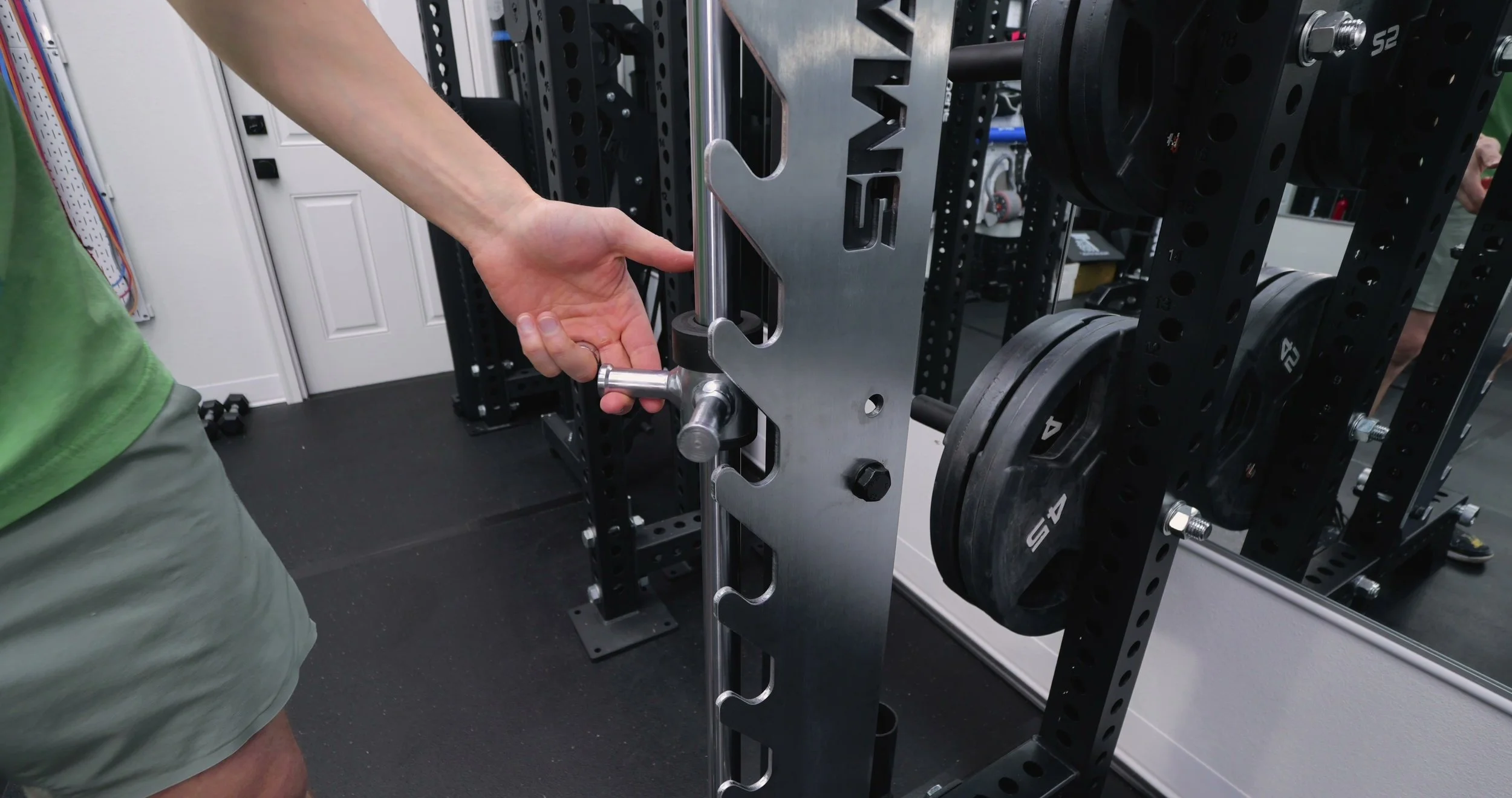
What surprised me most is how normal this feels once it’s mounted—no uneven sides, no weird binding, just a straight-up Smith track that moves the way you expect. The 28mm bar with mild knurling works well for a Smith because I’m constantly rotating it to lock and unlock, and aggressive knurling would be annoying here. The built-in safety stoppers are easy to move and actually get the bar lower than a lot of rack-mounted systems, which matters for RDLs, calf raises, and anything that needs more bottom-end range. The height choice is the double-edged sword: it fits short basement racks, but on a taller rack the top position sits right around my head, so I’ve had a few “don’t do that again” moments walking past it. Once you get used to where it lives, it’s fine, but it’s not something you forget is there.
Training Use Cases
This shines for traditional Smith work—squats, benching, seated pressing, rows, and anything where you want a fixed vertical path with consistent loading. The low bottom height makes hinge patterns more usable than a lot of rack-mounted options. It’s also a good fit if you train alone and want predictable safeties without setting up spotter arms every session. Where it’s less useful is for tall lifters who rely on full standing overhead presses or very high calf raises because you simply run out of vertical track.
Tradeoffs & Limitations
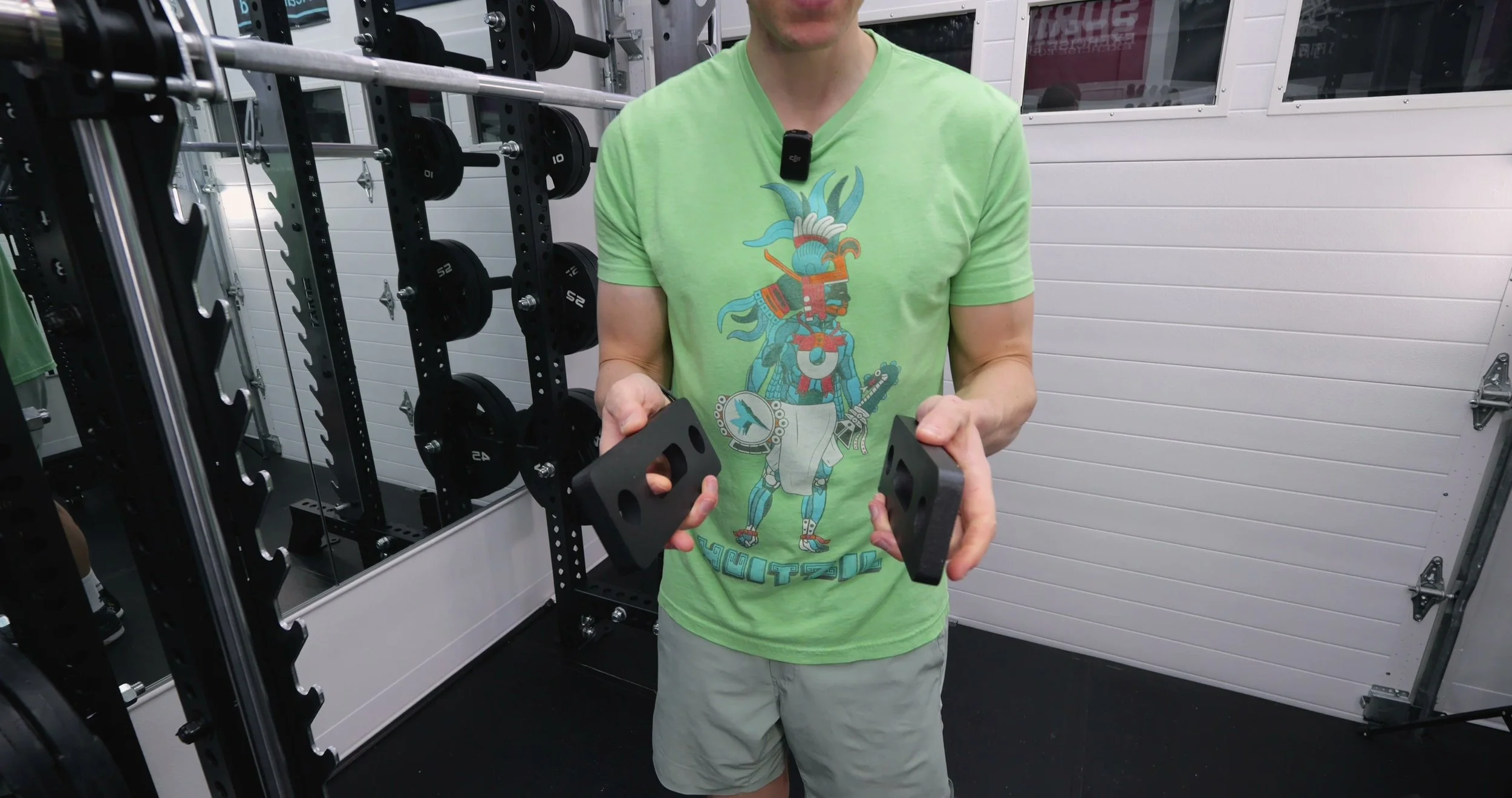
The biggest compromise is vertical travel: you get basement compatibility, but you give up overhead room and safe storage height on taller racks. The adapter-plate system expands rack compatibility, but it can create issues if you already have a cable system tuned to a specific rack width. Mounting this on the front of a rack also blocks barbell storage there, which effectively pushes you toward a six-post layout if you want both Smith and free-bar work in the same space.
Value & Alternatives
For the right home gym, the current price makes a lot of sense because you’re getting a full Smith experience without buying a standalone frame. Rack-attached Smith systems trade footprint for integration, and this one covers more rack widths than most. The value hinges on whether the height limitation works in your space—if it does, it’s a very efficient way to add Smith training to a rack you already own.
Who Should Buy This
Home gym owners with 3x3 racks who want a true Smith machine feel, need low-ceiling compatibility, and value a wide range of rack-width fitment.
Who Should Skip It
Tall lifters who rely on standing overhead work or anyone who needs maximum vertical clearance and hates head-level obstructions in the rack.
Final Verdict
This is one of the most adaptable rack-mounted Smith attachments I’ve used, and the low-height design is either exactly what you need or the reason it won’t work.
Affiliate Disclosure
Some links may be affiliate links. If you buy through them, I may earn a small commission at no extra cost to you.