PRx Profile Belt Squat Review
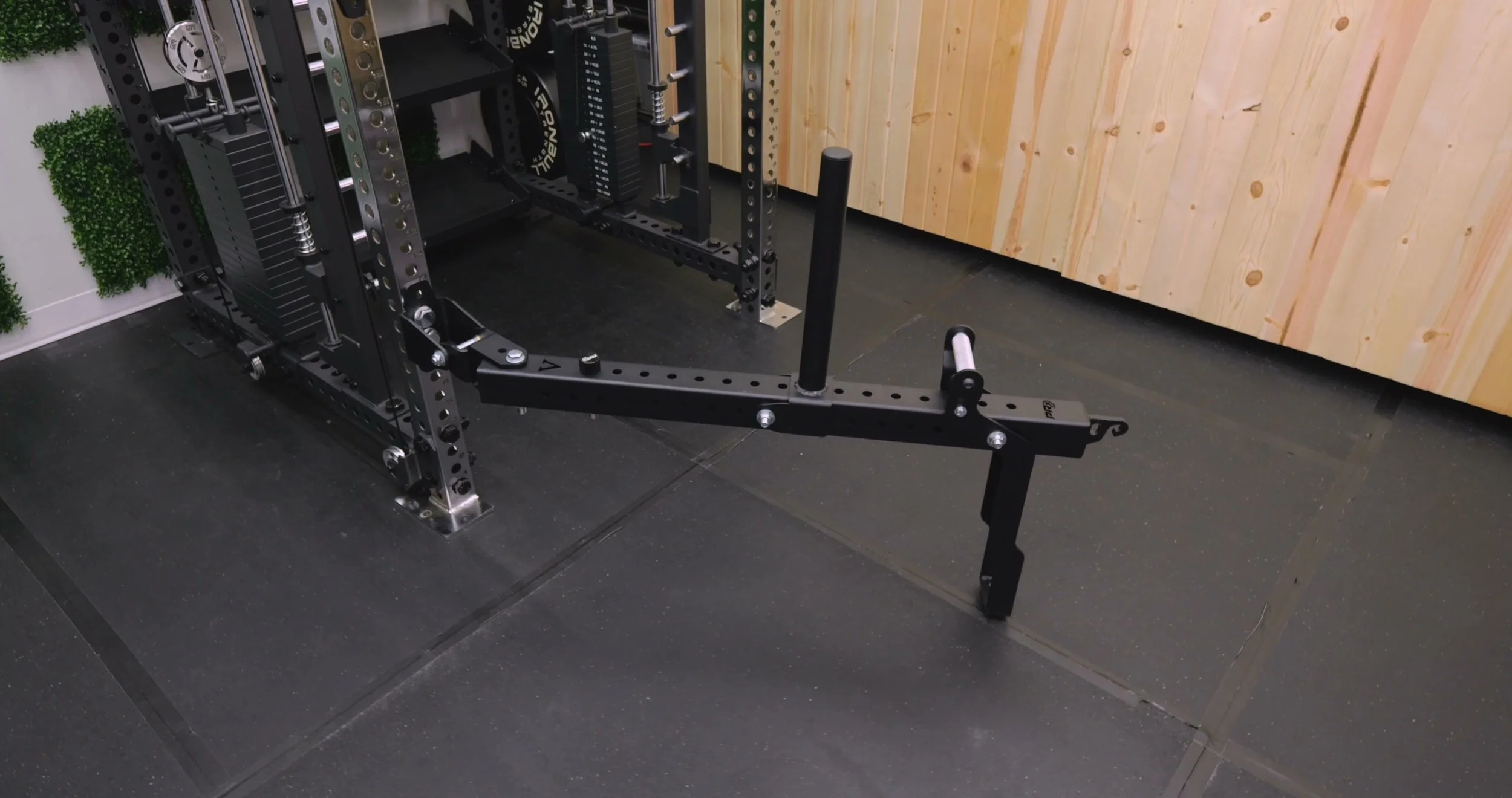
This product was in-house tested by Michael at The Jungle Gym Reviews.
What this does extremely well is solve the “belt squat setup problem” with the folding kickstand and quick-release notch—clip in, squat, clip out, done. The big tradeoff is that the folding “profile” concept also limits how you can add more loading options beyond the main horn, so the heaviest folks may want an add-on solution. If you want heavy leg training in a home gym where space is the limiting factor, this is one of the cleanest belt squat setups I’ve used. If you’re expecting perfectly smooth off-axis free-swinging work, that’s not really what it’s designed for.
Quick Specs
Price: $550 (as configured/mentioned: everything included)
Type: Rack- or wall-mounted belt squat attachment (pendulum-style)
Mounting: Wall (studs) or rack (via supplied brackets)
Rack Compatibility: 3x3 racks with 5/8” or 1” holes (also workable on some non-3x3 racks with creative hardware)
Steel Spec Mentioned: 3x3, 11-gauge steel (referenced with PRx Build Limitless / GetRX’d example)
Hole Spacing Mentioned: 2” spacing (imperial example referenced)
Included Belt: Spud Inc. belt squat belt (newer padded version described)
Weight Horn: Folding weight horn
Kickstand: Folding kickstand with knurled handle + magnets + UHMW stop
Motion Options: Linear/locked axis or limited free-swinging side-to-side (via mag pin)
Stored Profile Mentioned: ~53” x 8” x 8” (stored)
Loaded Example Mentioned: ~290 lb to ~300 lb loaded in your test
Where to Buy / Check Price
Check current price and availability on the official product page.
My Real-World Experience
I’ll start with what this actually feels like in a real home gym: it’s the first belt squat setup I’ve used that doesn’t make you dread the “getting into position” part.
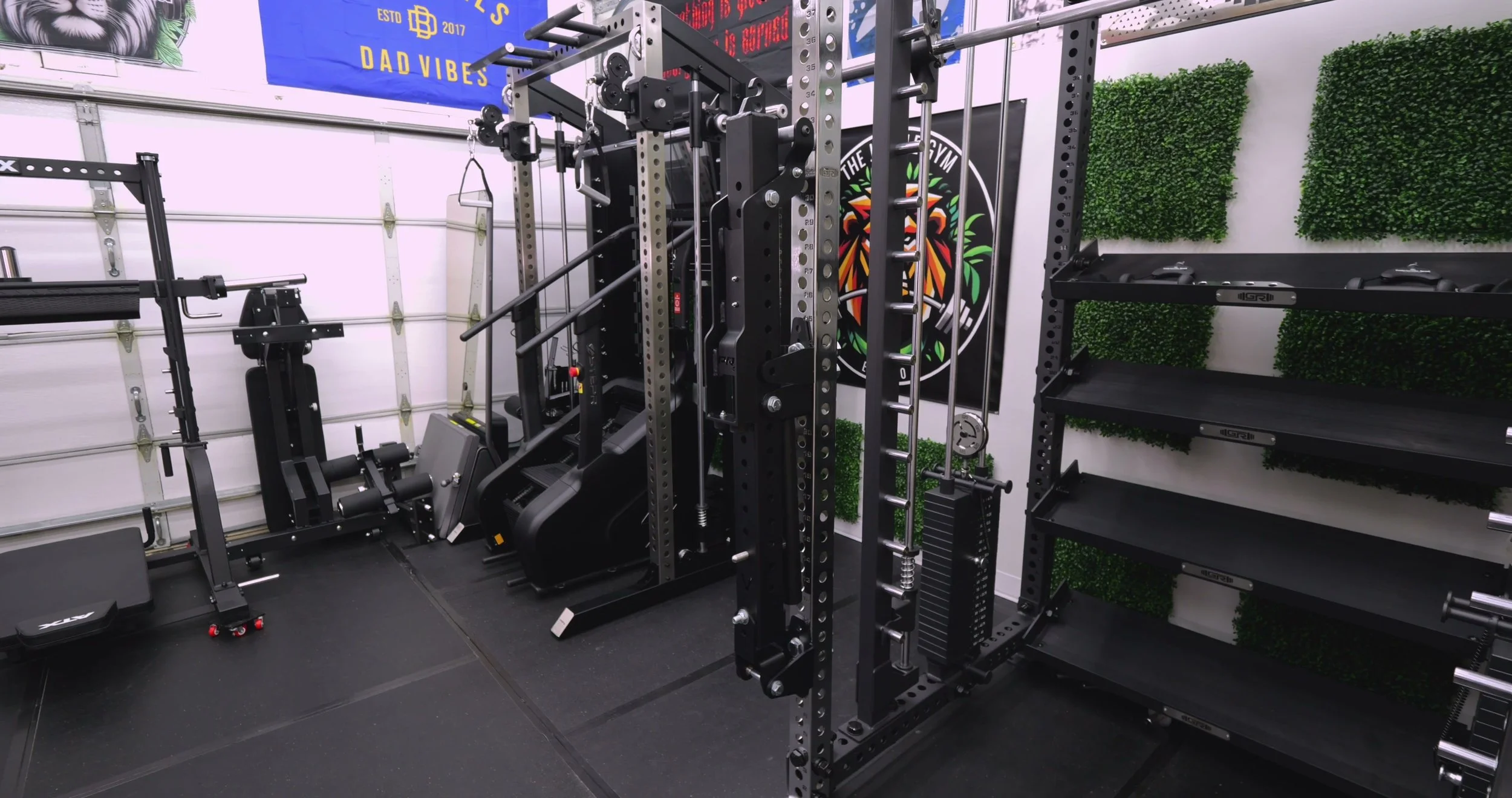
This thing was designed with a simple idea—keep the footprint tiny when you’re not using it—and that “Profile” concept is the entire identity. Rack-mounted on a 3x3 rack (I had it on a GetRX’d 3x3 rack in the footage), it stores upright and stays out of your way. If you’ve ever owned attachments that end up leaning in a corner or living on the floor because they’re annoying to move, that’s the problem this is trying to solve.
The mounting system is also more flexible than it looks at first glance. You can mount it to a wall with studs or to a rack with the supplied brackets. They include hardware for stud mounting, but not for rack mounting, so I had to supply my own 1” bolts. The bracket design itself is smart: it’s set up to work with a 1” bolt through the middle and 5/8” at the top, which is why it plays nicely with both major hole standards.
The “locked vs unlocked” movement is handled with a mag pin—the same style as the PRx Build Limitless Halo Arms mag pin we reviewed. With it in, belt squats stay on a straight, predictable axis. Pull it out and you get some side-to-side freedom. In practice, I see the unlocked mode as “a little extra give,” not true lever-arm-style free motion. There aren’t bearings in there to make aggressive lateral work feel buttery, and I wouldn’t recommend pushing it way off-axis. For what I want out of a belt squat, I keep it in the lane.
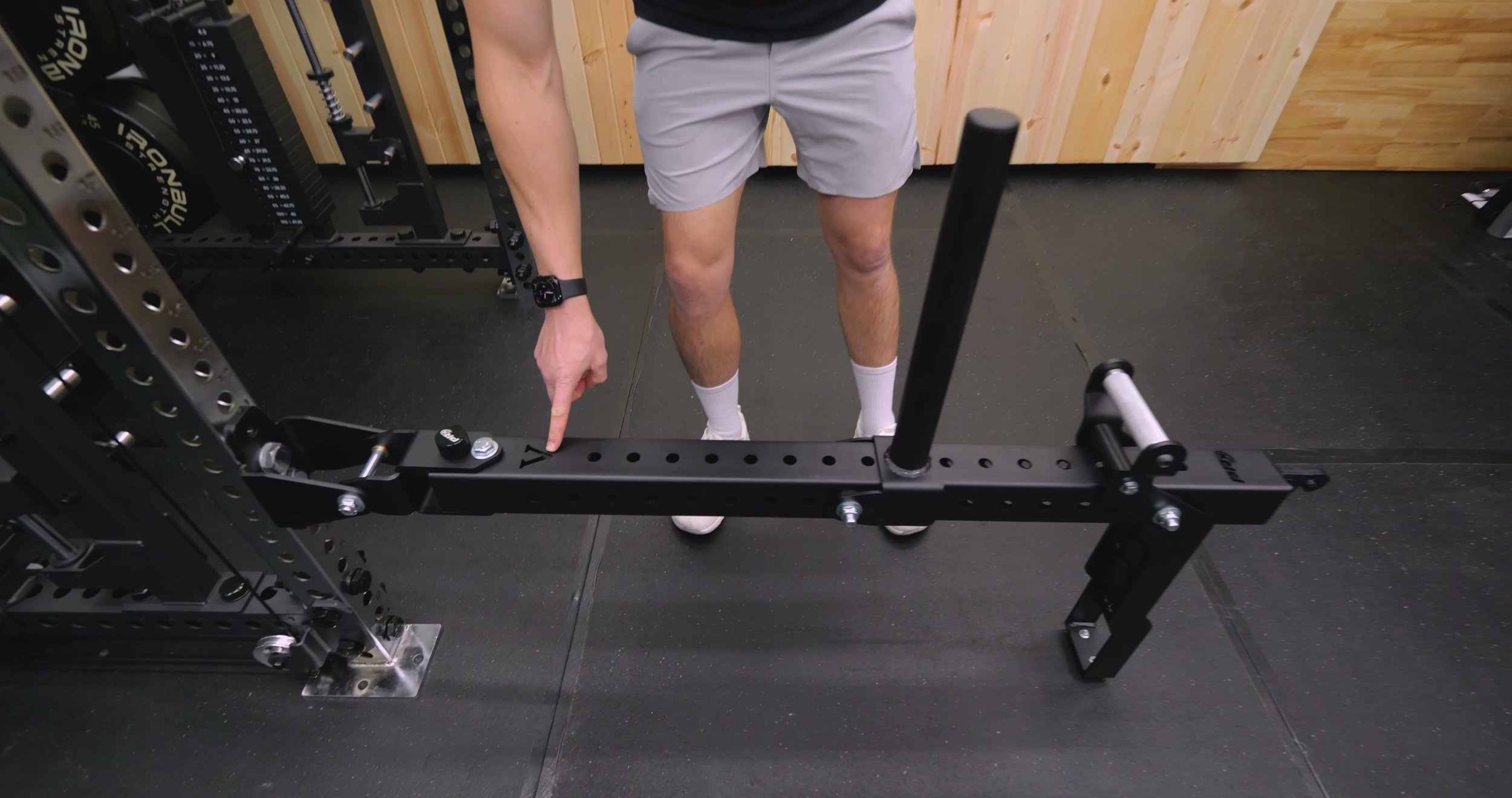
The biggest standout feature is the kickstand + notch setup. Anyone who’s done belt squats knows the usual compromises: awkward clip-in points, DIY solutions to hold the arm up, fiddling with straps while you’re gassed, or trying not to get smoked getting out of the bottom. This system basically deletes that friction.
Because you’re always pulling up against the arm’s force, you can loop the carabiner into the notch quickly, stand up into the belt squat, and start your set. When you’re done, you flip the kickstand down, lift the carabiner out from under the lip, and you’re free. It’s one of those things that’s almost annoyingly obvious once you use it—simple, but it works.
The belt itself matters here too. They include a Spud Inc. belt squat belt, and it’s the newer padded version—so you’re not dealing with the older style that can dig into you. I’ve loaded it heavy and didn’t feel like I needed to add extra padding or a cover.
From a training feel standpoint, you can use it in two main ways:
A more traditional pendulum pattern where you’re arcing out and up.
A more vertical “up and down” style, closer to how a linear belt squat feels.
I started with the pendulum feel because, for me, pendulum patterns tend to be kinder on hips/knees/back when I’m loading heavy. Over time, I actually came to like the more vertical up-and-down with a slight arch—on this setup, it feels really natural and strong.
The other huge win is space. I don’t say this lightly: in a home gym, space is almost invaluable. People can sometimes stretch budgets, but they can’t stretch a basement wall. The stored profile is roughly 53” x 8” x 8” in your setup, which is exactly the point—leave it installed, fold it up, and keep your gym usable.
Training Use Cases
This setup makes the most sense for:
Heavy belt squats when you want leg volume without loading your spine the same way you would with back squats.
Home gym programming where you want a “third leg day option” that doesn’t require a dedicated machine footprint.
Users who want fast setup between sets (especially when you’re tired and don’t want to fuss with rigging).
It also pairs well with simple add-ons like wedges if you want to bias the pattern more like a squat or tweak your mechanics.
Tradeoffs and Limitations
The main limitations are directly tied to the “Profile” concept:
Because it folds for storage, there isn’t an obvious place to permanently add additional weight horns without increasing the stored profile.
The unlocked/free-swinging mode is useful for a little freedom, but it’s not something I’d treat like true lever arms where you’re planning big off-axis movement.
If you’re on a metric rack, you may need to experiment with hole placement so the storage bracket sits cleanly—my first placement caused some scraping and paint damage until I adjusted it.
Value and Alternatives
At $550 with the belt, weight horn, kickstand, and the pivot/lock option included, the value here is that it’s a complete belt squat solution out of the box.
People will compare it to things like the Fringe Sport Mammoth. My take is: once you start adding the features that make this one so usable (upright storage, kickstand workflow, comparable functionality), you’re not living in totally different price worlds anymore—you’re usually within a pretty small gap. At that point, you’re choosing based on how you want it to live in your gym day-to-day.
I’ve also recently reviewed bigger standalone leg options like a pendulum squat machine, and for most home gym owners, I’d steer them toward this style of attachment specifically because it doesn’t dominate the room.
Who Should Buy This
Home gym owners who want a belt squat but refuse to give up the floor space for a big dedicated machine.
People who care about setup speed and safety when you’re fatigued.
Anyone running a 3x3 rack ecosystem who wants a rack-mounted leg solution that can stay installed.
Who Should Skip It
Lifters who know they want a belt squat setup specifically built for wide off-axis movement patterns.
People who want an obvious “expandable” loading system beyond the main horn without any added attachments.
Anyone unwilling to do minor dialing-in on a metric rack to get the storage bracket fitment perfect.
Final Verdict
If you want heavy belt squat training in a home gym without sacrificing the usable space, the PRx Profile Belt Squat delivers exactly what the name implies: it’s built to disappear when you’re not using it. The kickstand + quick-release notch is the feature that changes everything—this is one of the least annoying belt squat setups I’ve used, and that’s why it’s earned a spot in the conversation.
Affiliate Disclosure
This article may contain affiliate links. If you buy through them, The Jungle Gym Reviews may earn a small commission at no extra cost to you.