Mikolo LR01 Lateral Raise & Chest Fly Attachment Review
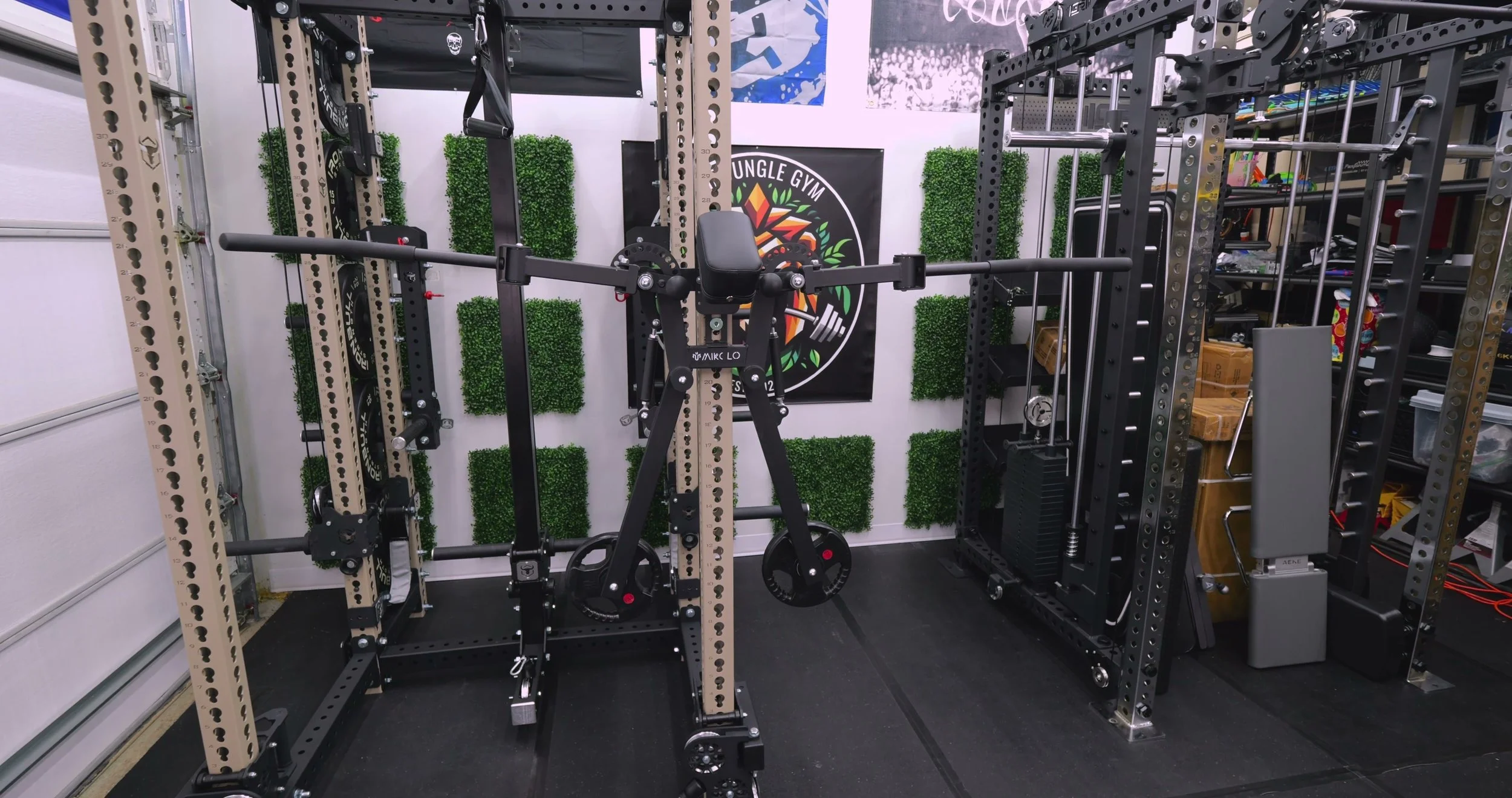
This product was in-house tested by Michael at The Jungle Gym Reviews.
The Mikolo LR01 works best as an affordable way to add machine-style lateral raises to a power rack, with chest flies as a secondary bonus. The lateral raise strength curve is surprisingly good for a plate-loaded design, while the chest fly is more limited at the stretched position. The biggest tradeoff is convenience: while technically removable, it’s not something you’ll want to take on and off frequently. If you have the space to leave it mounted and want more shoulder isolation without buying a dedicated machine, it’s a solid value.
Quick Specs
Attachment Type: Rack-mounted, plate-loaded
Compatible Rack Sizes: 2x2, 2x3, 3x3
Hole Size Required: 1-inch
Movements: Lateral raise, chest fly
Load Type: Olympic plates (with plastic sleeves) or standard plates
Max Load (Per Arm): ~90 lb
Loadable Sleeve Length: ~8–9 inches
Headrest: Adjustable, removable
Price: Under $300
Where to Buy the Mikolo LR01
Check current pricing and availability directly from the official product listing.
My Real-World Experience
The LR01 is conceptually similar to other rack-mounted lateral raise systems I’ve used in the past. Two lever arms mount to the rack, each holding plates, and your arms move those levers through the range of motion. What matters most with this kind of design is whether you can get usable tension at the bottom of the movement—and Mikolo handled this better than expected.
The multi-angle pop-pin system lets you choose where the handles start. By crossing the arms slightly or setting them higher, you can preload the movement so there’s resistance right from the bottom. That makes lateral raises feel far more “machine-like” than a lot of budget plate-loaded options.
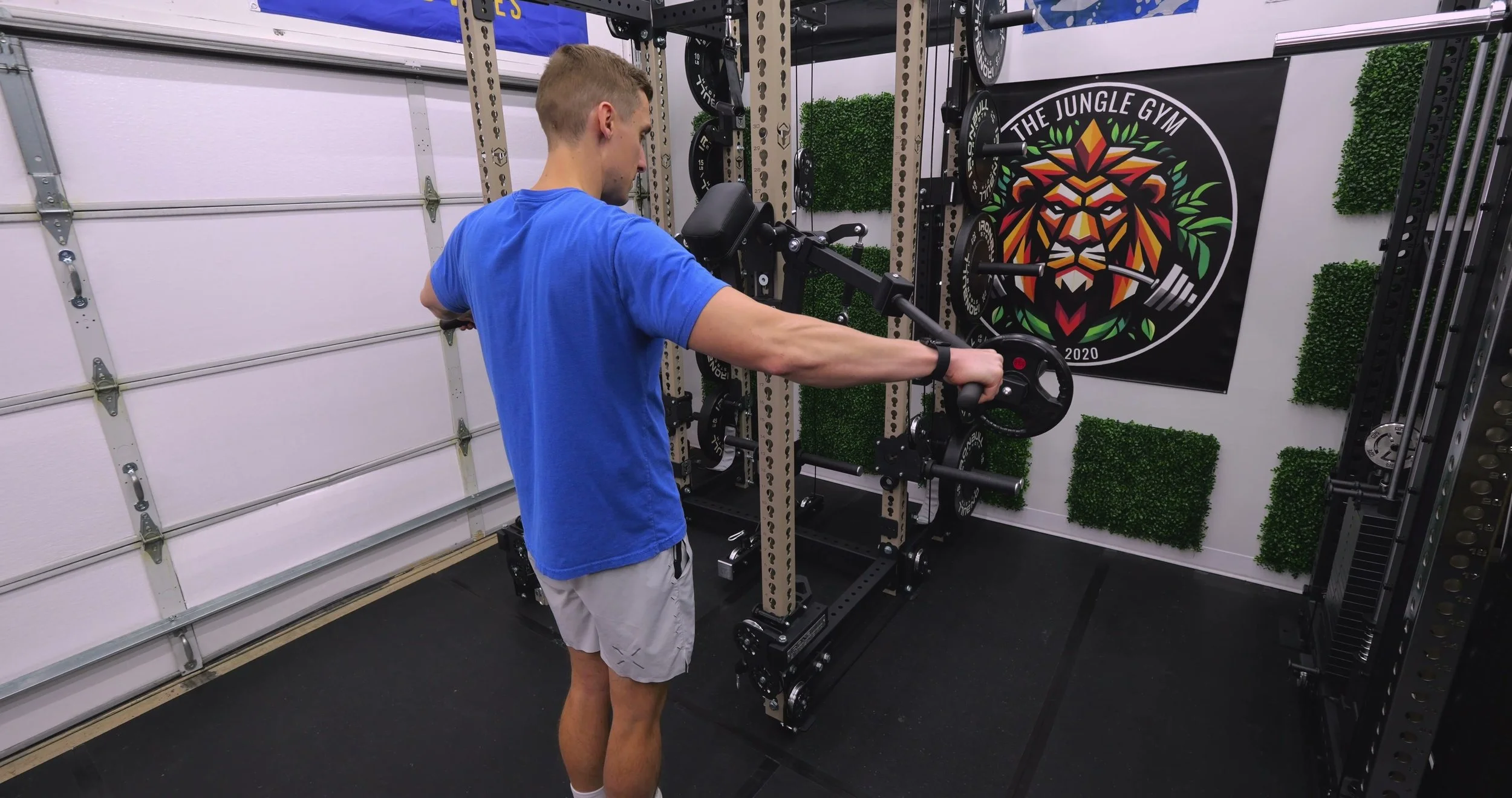
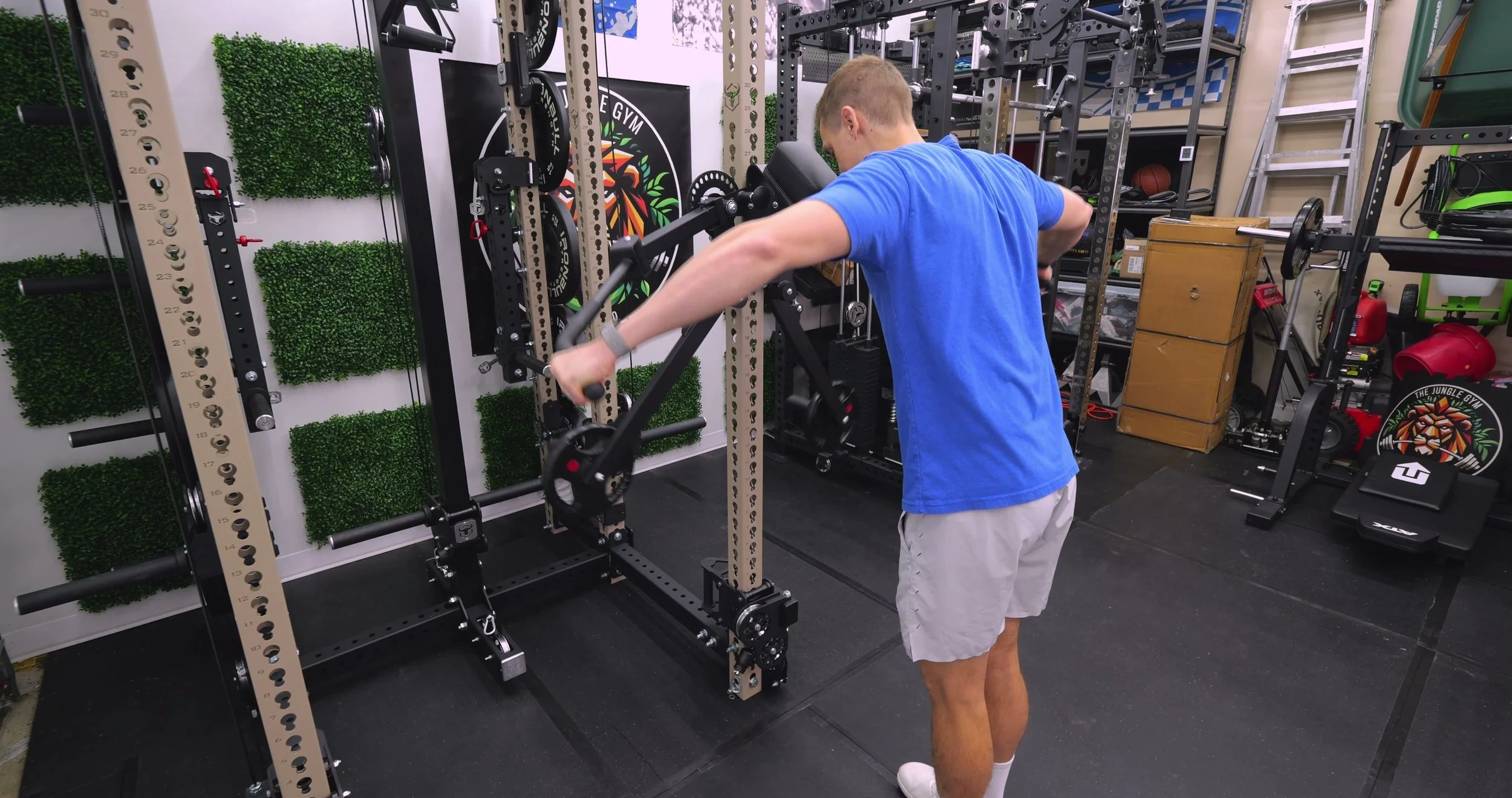
I typically use it standing, sometimes upright and sometimes bent over. When you hinge forward, you get more side-delt and rear-delt involvement, similar to a bent-over dumbbell fly. The adjustable headrest helps here—it gives you a consistent point of contact and changes the feel just enough to make it worthwhile.
One of my favorite ways to use it isn’t even the handles. I’ll put my fists directly against the arms. It feels odd at first, but it increases tension early in the movement and takes wrist angle out of the equation. It’s not how it’s “meant” to be used, but that’s part of the appeal of rack attachments—you can adapt them to what feels best.
Chest Fly Performance
Switching from lateral raises to chest flies is straightforward: it’s all about where you set the arms using the pop-pin adjustments. In practice, only the outer adjustment positions really make sense. The middle settings don’t give you a meaningful fly or lateral raise.
Chest flies are usable, but clearly secondary. The resistance curve isn’t great at the deep stretch—you can move the arms with very little effort early in the motion. Once you reach roughly 35–45 degrees, tension ramps up and you get a solid contraction.
Standing upright feels more like a high-to-low cable fly. Using the headrest changes the angle slightly and lets you bring the handles forward or slightly behind your body. The hinges allow your arms to follow a natural path, which helps, but you’re still giving up some stretch compared to cables or a selectorized pec deck.
Setup, Mounting, and Space Requirements
This is where the biggest compromises come in. While the LR01 is technically removable, it’s not something you’ll want to take on and off between sessions.
Mounting uses a main 1-inch threaded pin through the rack and a secondary adjustable locking bracket that adapts to different rack widths and hole spacing. That design is actually very clever—it’s why this works on so many rack sizes—but it still takes time.
Realistically, once it’s on, you’ll leave it there.
You also need space. With a 10-lb plate loaded and the arms fully extended, you’re looking at roughly 30 inches of clearance for full range of motion. Depending on your rack layout, that can interfere with other lifts if you don’t plan around it.
The unit itself isn’t very heavy—likely under 40 lb—but finding a good storage spot when it’s off the rack isn’t trivial either.
Tradeoffs & Limitations
The lateral raise is clearly the star of the show. Chest flies are usable, but not the main reason to buy this.
Resistance is limited by design. About 90 lb per arm is more than enough for accessory work, but this isn’t a strength movement.
Handle positioning and arm hinges take a bit of learning. Once loaded, the system stabilizes itself well, but there’s a short adjustment period.
While removable in theory, it’s best treated as semi-permanent. Frequent removal will get old fast.
Value & Alternatives
For under $300, it’s hard to argue with what you’re getting. Dedicated lateral raise or pec fly machines take up real space and cost significantly more. Compared to other rack-mounted options in this category, the LR01 delivers very similar functionality at a lower price point.
If you already rely heavily on dumbbells and don’t mind free-weight isolation, you don’t need this. But if you like machine-style movements and want them without adding more floor equipment, this is one of the cheaper ways to get there.
Who Should Buy This
Home gym owners with limited space
Anyone wanting better lateral raise isolation than dumbbells
Rack owners who are okay leaving attachments mounted
Lifters looking for accessory variety at a low cost
Who Should Skip It
Anyone constantly reconfiguring their rack
Lifters expecting a perfect pec fly strength curve
Gyms with extremely tight clearance around the rack
Final Verdict
The Mikolo LR01 isn’t perfect, but it does exactly what it promises for the price. As a lateral raise attachment, it’s legitimately useful and surprisingly effective. Chest flies are a bonus, not the main event. If you have the space to leave it mounted and want more isolation work without buying another machine, it’s an easy recommendation.
Affiliate Disclosure
Some links may be affiliate links, which help support the site at no additional cost to you.