GetRX’d RX3 Tornado Smith Machine Rack Review
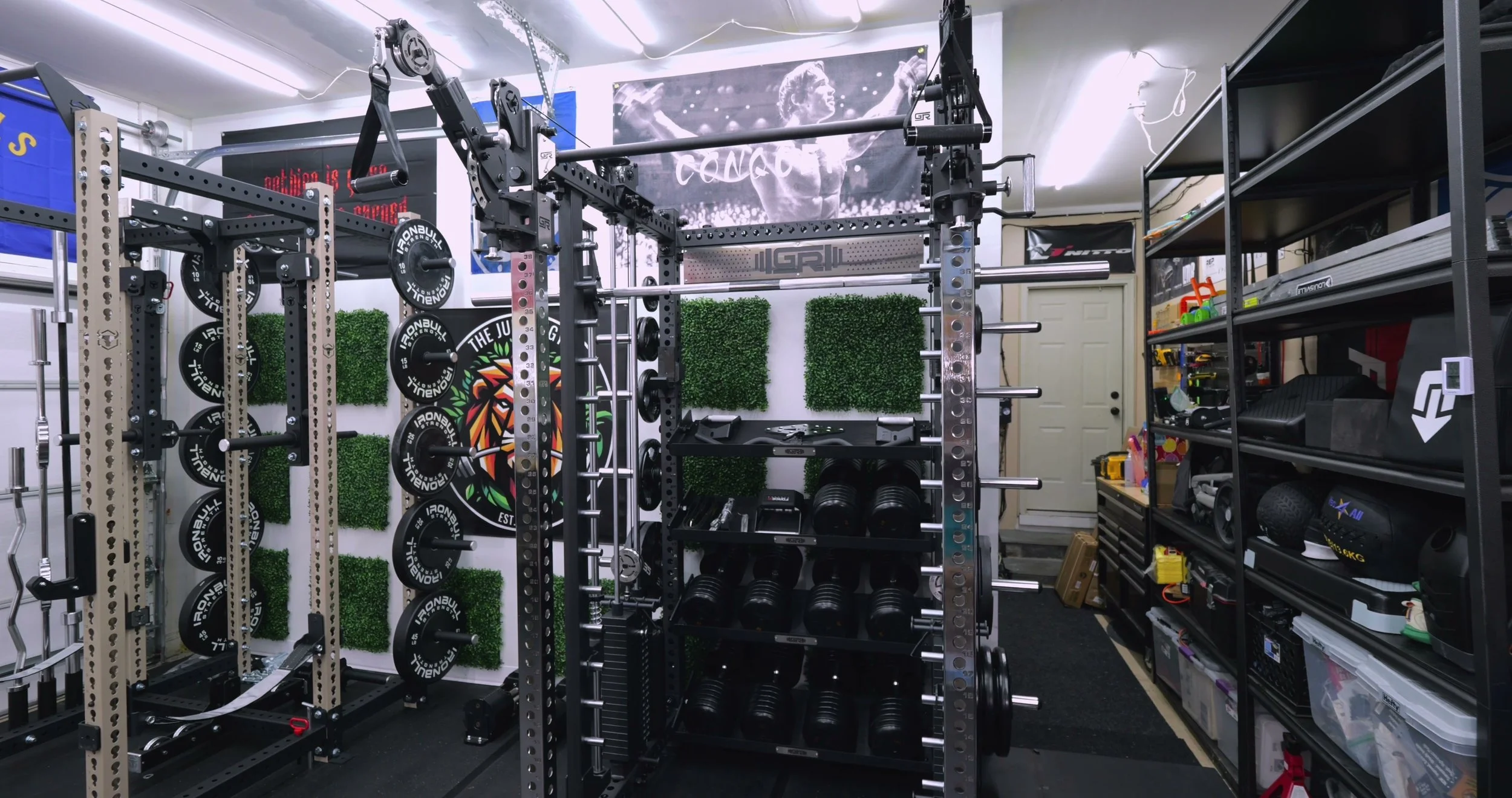
This product was in-house tested by Michael at The Jungle Gym Reviews.
If you want a single rack to cover cables, a Smith, and a ridiculously flexible set of adjustable trolley arms, this is one of the most complete “all-in-one” setups I’ve used. The main tradeoff is practical friction: the Tornado Arms take some technique to move smoothly, and the Smith machine design has real clearance and bottom-range considerations depending on which version you’re looking at. It’s best for serious home gym owners who want machine-like cable training without dedicating separate floor space to standalone stations. If your priority is dead-simple adjustability or you need perfect Smith low-end ROM without platforms, you should hesitate.
Quick Specs
Price: $3,967 (94” Smith version)
Height: 94” (full size) or 86” (compact)
Width: 48”
Depth: 48”
Frame: 3x3 uprights, 11-gauge steel
Hole Size: 1”
Hole Spacing: 2”
Weight Capacity: 1,400+ lbs
Weight Stacks: 200 lbs per side (400 lbs total)
Cable Ratio: 2:1 (100 lbs effective per side)
Smith Bar Diameter: 30mm
Smith Motion: Vertical only
Tornado Arms Horizontal Rotation: 180°
Tornado Arms Width Range: 10” to 81” apart (center to center)
Trolley Protection: UHMW pads (4 sides), no rollers
Shipping: Free
Where to Buy the GetRX’d RX3 Tornado Smith Machine Rack
Check price and availability on the official product page.
My Real-World Experience
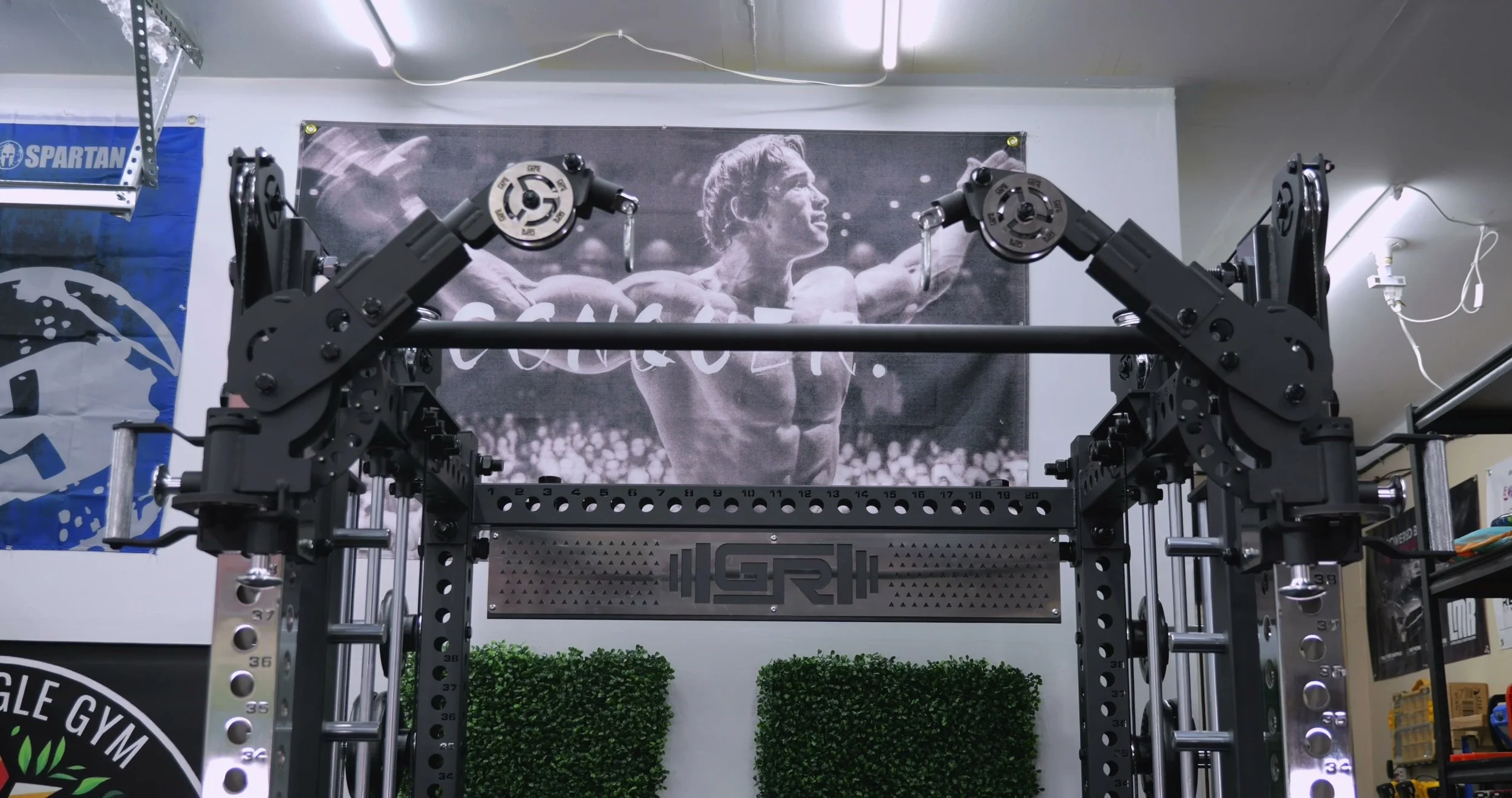
The entire reason this rack is a hot topic is the Tornado Arms, and after living with them, I get the hype. The big difference versus “normal” trolleys is that you’re not just moving a pulley up and down—you’re changing the entire line of pull by rotating the arms left-to-right, dialing the width way wider than most functional trainers, and then fine-tuning height and angle. That’s why I kept finding better setups for the same movements week after week. Once you get used to thinking in angles instead of fixed cable columns, it opens up a lot.
Where people get frustrated is the physical feel of moving the arms, especially upward. The trolley rides on UHMW pads instead of rollers, so if you try to muscle it one-handed from a bad leverage point, it can feel heavier than it should. The workaround is honestly just technique: two hands, control the torque, and don’t let the arm bind into the upright as you slide. It’s not “effortless,” but it’s also not a dealbreaker once you learn it.
Cable feel is a strong point here. Even with all the routing required for the stacks and connection points, the system feels smooth and consistent, including on the eccentric where you usually notice cheap pulley paths.
Training Use Cases
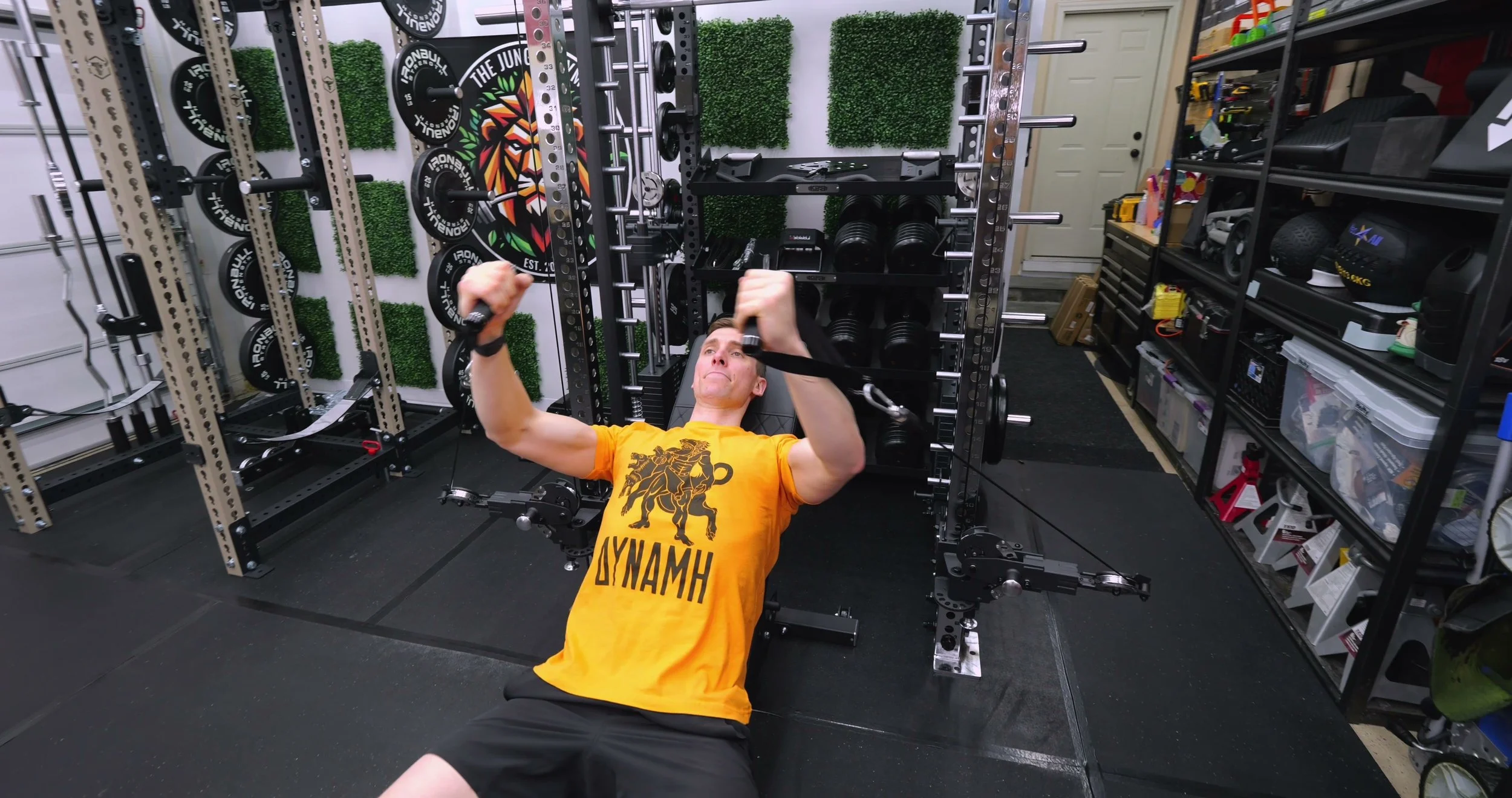
If you train with cables a lot, the Tornado Arms are the feature. They let you do your standard work (flies, rows, pushdowns, pulldowns), but the win is how easily you can match the pull to your body instead of forcing your body to match the machine. You can set the pull point directly over your head for pulldowns, shift it forward for different lat paths, go extra-wide for flies, and build better single-arm lines that actually cross the body instead of collapsing into a central rope attachment.
This is also one of those setups where “machine-style” isolation becomes more realistic in a home gym footprint because you can brace against the rack and set angles precisely. I found myself using it for almost everything because the setup kept improving as I experimented.
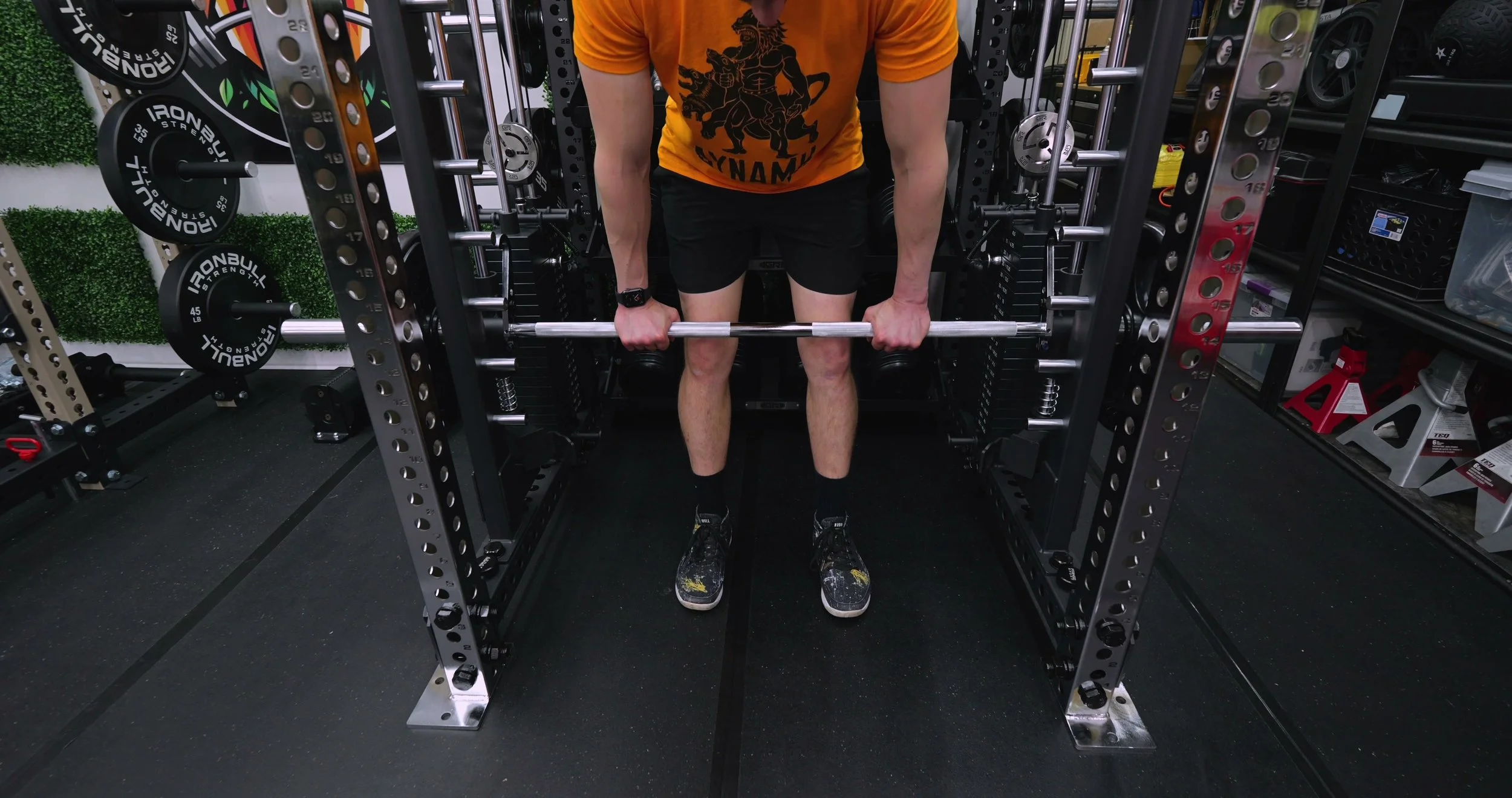
The Smith machine adds a second training lane for pressing, squatting patterns, and controlled accessory work. It’s a vertical-only path, so you’re getting the predictable Smith feel rather than a hybrid/free-track design.
Tradeoffs & Limitations
The biggest day-to-day compromise is adjustability friction. The Tornado Arms can be heavy to move if you treat them like a simple trolley, and the lack of rollers means the “feel” depends on how you apply force and where the arm is sitting. If you want the fastest possible adjustments for multiple users back-to-back, you’ll notice this.
Smith clearance is the second big tradeoff. On the version I’m describing, the latching hardware and interior geometry can get close to your elbows on some presses, especially if your setup forces you to face a certain direction. It’s not an automatic dealbreaker, but it’s something you stay aware of during pressing.
The Smith low range is also a real consideration. In the earlier version I discussed, the bottom position could force you into using a platform for RDLs and deadlift-style patterns. The updated version addresses the height limitations and storage height concerns, but the key point is that the Smith experience depends on which revision you’re buying.
Finally, this is a large, dense footprint. It’s 48” x 48” before you start accounting for storage shelves, dumbbells, plate storage, and wall clearance. If you’re tight on space, the “all-in-one” benefit can turn into a layout challenge.
Value & Alternatives
At this price, the value only makes sense if you actually want the all-in-one approach: rack training plus smooth stacks plus the unique angle control of the Tornado Arms plus a Smith lane. If you mainly want a functional trainer, you can spend less and simplify your life. If you mainly want a rack, you can spend less and keep your training clean and straightforward.
Where this earns its spot is when you want a single footprint to cover “rack basics” and “machine-like cable work,” and you care about angle versatility more than you care about the fastest, lightest adjustments. The Tornado Arms are the differentiator that changes how the rack trains.
Who Should Buy This
Buy this if you want one rack to be your entire cable station, your Smith lane, and your primary rack for years—especially if you like experimenting with cable angles, width, and movement paths.
Who Should Skip It
Skip it if you want the simplest possible adjustments, if multiple people will constantly be moving the arms and you hate any friction, or if you need guaranteed Smith low-end ROM without ever using a platform.
Final Verdict
As an all-in-one, this rack is defined by the Tornado Arms: they turn cable training into something far more adjustable and “machine-like” than most home setups. If you’re buying it for that versatility and you’re okay learning the movement technique, it’s a seriously capable system.
Affiliate Disclosure
Some links may be affiliate links. If you buy through them, I may earn a small commission at no extra cost to you.