Freak Athlete Hyper Pro Review (GHD Attachment + Leg Developer)
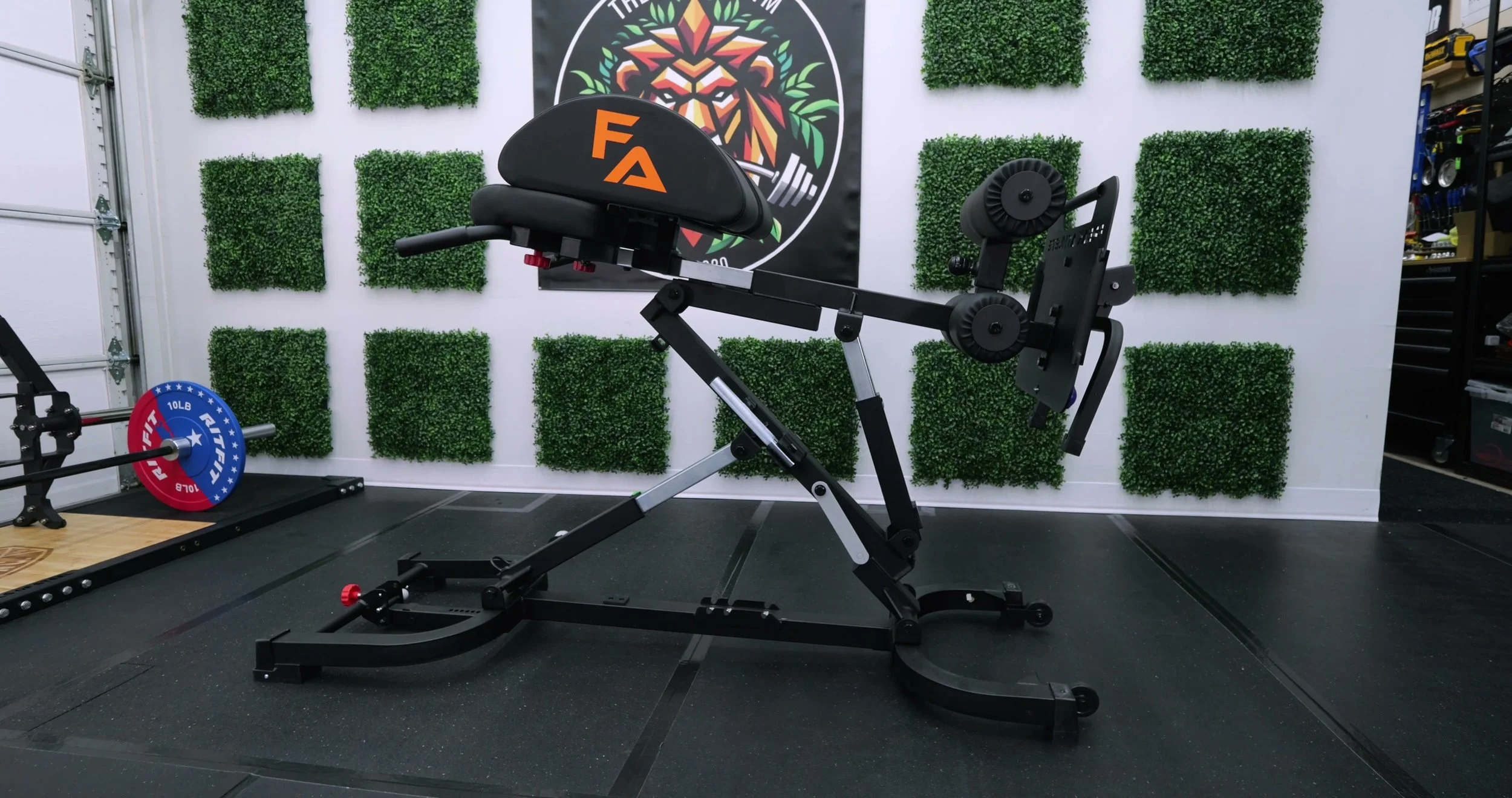
This product was in-house tested by Michael at The Jungle Gym Reviews.
If you’re space-limited but want real lower-body machine variety at home, the Hyper Pro is one of the most clever “one footprint, many jobs” pieces I’ve owned. It’s not perfect, and there is a learning curve, but after ~6 months it went from “cool but annoying to set up” to “I’m genuinely glad I own this.” The leg developer attachment is the biggest value-add for hypertrophy training (leg extensions + lying leg curls), and the GHD attachment adds legit posterior-chain work (GHD sit-ups, glute ham raises, reverse hypers) without needing three separate machines.
Quick Specs
Price (Hyper Pro Base Unit): $999 MSRP ($799 sale)
Frame: 14-gauge steel frame, 8-gauge steel footplate
Weight Capacity: 500 lbs (ASTM rated)
Machine Weight: ~108–110 lbs
Footprint (In Use): 65” L × 23” W
Footprint (With Leg Developer): ~84” L × 23” W
Stored Upright: ~23” × ~22” (~2’ × 2’)
User Height Range: 5’0” to 7’0”
Height Adjustments: 12 positions
Front Incline Levels: 14 levels (5°–45°)
Rear Angle: 0°, 20°, then 20°–45° in 5° increments
Warranty: Lifetime
Return Policy: 30-day free returns
GHD Attachment Price: $220 ($170 bundle)
GHD Height Compatibility: Full ROM for users 6’6” and shorter
Leg Developer Price: $350 ($300 bundle)
Leg Developer Weight Capacity: 225 lbs
Plate Compatibility (Leg Developer): Standard (1”) + Olympic (2”) with adapter
Upper Body Kit Price: ~$30 (eye bolt, handles, strap, carabiners)
Where to Buy / Check Price
Freak Athlete runs bundles and sales pretty often (and the “fully loaded” pricing is usually best when you buy the base + attachments together). If you’re comparing this to buying separate machines (GHD + reverse hyper + leg extension/curl), the Hyper Pro usually wins on total value and footprint even if you add the attachments.
My Real-World Experience
I don’t think I’ve ever owned a standalone piece of gym equipment that packs this much functionality into a single machine. This is the Freak Athlete Hyper Pro fully loaded with the GHD attachment and the leg developer, and together it basically turns into a “lower-body station” that can mimic a bunch of dedicated machines in one compact footprint. That’s what makes it exciting: lower body machines are usually expensive, huge, or both, and most home gyms don’t have the space (or budget) to buy separate dedicated options for everything.
I’ll also say up front: my perspective here might be different than other reviewers because I’ve trained primarily bodybuilding/hypertrophy style. A bunch of these movements (reverse hypers, GHD work, even Nordics) weren’t staples for me historically. That matters because this machine has a learning curve, and at first I honestly put it off. But after ~6 months, I’ve found ways to integrate it consistently, and my opinion has shifted a lot from month one to month six. If you’re in the camp of “I don’t do half of these exercises so I don’t need this,” I’d still consider it, because the leg developer alone can justify the whole thing for a lot of people who want better quad/hamstring isolation at home.
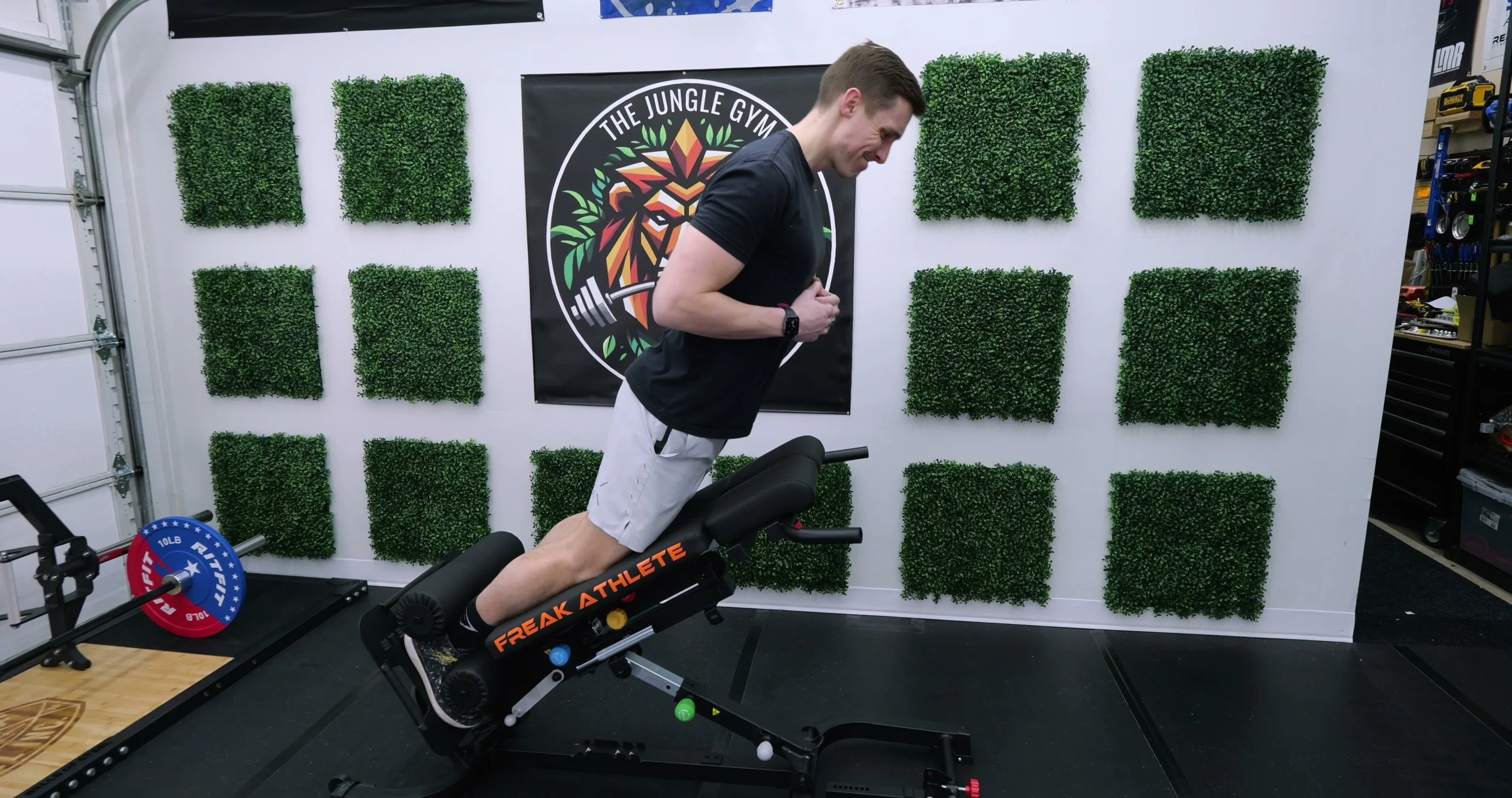
Base Hyper Pro: Nordics, Back Extensions, Decline Sit-Ups, Hip Thrusts
If you buy the Hyper Pro base unit by itself (no attachments), the big headline movement is the Nordic curl. A true Nordic on the floor is brutally hard, and what’s cool here is you can do regressions by starting at easier angles, then progress over time. You don’t need to add weight right away—difficulty scales naturally with angle and gravity. Lock-in is easy: the ankle/foot pad adjusts with a pop pin, and the padding is supportive enough that it doesn’t feel like your knees are getting punished. The pad material is smooth (not grippy), which I actually like because it doesn’t pinch or grab skin like some “super grippy” vinyl can, but it does show sweat/skin marks more easily.
Back extensions are the next “base” exercise, and setup is straightforward. You remove the main rectangular pad (loosen the knob, lift off), adjust the thigh pad height on the main shaft with the pop pin, and you can also slide the thigh pads left/right by loosening the knobs underneath each pad to fit your body. The movement feels stable, and the machine is solid front-to-back and side-to-side because of the wide frame and feet. The angle adjustments let you fine-tune difficulty without needing plates immediately, which is a nice feature compared to a fixed-angle back extension bench.
Decline sit-ups are doable by flipping the orientation and adjusting the angles, then putting the seat pad back on. Getting into position is the awkward part: you’re kind of sliding down while trying to hold yourself with the knurled baseplate handles and also get your feet locked in under the rollers. Once you’re in, it works, but it doesn’t feel as good as a dedicated decline ab bench that supports both the back of your knees and the front of your ankles. This gets the job done, just with a bit more “balance your body position” than I’d prefer.
Hip thrusts are one of the sleeper features. You move the leg pad to the front, bring the tube up, lock it with the detent pin, set the brace height, and now you’ve got a round, comfortable back support. If you’ve ever hip thrusted off a bench, you know the square edge and bench height can be annoying. This feels better on the back and is easier to “settle into.” The only real consideration is room: you need to orient the machine and barbell so you’re not cramped.
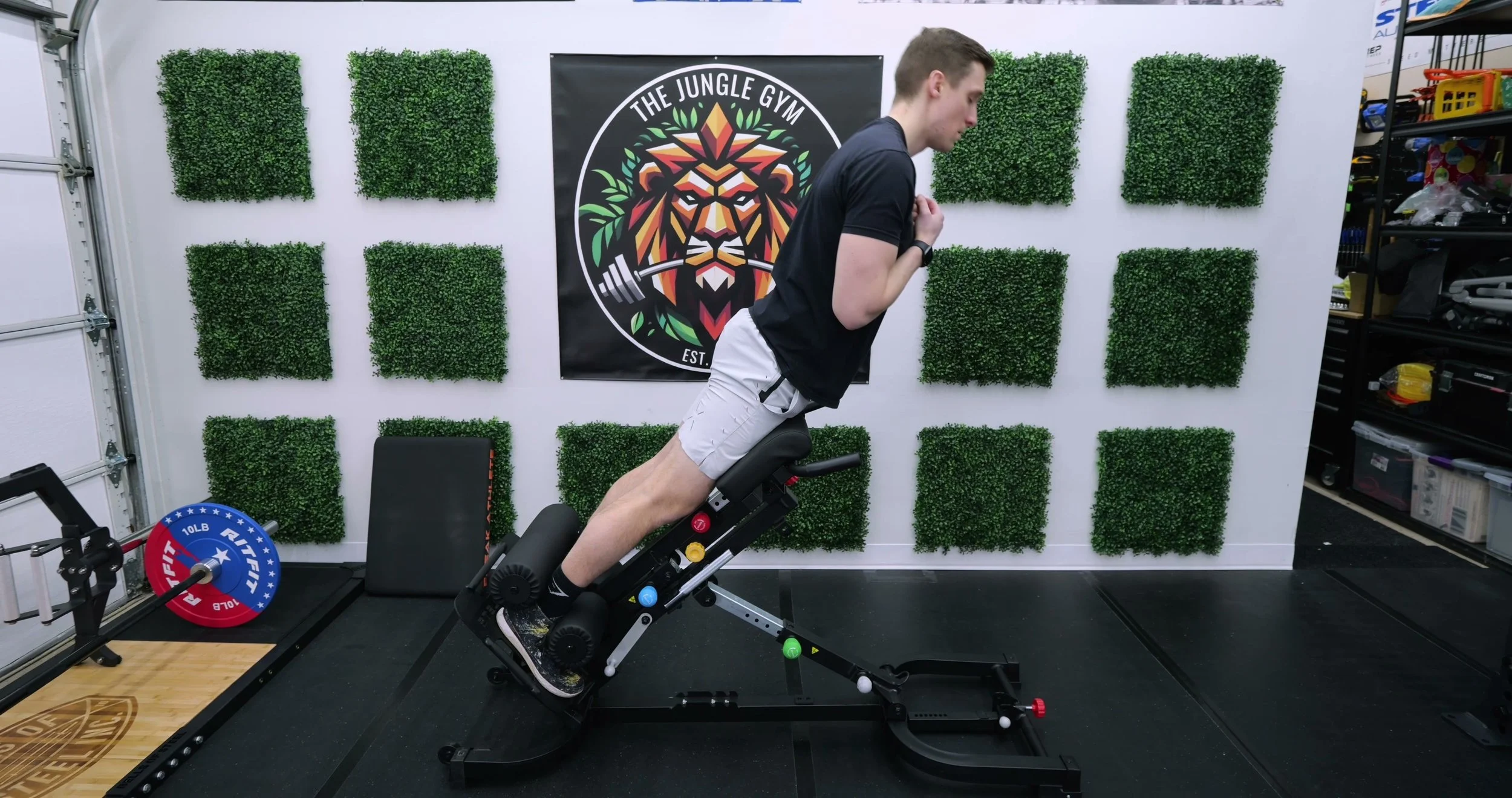
GHD Attachment: Glute Ham Raises, GHD Sit-Ups, Reverse Hypers
If you add the GHD attachment, it unlocks the “real GHD” movements: glute ham raises and GHD sit-ups. Setup is pretty quick: remove the main pad, slide on the GHD pad, lock it into the top hole, tighten down, and go. The machine also has knurled “step” pieces that magnetically store up out of the way, but I usually just leave them down because they don’t bother me and they’re helpful for getting into position.
The glute ham raise feels comfortable enough and absolutely hits the posterior chain, but personally it’s not the movement I find myself prioritizing most often. That’s a “me” thing more than a machine thing. GHD sit-ups, though, are more my style. The hyperextension aspect feels weird at first, but once you get the hang of it, it’s just another effective ab movement that’s easy to cycle into training.
The reverse hyper is the other big win with the GHD setup. I usually lower the back end of the machine a click or two to improve torso angle and foot clearance. I’m 6’2” and still have a couple inches to spare before feet would hit anything, and a buddy at 6’3” was also fine. You grab the narrow knurled handles on the baseplate and go. I was new to reverse hypers, but they’ve grown on me a lot—great for low back and glutes, and because it’s bodyweight-only here, it naturally pushes you into higher reps, which gives a nice pump and makes it a solid warm-up on leg day before squats.
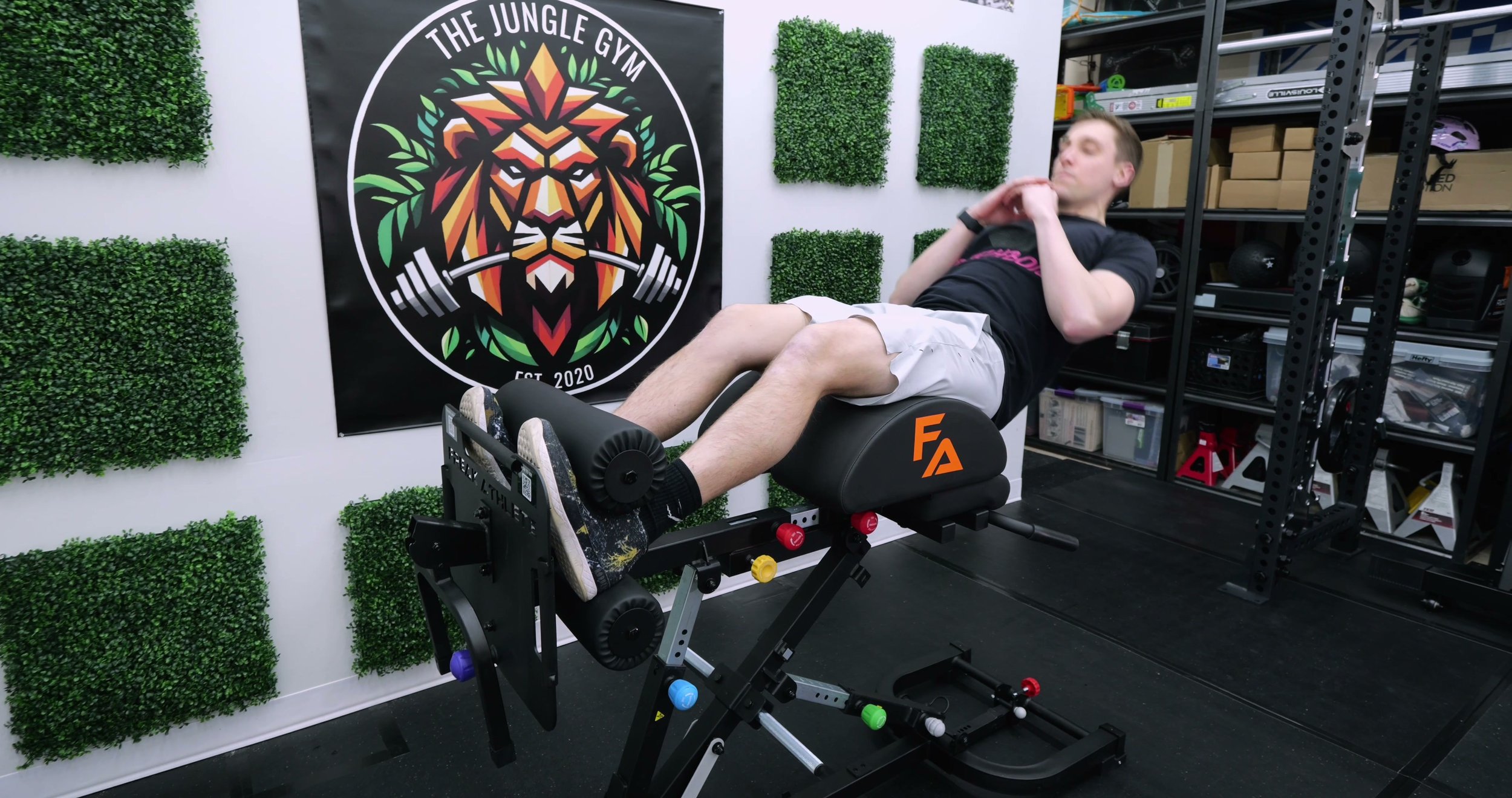
Leg Developer Attachment: The Most “Hypertrophy Useful” Upgrade
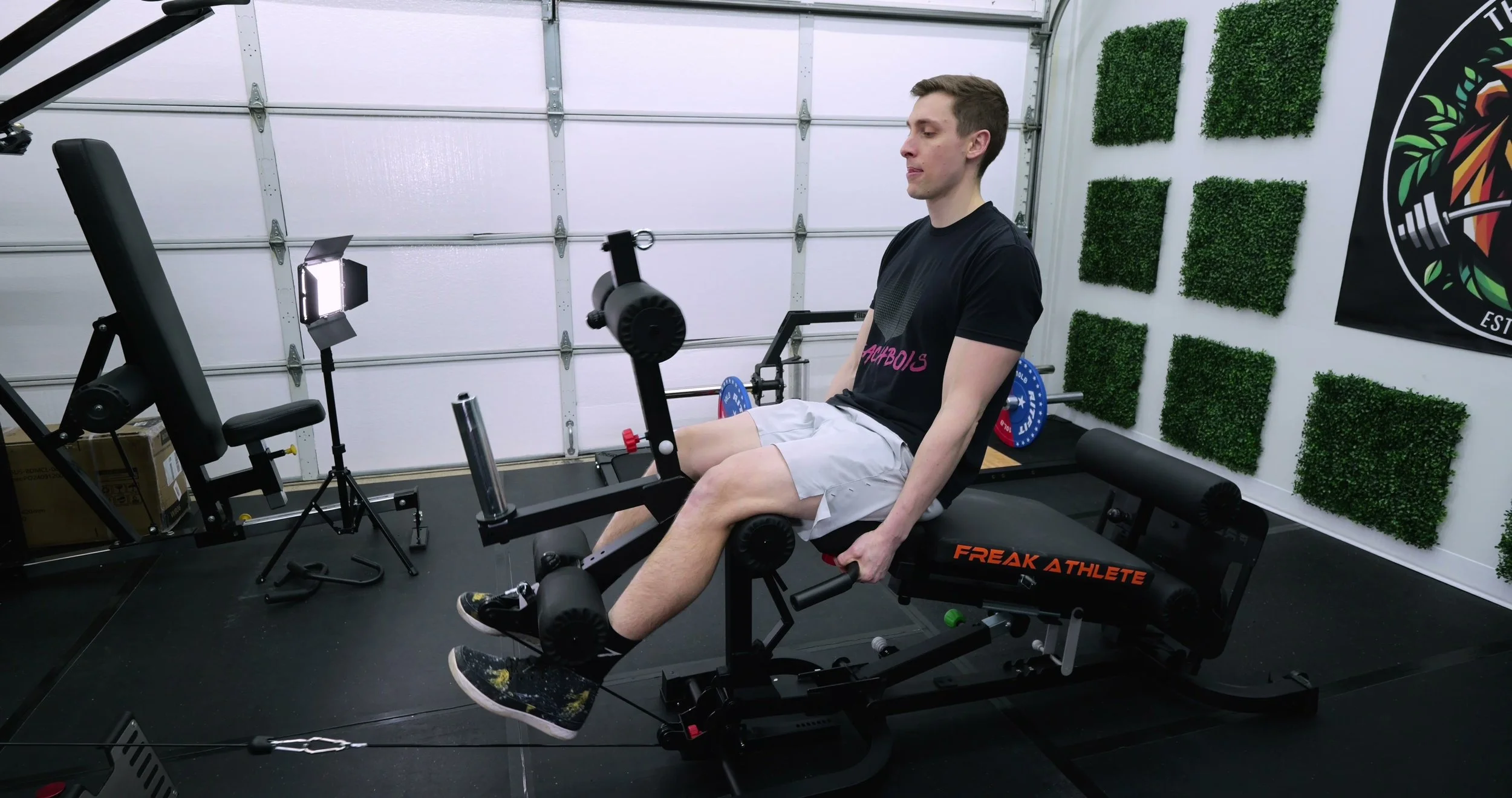
The leg developer is, in my opinion, the attachment that makes this machine make the most sense for a bodybuilding-style home gym. You lock it onto the frame, and because it attaches to the frame (not the seat), you can still adjust front and rear angles to dial in what feels best for each exercise. Freak Athlete also includes handle extensions that make a big difference for leg extensions, because the native grips aren’t ideally placed for bracing.
Leg extensions feel very even through the whole range—almost too even, because it stays hard near lockout rather than tapering slightly like a cam-based commercial unit. The good news is you can “fix” that feel by leaning slightly back, which both increases quad stretch and makes the top a bit more manageable so you can hold peak contraction better. For an attachment, it ends up feeling surprisingly legit once you find your position. Also, the leg curl bracket looks like it’s going to hit you during extensions, but it doesn’t. You can remove it with a detent pin if it bugs you visually, but I leave it on because it doesn’t interfere and I like the option to superset.
Lying leg curls feel more natural right away. The resistance curve is better for this movement because you’ve got more travel where it becomes easier near the top, which is what you want. I usually bump the front angle one more click (from what I use for extensions) to put my hips in a better position, similar to a traditional lying curl machine. The one annoyance: if you’re tall like me, the rear leg holder pad ends up kind of in your face, so I take it off and shift my head slightly to either side of the square tube. Mildly annoying, but worth it because the movement itself feels strong for a home-gym attachment.
The Honest Tradeoff: Learning Curve + Storage “Friction”
This is not a “set it and forget it” machine. There’s a real learning curve—front angle adjustments, rear angle adjustments, pad swaps, height and width knobs, attachment storage, detent pins, pop pins, plates, etc. It’s a lot at first. Freak Athlete tries to color-code things, which I appreciate, but there are so many knobs that early on it still feels daunting. The good news: after you learn it, it becomes second nature. I’m not thinking about colors or instructions anymore—setup is fast because I just know what does what.
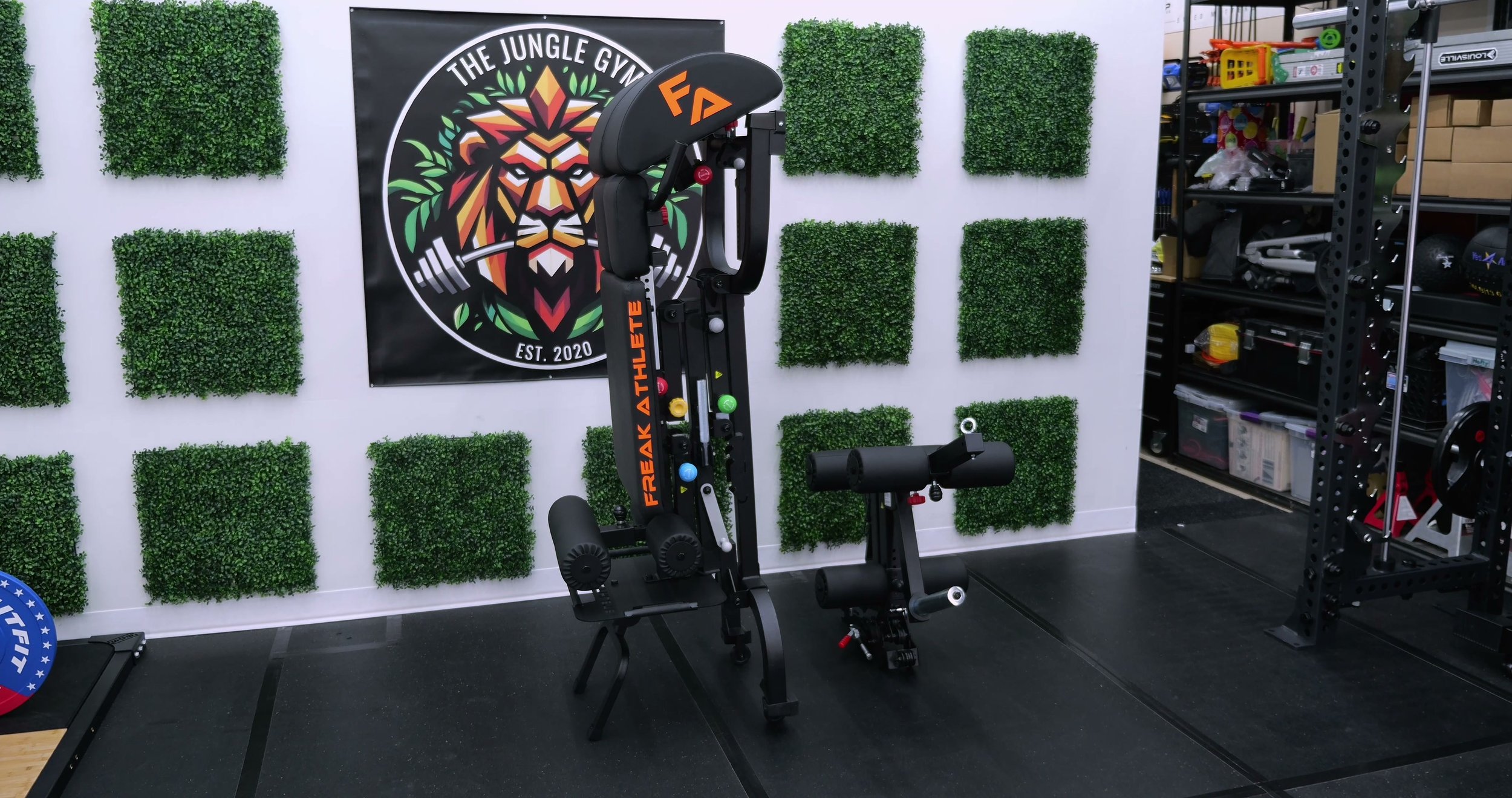
The other real-world friction point is storage. Yes, it stores upright in about a 2’×2’ footprint, which is awesome. But storing it upright and setting it back down takes a bit of time, and doing that daily can be annoying. Plus, you still have to store the leg developer somewhere, and it takes up a meaningful amount of space on its own. This is the unavoidable tradeoff of “one machine does everything”: the machine footprint is small, but the ecosystem of attachments can start taking up real storage space—especially if Freak Athlete continues adding more upgrades (which I actually hope they do).
Final Thoughts
If you want a simple, always-ready dedicated machine experience, the Hyper Pro is not that. If you want a space-efficient lower body station that can meaningfully expand your exercise menu at home—and you’re willing to learn it and live with attachment storage—this is one of the best values I’ve seen. It genuinely grew on me over time, and that’s rare for equipment. Month one, I respected it. Month six, I’m happy it’s in my gym.
Affiliate Disclosure
Some links on this site are affiliate links, which means I may earn a small commission if you purchase through them at no extra cost to you.