Dialed Motion Ibex Cable System Review
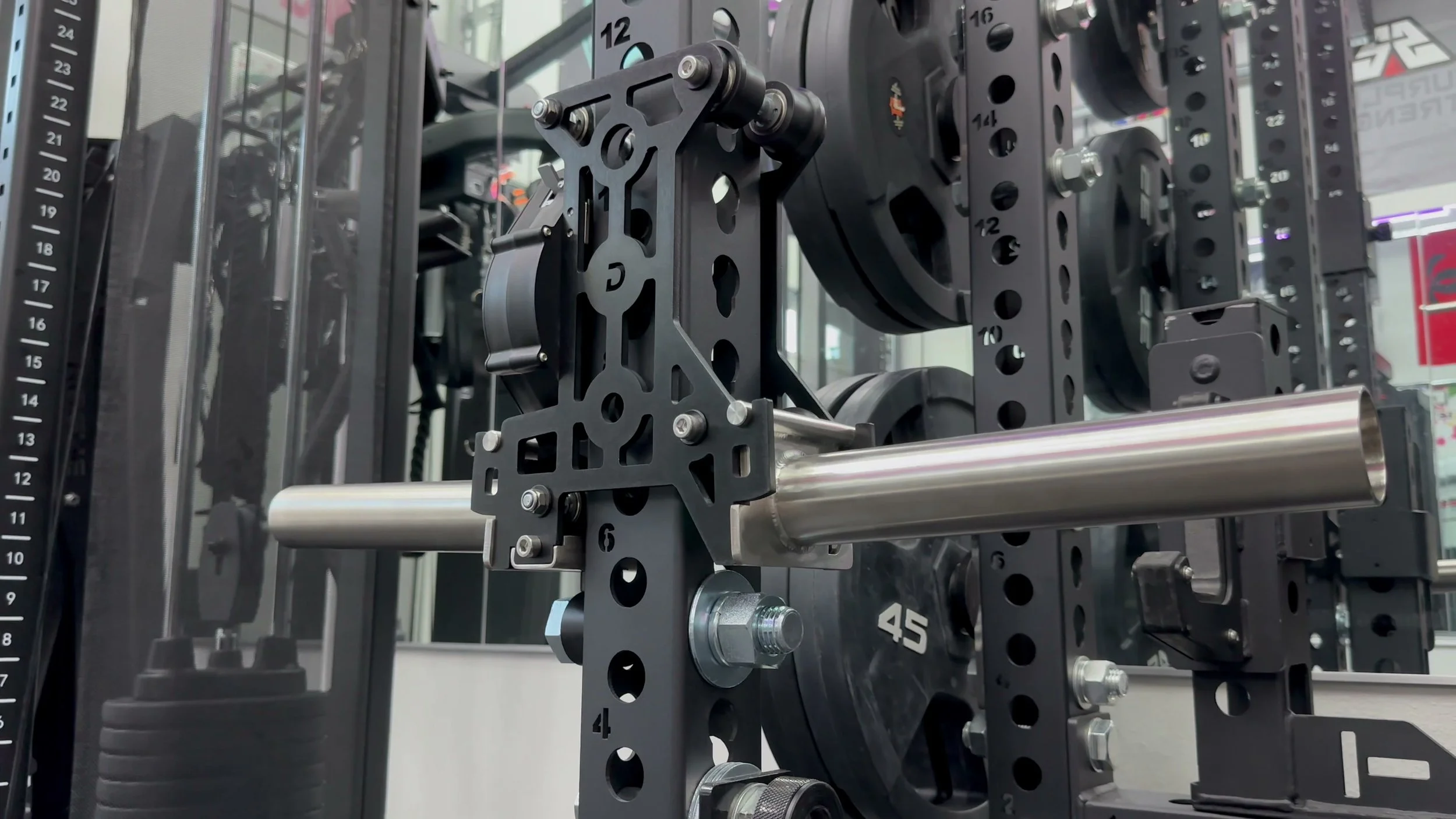
The product was in house tested by Michael at The Jungle Gym Reviews.
If you want your rack to feel like a real functional trainer without adding floor footprint, the Dialed Motion Ibex is one of the smartest solutions I’ve used. The smoothness and “OEM-like” feel are the headline, and the cable retractor concept makes it genuinely fast to set up, adjust, and move between exercises. The biggest tradeoff is price and access: it’s not cheap, and it runs on preorder windows, so you can’t always buy it on impulse. This is best for serious home gym owners with a 3x3 rack who want premium cable work without dedicating space to a standalone functional trainer. If you want the cheapest pulley setup possible—or you hate preorders—you should hesitate.
Quick Specs
Ibex (1-Side) Price: $699
Ibex (2-Sides) Price: ~$1,398
Sidewinder (1-Side) Price: $524
Sidewinder (2-Sides) Price: ~$1,048
Weight Capacity: 300 lbs
Pulley Ratio: 1:1
Cable Length (Retractor): 21 feet
Rack Compatibility: 3x3” and 75x75mm
Hardware Options: 5/8” or 1” holes
Trolley Base Weight: ~7.5 lbs (measured)
Trolley + Weight Horns: ~12 lbs (measured)
Height Added to Rack: ~1” past top of rack
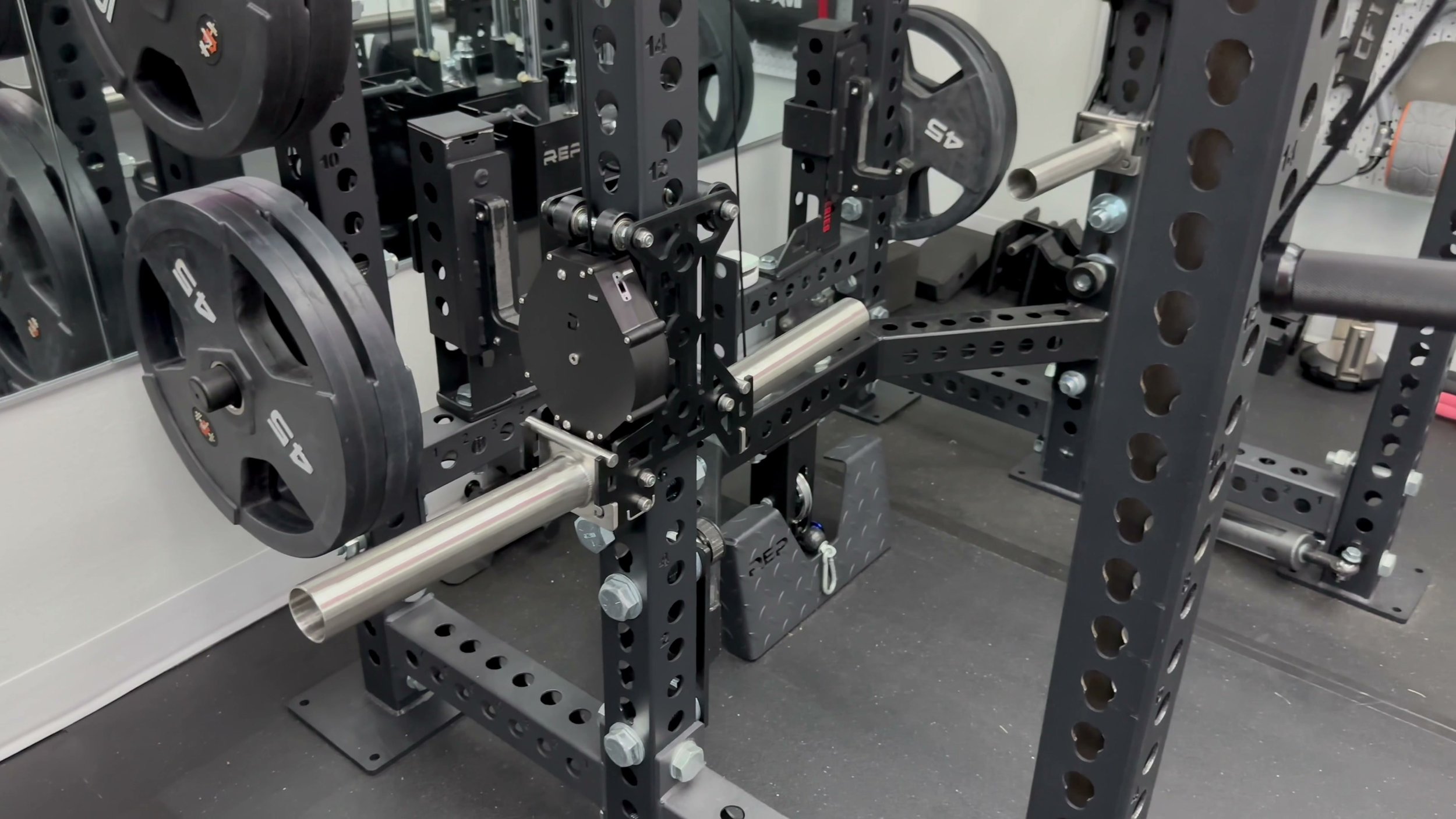
Weight Horn Protrusion: ~13.5” inside and outside rack
Trolley Material: Aluminum with POM roller bearings
Finish: Matte black, laser-cut logos, brushed hardware
Cable Retractor Price: $169
Trolley Price: $269
Carriage Price: $159
Single Pulley Mount Price: $69
Upper Arm Price: $129
Belt Squat Attachment Price: $109
Roller Footplate Price: $259
Availability: Preorder basis
Where to Buy the Dialed Motion Ibex Cable System
Check price and availability since preorder windows and pricing can change.
My Real-World Experience
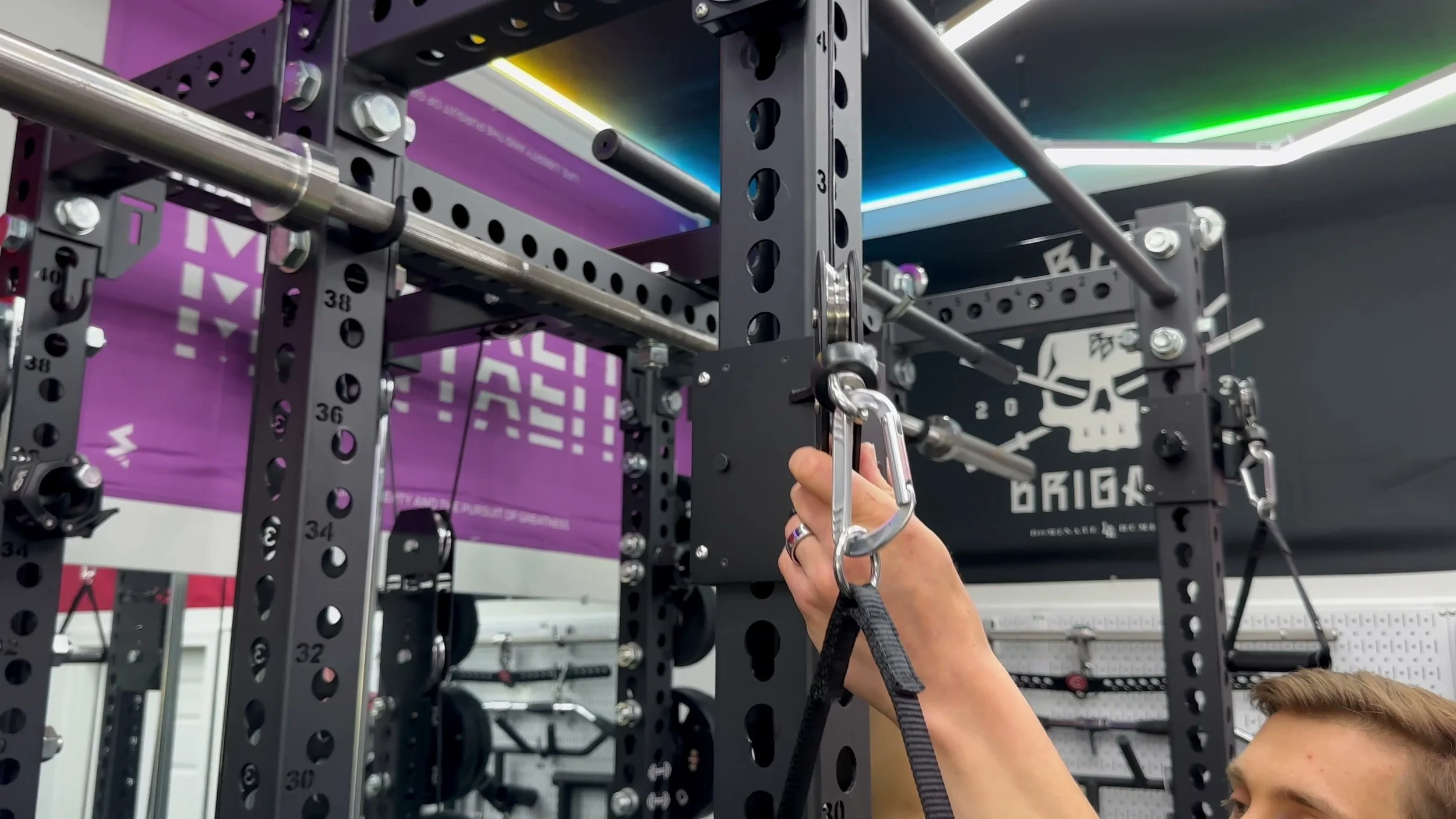
This is one of those products where the engineering shows up immediately. The Ibex doesn’t feel like a “strap pulley you added to your rack.” It feels like a purpose-built rack attachment that happens to be modular. The cable retractor is the whole magic trick: you get a long cable run without having to custom-size cables for your rack, and you can move the working height quickly without re-rigging your setup every time.
Setup is more involved than cheap pulleys, especially if you’re on a 75x75mm rack, because you’re dialing in the trolley fit so it slides tight with minimal play. But once it’s adjusted, it stays adjusted, and the day-to-day use is fast. In practice, my flow is exactly what I want from a rack-mounted cable system: load plates, unlock the retractor, set height, lock it, lift.
The biggest surprise for me was the feel under load. I expected some “rack sliding” friction or a weird eccentric. Instead, it’s genuinely smooth and even, to the point where the resistance feels comparable to the dedicated selectorized systems I’m used to using. The only giveaway is you can hear the trolley traveling on the upright, but the actual pull feels clean.
Training Use Cases
If you already own a power rack and you want cable work to be a first-class citizen in your training, the Ibex makes a ton of sense. I use it like a functional trainer for all the standard single-arm and dual-handle movements, and it’s especially nice in a home gym where every square foot matters.
The 1:1 ratio is also a big deal if you’re used to 2:1 functional trainers and you want the full resistance you load. It keeps things simple and predictable: what you load is what you feel.
It’s also a strong fit for home gyms that already have a barbell/rack-centric setup and want cables without committing to a standalone machine’s footprint and placement. If your training is mostly barbell + dumbbells with “I still want cables” as a major requirement, this fits that reality really well.
Tradeoffs & Limitations
The first tradeoff is access. If you’re the type who wants to buy today and train tomorrow, preorder windows can be annoying.
The second tradeoff is that this is premium pricing for a rack attachment, especially once you start building out both sides and adding accessories. You’re paying for precision, design, and the way it integrates—not just “a pulley that technically works.”
Capacity is another limiter you should take seriously. This is a 300 lb system now, and that’s plenty for most home gym cable training, but it’s not the right choice if your entire goal is to chase ultra-heavy cable work forever.
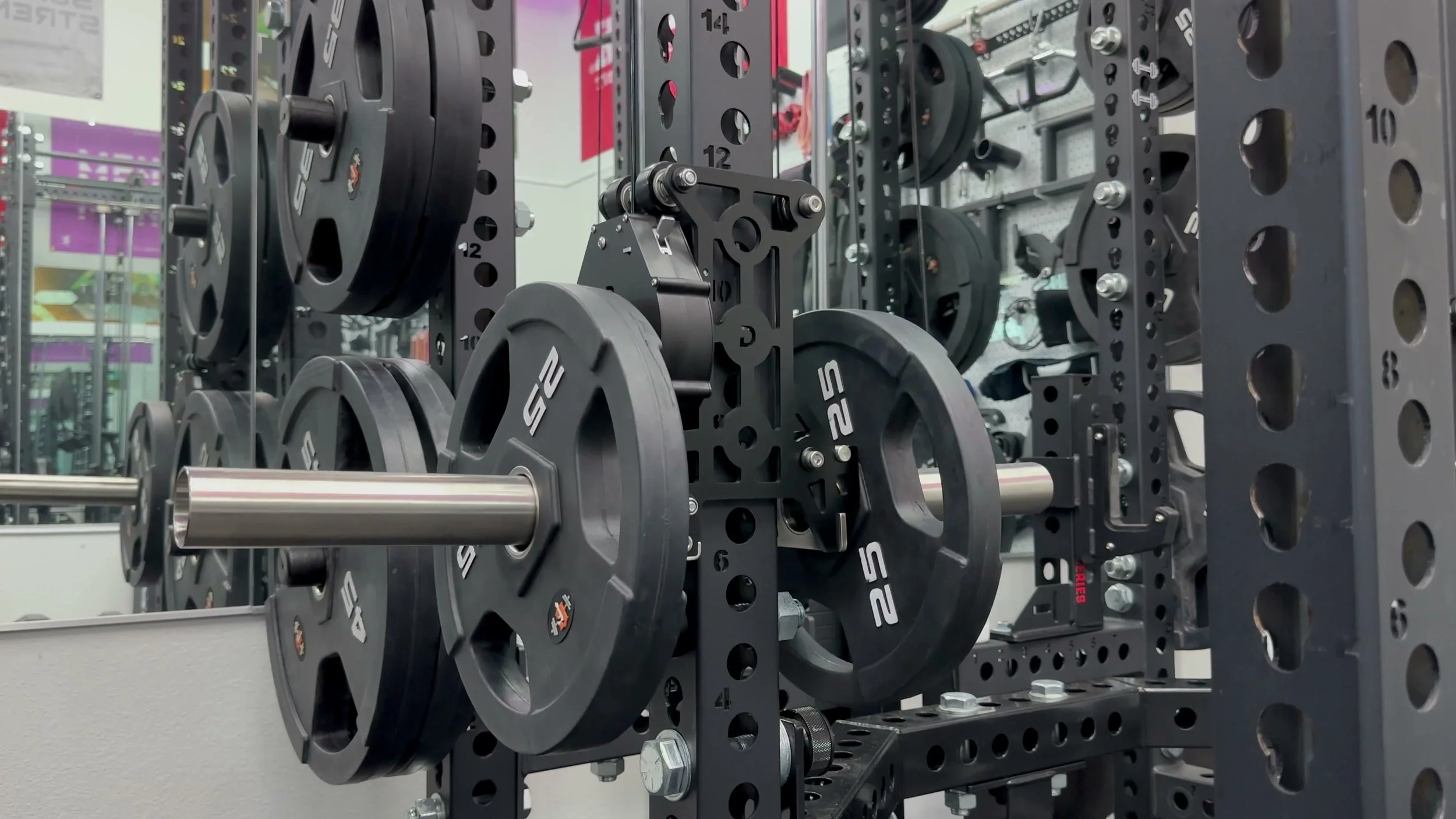
Finally, the weight horns protrude into your rack space and out into your room. You can remove them, but if your rack is already a puzzle-piece layout with other attachments, you’ll want to think through clearance.
Value & Alternatives
If you’re comparing rack-mounted solutions only, the cheapest alternatives are the strap-mounted pulleys and basic bolt-on pulleys that get the job done but don’t feel integrated. The next step up is a true OEM rack-mounted plate-loaded or selectorized system, which can work great, but tends to be rack-specific and more “permanent hardware living on your rack.”
Where the Ibex wins is the combination of premium feel, flexibility across 3x3 sizes, and how quickly it transitions between movements without re-rigging. It’s the closest I’ve used to a functional trainer experience while still staying a rack attachment.
If you’re comparing beyond rack attachments, a dedicated functional trainer like my Inspire SF3 is still the “walk up and go” king, and it’s hard to beat the convenience of a standalone machine if you have the space. On the opposite extreme, something like a Beyond Power Voltra is the ultra-compact, money-is-no-object alternative that goes in a completely different direction.
Who Should Buy This
Buy the Ibex if you already have a 3x3 rack and you want a premium cable experience without adding a separate machine footprint. It’s especially worth it if you care about smoothness, fast adjustments, and having a setup that feels like it belongs on the rack rather than hanging from it.
It also makes sense if you change your rack setup over time and you don’t want your cable solution to become a custom-cable science project every time you reconfigure.
Who Should Skip It
Skip it if you want the lowest-cost pulley option, you don’t care about premium fit/finish, or you’re allergic to preorder windows. Also skip it if your main goal is loading cable work brutally heavy beyond what a 300 lb system is meant to handle.
Final Verdict
The Dialed Motion Ibex is one of the most “thought-through” rack attachments I’ve used, and it delivers a functional trainer-like feel while keeping your gym footprint basically unchanged. It’s not cheap and it’s not always instantly available, but if you want a premium rack-based cable system that you’ll actually enjoy using every week, this is the one that finally feels like the real thing.
Affiliate Disclosure
This article contains affiliate links. If you purchase through them, I may earn a commission at no extra cost to you.