Bolt Fitness Gemini Peregrine Lateral Raise and Chest Fly Combo Review
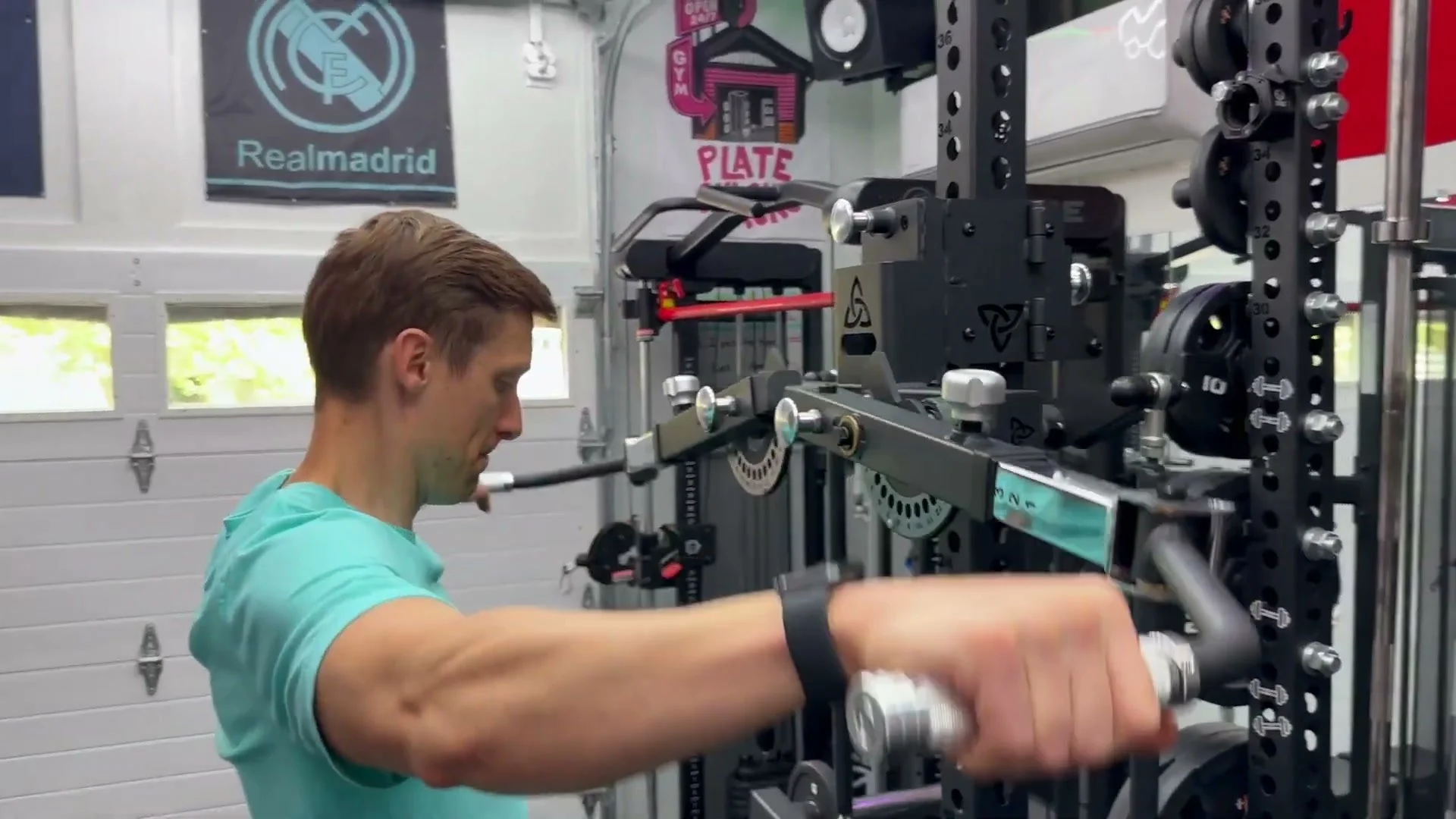
This product was in-house tested by Michael at The Jungle Gym Reviews.
If you want more “machine-like” lateral raises and chest flys without buying two standalone machines, this Bolt Fitness Gemini attachment is a legitimately clever rack-based solution. The biggest win is how quickly it goes from stored to usable—once you’ve done it a couple times, it’s realistically a one-minute setup and it leaves basically no lasting footprint. The biggest tradeoff is that it’s still a plate-loaded, gravity-based attachment, so the resistance curve won’t feel like cables (especially at the bottom of a lateral raise), and it’s more fiddly than grabbing dumbbells. This is best for 3x3 / 1” rack owners who want shoulder and pec accessories that feel more guided than free weights. If you hate setup steps between sets or you already love your cable fly/lateral raise setup, you should hesitate.
Quick Specs
Price: $730 with coaster / $545 without coaster (shipping included)
Brand: Bolt Fitness Supply (Houston, Texas)
Product Line: Storm Series / Gemini Series
Type: Power rack attachment (plate-loaded)
Rack Compatibility: 3” × 3” uprights with 1” holes
Compatible Racks: REP PR5000, Rogue Monster, Titan Fitness Titan Series, Bells of Steel Manticore, Bolt Fitness Storm Series
Steel Gauge: 7-14 gauge
Bottom Anchor: 1” thick 7-gauge steel
Base Bracing: Two 2” × 3” 11-gauge steel beams with 2” rubber pads
Coaster Material: 7 and 11-gauge steel (1/4” thick), UHMW rollers
Arm Rotation: 13 ports, 100 degrees per arm
Arm Extension: 6 ports (4.5” total)
Weight Horns: 12” length
Max Capacity: 360 lbs per side
Handles: Chromed aluminum, light knurling, independently rotational
Primary Exercises: Lateral raises, Chest flys
Setup Time: ~1 minute
Storage: Coaster stores at top of rack, no lasting footprint
Where to Buy the Bolt Fitness Gemini Peregrine Lateral Raise and Chest Fly Combo
If you’re deciding between versions, check current price and whether you already own a coaster.
My Real-World Experience
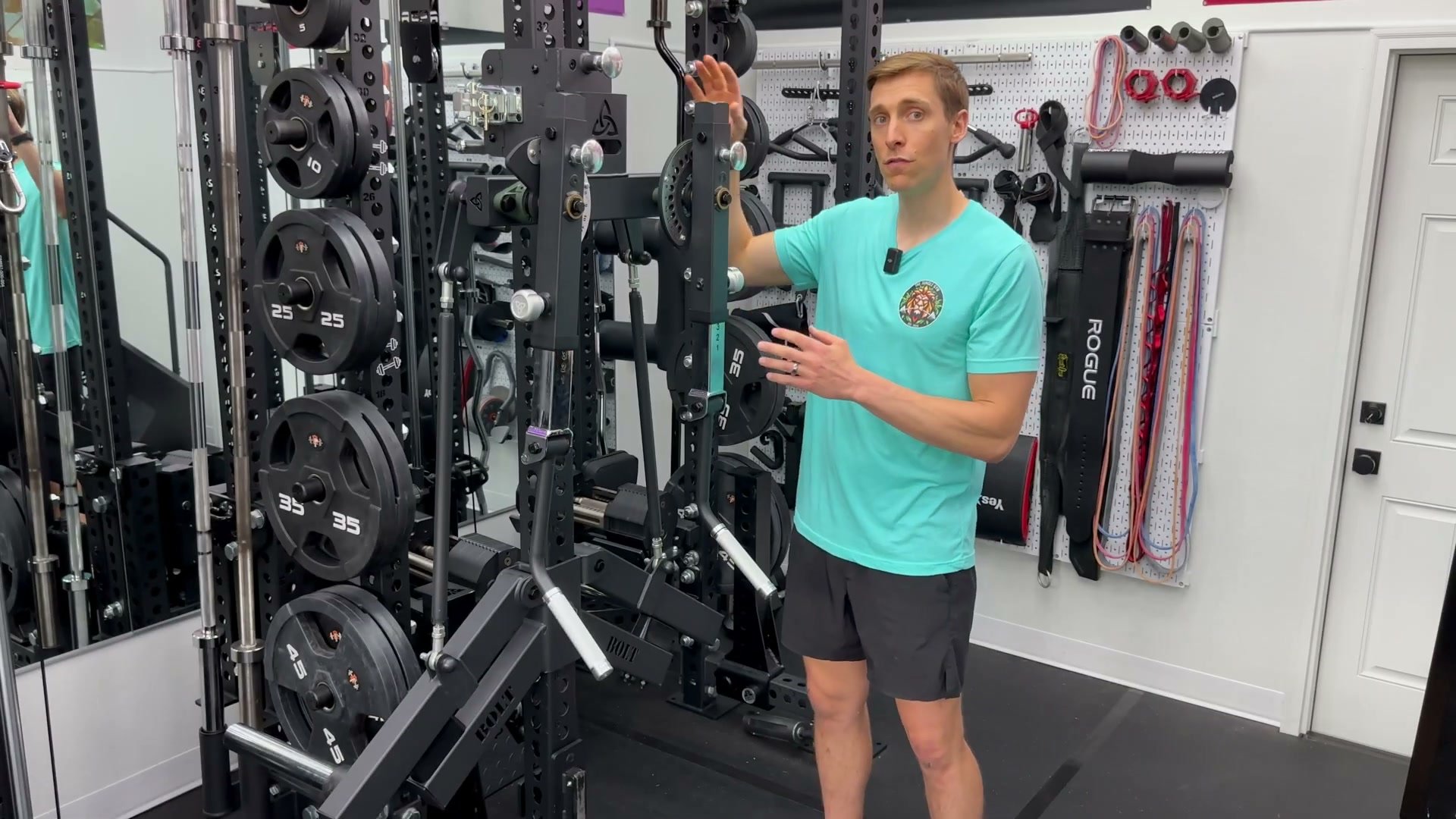
I’m a sucker for rack attachments that feel like an engineer designed them instead of a factory just “adding another accessory,” and this one is exactly that vibe. At first glance it looks complicated—pins, knobs, rotating arms, multiple adjustment points—but the reality is you repeat the same quick sequence every time: set coaster height, pin on the arms, brace the base, tighten the knob, and you’re training.
Once it’s set, the motion feels smooth and controlled. The handles rotate, which helps you find a natural wrist position instead of being forced into one fixed angle. It also feels sturdy in use, and the “overbuilt” nature shows up in the materials and how everything locks in.
The lateral raise movement is where you notice the physics: it feels very dumbbell-like, meaning the hardest part is when your arm is out near that perpendicular-to-gravity position, and the very beginning of the rep has less resistance. That’s not automatically bad—dumbbells have the same reality—but it’s different than cables where you can get tension right off the bottom. In practice, I still get a great delt stimulus, but I treat it like a machine-ish dumbbell lateral raise rather than expecting it to feel like a cable stack.
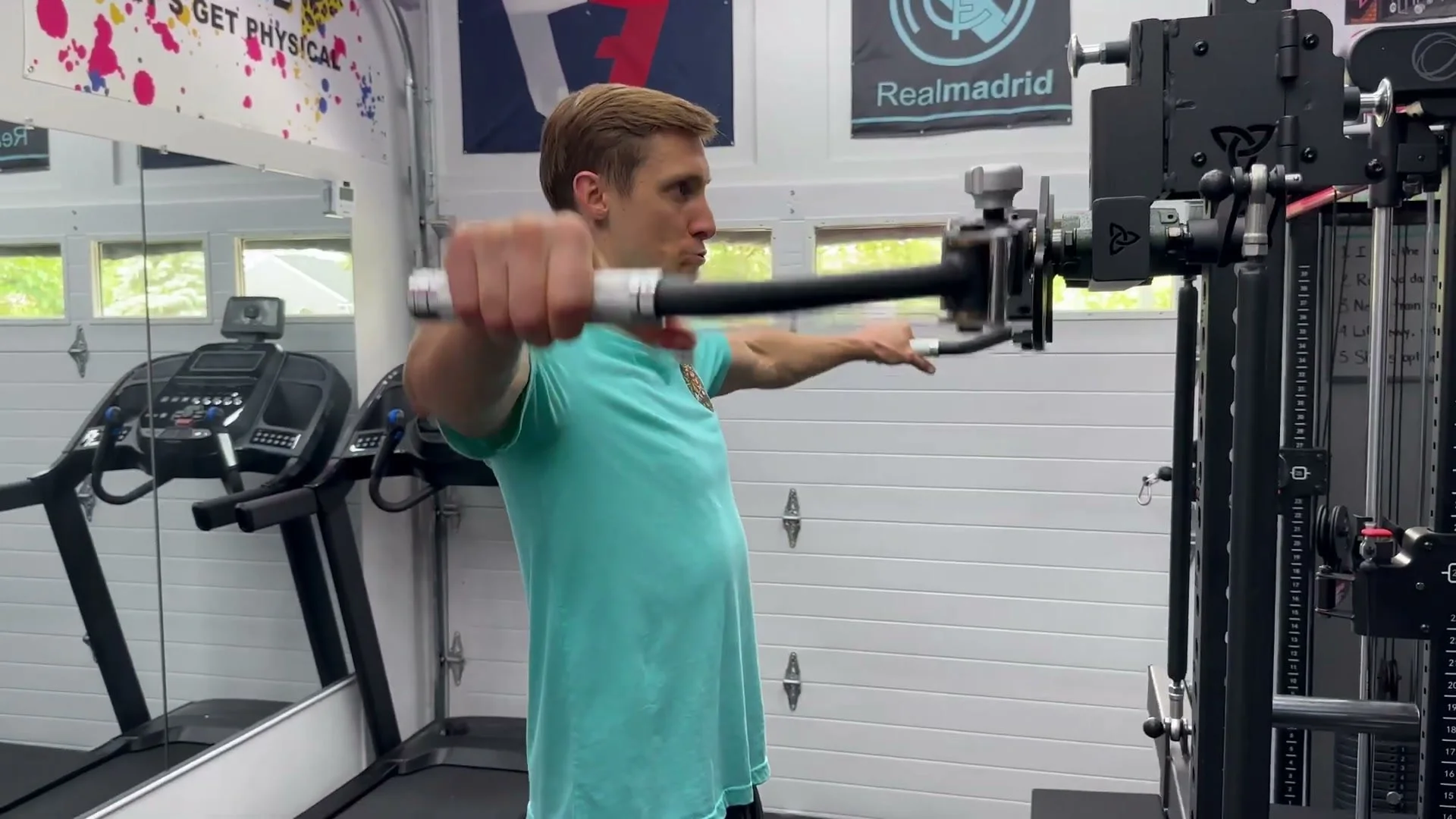
The chest fly surprised me more. When you use it with a slight lean to create that pre-stretch, it feels more “pec deck-ish” than I expected from a rack attachment, and it’s a movement I actually look forward to using on it.
Training Use Cases
This is a pure accessory tool for me—something I’ll plug into training when I want a guided delt or pec movement without needing a dedicated machine footprint. It’s especially useful in home gyms where you’ve already accepted the rack is the “center of the universe,” and you want more variety without adding another 20 square feet of equipment.
It’s also a strong fit if you train alone and you like movements that feel stable and repeatable. A lot of people struggle to feel lateral raises or flys “in the right place” with dumbbells, especially as fatigue builds. This gives you a more consistent path.

Tradeoffs & Limitations
The biggest limitation is the resistance curve reality. The lateral raise doesn’t give that constant tension you’d get from a cable setup, and the start of the rep is lighter. If you specifically want tension from inch one, cables still win.
There’s also a simple usability quirk in chest fly mode: with the handles flipped and the arms free, they can swing back toward your face if you’re not controlling them. It’s not a “defective” thing—it’s just a gravity + hinge reality—so you need to treat it with basic awareness.
And while setup is fast once you learn it, it’s still more steps than dumbbells or a functional trainer. If you’re the kind of person who wants zero friction between exercises, that matters.
Value & Alternatives
If all you want is lateral raises and flys with no setup, a functional trainer and a couple cable attachments is the most straightforward path. Dumbbells are the cheapest and simplest option, and they work—especially if you’re good at controlling form.
Where this Bolt attachment earns its keep is the combination of “more guided than dumbbells,” “no permanent footprint,” and “rack ecosystem logic.” It’s a niche, but it’s a real niche, and it does what it’s designed to do.
Who Should Buy This
Buy this if you have a 3x3 rack with 1” holes and you want a more machine-like way to train delts and pecs without committing to standalone machines. It’s also a great fit if you like modular rack ecosystems and you’re okay spending money on accessories that increase training variety in a small space.
Who Should Skip It
Skip it if you already love your cable fly/lateral raise setup, if you want constant tension from the very bottom of the rep, or if you hate any setup time between movements. Also skip it if you don’t have a compatible 3x3 / 1” rack.
Final Verdict
This is a genuinely innovative rack attachment that delivers on the promise: lateral raises and chest flys that feel more guided than dumbbells, without eating your gym space. The tradeoff is that it’s still gravity-based and plate-loaded, so it won’t feel like cables, and it takes a minute to set up. If you’re the right buyer—compatible rack, space-conscious, and you want accessory variety—it’s an easy piece to keep in the rotation.
Affiliate Disclosure
This article contains affiliate links. If you purchase through them, I may earn a commission at no extra cost to you.