Bells of Steel Modular Weightlifting Platform Review
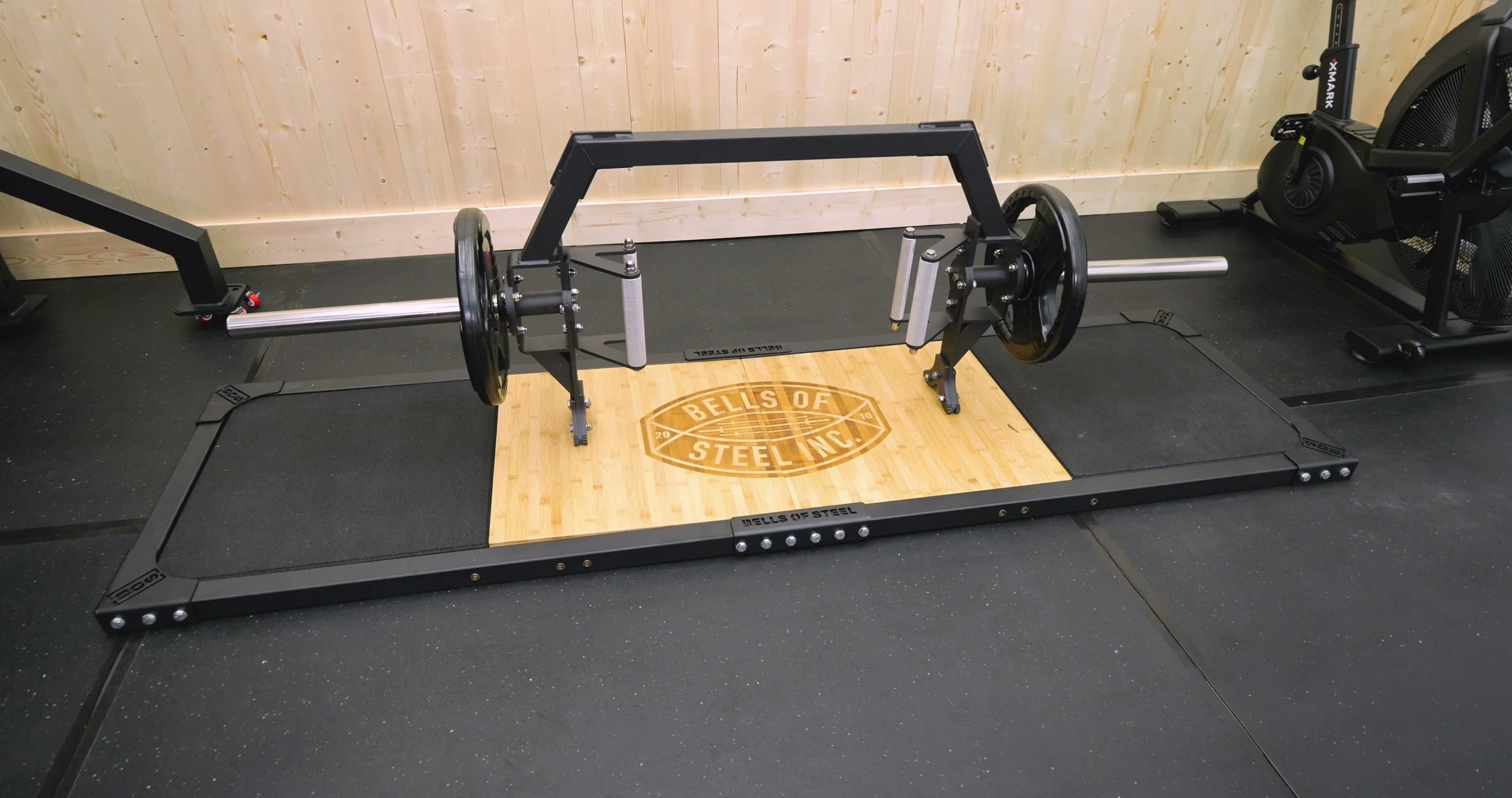
This product was in-house tested by Michael at The Jungle Gym Reviews.
This modular platform does a great job solving the “where do I deadlift in a home gym” problem without forcing you into a huge, permanent 4×8 footprint. The main tradeoff is that once it’s assembled it’s heavy and not something you casually move around. It’s best for home gym owners who want a clean, purpose-built deadlift or Olympic lifting zone that fits their exact space. If you need something you can regularly break down and move out of the way, this isn’t the right solution.
Quick Specs
Width Options (Side-to-Side): 180cm / 6 ft or 240cm / 8 ft
Depth Options (Front-to-Back): 60cm / 2 ft, 120cm / 4 ft, 180cm / 6 ft, 240cm / 8 ft
Tile/Frame Height: 2”
Frame Material: 2x2 steel
Frame Assembly: Bolt-together construction
Layer Options: Single-layer (standard) or 3-layer (for crash pads)
Center Tile Options: Bamboo (solid, reversible) or Rubber
Outer Tile Options: Rubber tiles or Deadlift Pads (crash pads)
Add-Ons Available: Band pegs, additional tiles, crash pads
Assembly Time: ~10–15 minutes
Custom Quotes: Available for any size configuration
Where to Buy the Bells of Steel Modular Weightlifting Platform
Check current pricing and configuration options directly from the official product page.
My Real-World Experience
After years of stacking rugs, foam tiles, stall mats, and DIY platforms, this finally felt like a purpose-built solution instead of a workaround. I built mine in about 10–15 minutes with a drill and some bolts, and the frame went together easily with everything lining up cleanly. The 2x2 steel frame feels rigid and the laser-cut brackets actually look good instead of cheap stamped metal.
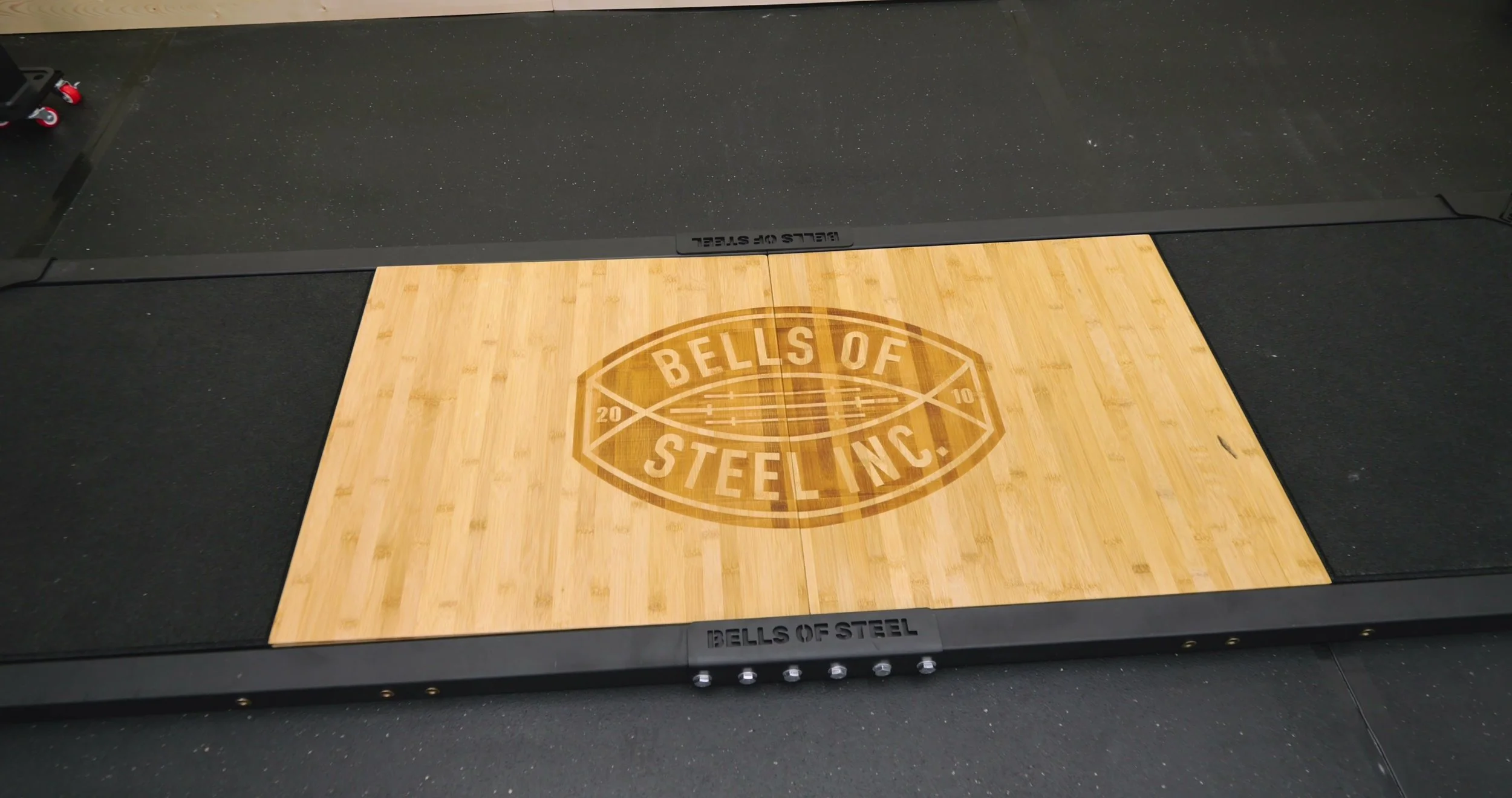
The bamboo center tiles surprised me the most. They’re solid, not laminated, and have a nice court-style finish that feels firm under heavy pulls. I like that they’re reversible, so if you scuff one side you can flip them. Once it’s down, it feels exactly like lifting on a proper platform—no shifting, no soft spots, and consistent foot feel rep to rep.
What became obvious very quickly is that this thing is not something you move casually. The tiles are thick, the frame is steel, and once it’s bolted together it’s basically semi-permanent. For normal training that’s perfect, but when I’m moving equipment around for filming, it reminded me how much I would prefer loose tiles instead of a framed platform.
Training Use Cases
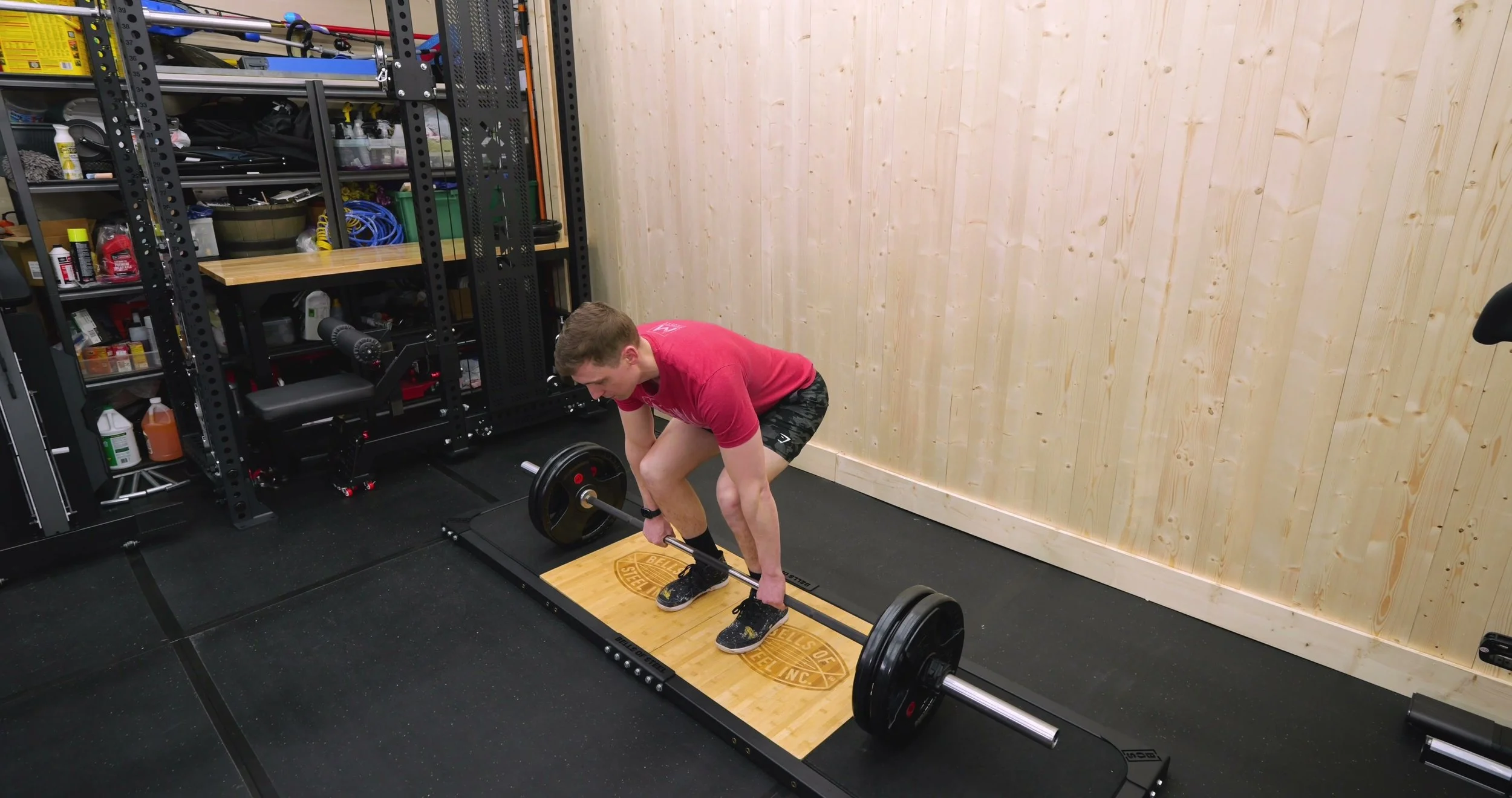
This works exactly how you want for deadlifts, barbell rows, and Olympic-style pulls. The rubber outer tiles do their job absorbing drops while the bamboo center stays firm under your feet. In a single-layer configuration like mine, it’s also great for trap bar work and general barbell training.
If you’re doing Olympic lifting and dropping from overhead, the three-layer crash pad option makes more sense, but for deadlifts and bodybuilding-style training, the standard single-layer rubber is more than enough.
Tradeoffs & Limitations
The biggest compromise is portability. This is not a roll-up mat or a stackable tile setup—you assemble it and it lives there. The bamboo tiles can get scratched if you use open trap bars with bare metal feet, which I found out the hard way. If you plan to use a trap bar as your main lift, you’re better off choosing all-rubber tiles or the 6-ft width so the plates land on rubber instead of wood.
The 8-ft width is nice for peace of mind, but if you’re not loading heavy bumper plates, it can be more space than you actually need.
Value & Alternatives
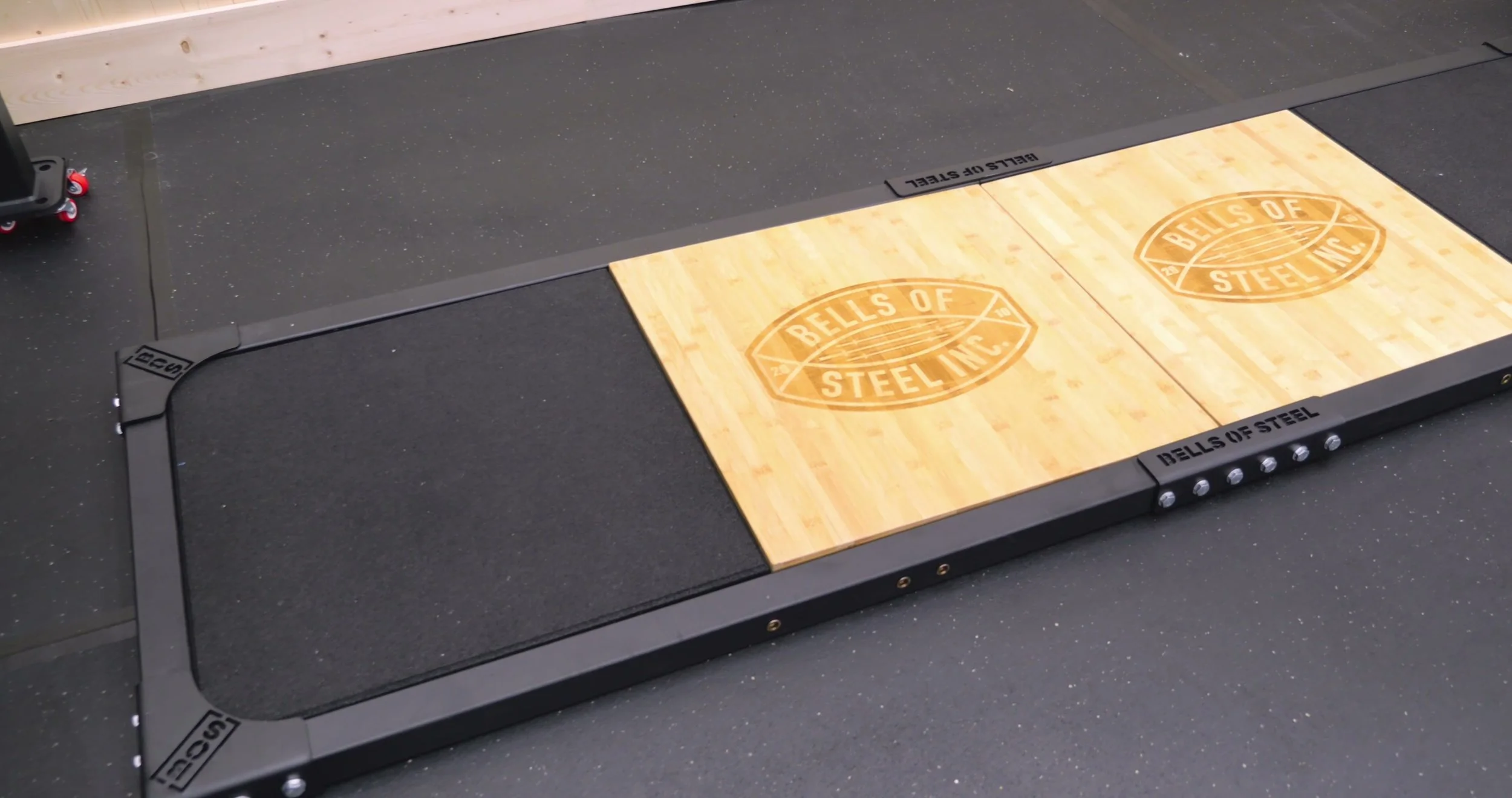
For people who would otherwise spend $600–$1,000 on a fixed 4×8 platform or deal with DIY builds, this hits a sweet spot. The ability to choose width, depth, tile types, and add-ons makes it far more adaptable than a one-size-fits-all platform. It also lets you start small and expand later instead of committing to a huge footprint up front.
Who Should Buy This
If you want a clean, professional-looking deadlift platform sized specifically for your gym, this is an easy yes. It’s especially good for garage gyms, basement gyms, and anyone who wants a dedicated lifting zone without wasting floor space.
Who Should Skip It
If you need something you can move, stack, or store away between workouts, this will feel too permanent. Trap bar lifters who don’t want to worry about scratching bamboo should also look at all-rubber configurations instead.
Final Verdict
This is one of the most practical platform solutions I’ve used for a home gym. It looks good, feels solid under load, and finally gives you a real deadlift area without forcing a giant footprint.
Affiliate Disclosure
Some links on this site are affiliate links, which means I may earn a small commission if you purchase through them at no extra cost to you.