Major Fitness Drone 1 Power Cage Review
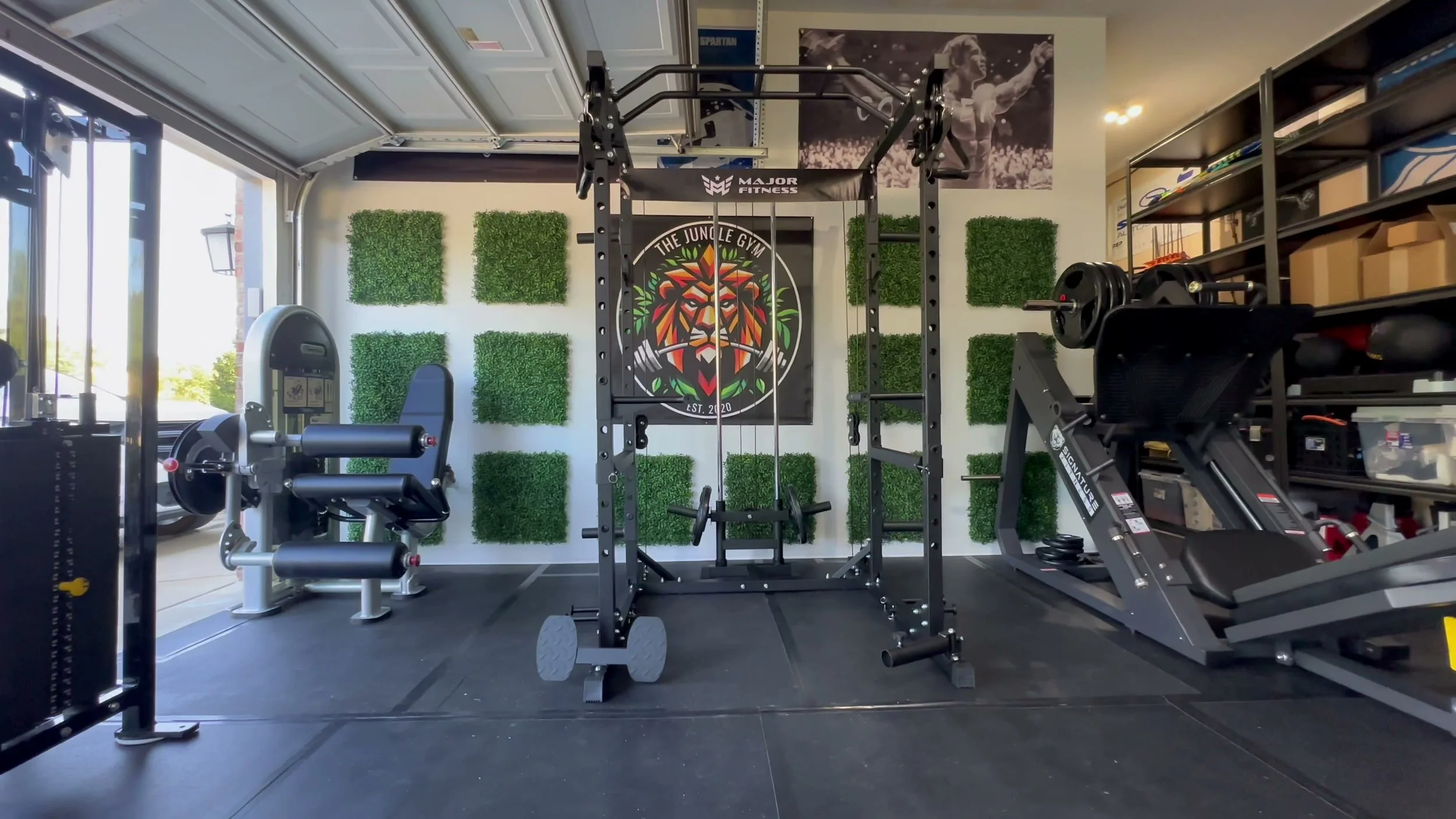
This product was in-house tested by Michael at The Jungle Gym Reviews.
If you want the most “do-a-lot” rack package I’ve seen around the ~$500 mark, the Major Fitness Drone 1 is hard to ignore. You’re getting a real power-cage layout with inside safeties plus a plate-loaded cable setup, dip bars, low row footplate, landmine, and a pile of starter attachments in one box. The biggest tradeoff is refinement—cable smoothness and overall fit/finish are clearly budget-tier, and the cable system’s 300 lb static rating is the ceiling you need to respect if you’re loading heavy long-term. This is best for someone starting a home gym who wants a little bit of everything without piecing together five separate purchases. If cables are your primary training method or you want a buy-it-for-life rack with premium pulleys and ergonomics, you should hesitate.
Quick Specs
Price: ~$500
Availability: Amazon Exclusive
Uprights: 2” × 2”, 14-gauge steel
Hole Diameter: 1” (compatible with REP, Titan, other 2×2/1” attachments)
Hole Spacing: ~3.5” on center
Height: 86”
Width: 64” (includes band pegs and low row footplate)
Depth: 66”
Rack Capacity: 1,500 lbs (static)
Safety Bars: 900 lbs
J-Hooks: 1,100 lbs
Cable/Pulley Capacity: 300 lbs (static)
Pulley Type: Single center-mounted plate-loaded, 2:1 ratio
Cable Height Range: ~12” to 74”
Cable Height Spacing: Every 10 cm
Safety System: Flip-down spotters (inside rack), detent pin
Included: Multi-grip pull up bar, dip bars, low row footplate, band pegs, landmine post, J-hooks, lat pulldown bar, cable attachments, tricep rope, ankle straps
Where to Buy the Major Fitness Drone 1 Power Cage
Check price and availability since it can change frequently.
My Real-World Experience
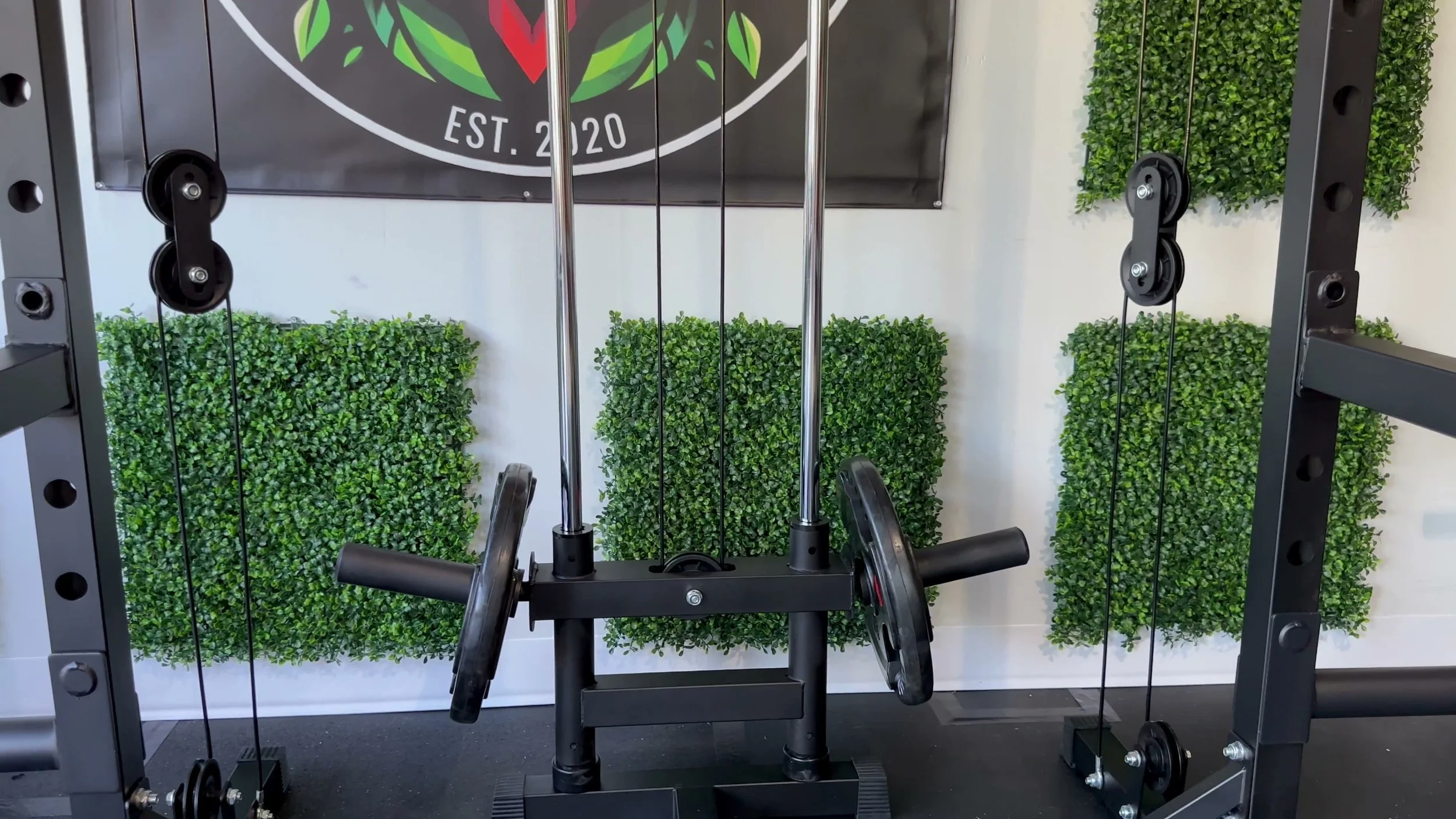
This rack exists for one reason: maximum functionality per dollar. In real use, it feels like a “starter home gym bundle” disguised as a power cage—pull-ups, dips, landmine work, low rows, lat pulldowns, and plenty of one-off cable movements all become possible without buying extra pieces on day one. I also like that the safeties are inside the rack, so your main barbell work (squat/bench/etc.) feels more like a traditional cage setup instead of living out in front on spotter arms. The 2”×2” uprights with 1” holes are the sleeper feature here because it opens the door to a lot of common aftermarket attachment compatibility if you want to upgrade it over time. The reality check is that everything feels built to a price, especially the cable/pulley experience compared to nicer systems, and loading the center horns can feel a little cramped because you’re working around the rear cable area.
Training Use Cases
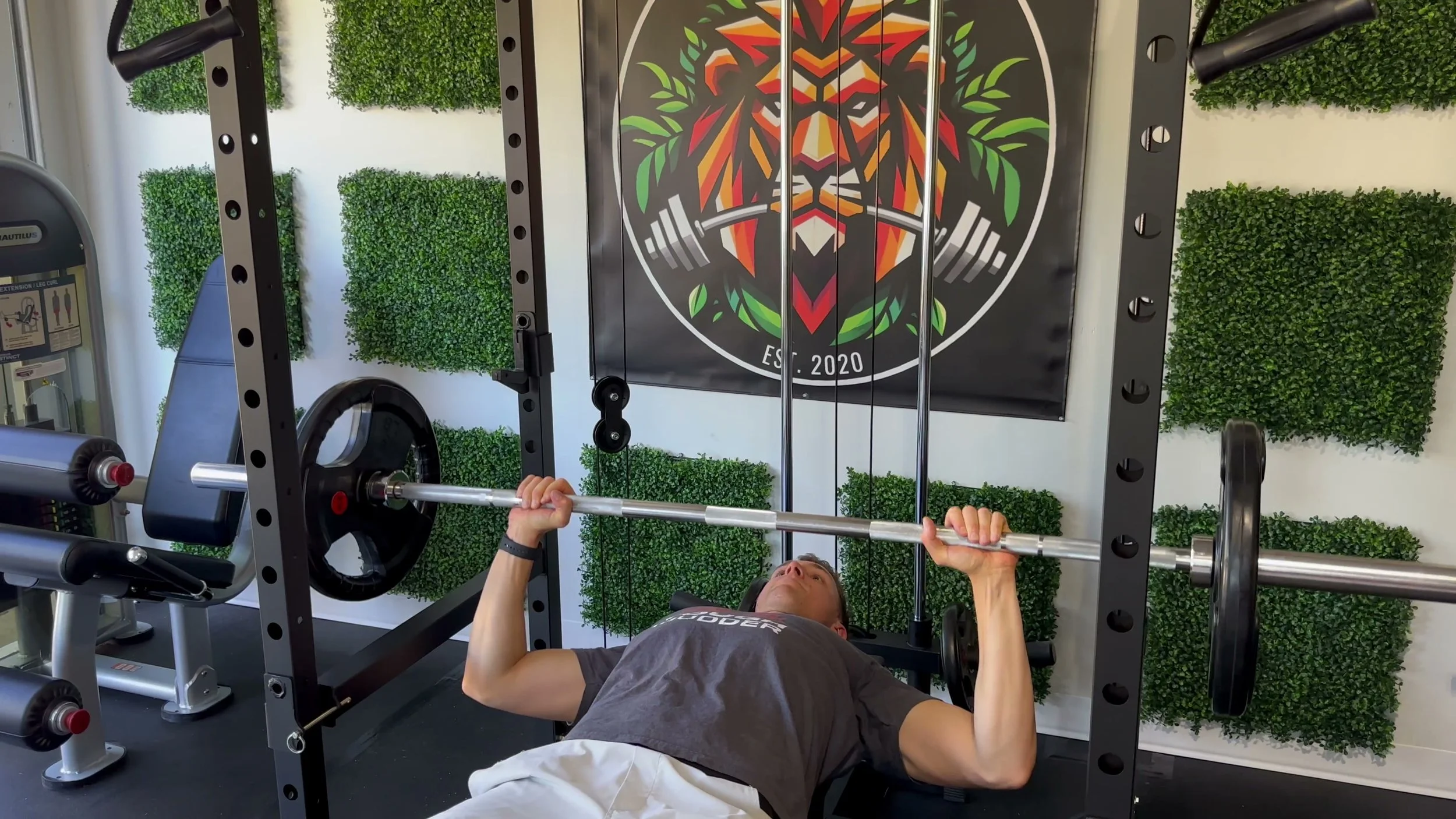
For barbell training, this works like a standard cage: squats, flat bench, overhead press, rack pulls, and anything you’d normally do with J-hooks and internal safeties. For cable training, I treat it as a utility station—triceps work, curls, fly variations, rows, pulldowns, and quick supersets are easy to set up with the included attachments. The low row footplate is a simple add that makes seated rows feel more natural, and the built-in landmine post is another easy win for presses, rows, hinges, and core work. The dip bars and multi-grip pull-up bar are nice for variety, even if you’re not getting a huge menu of neutral options like on higher-end multi-grip bars.
Tradeoffs & Limitations
The main bottleneck is the cable system rating: 300 lb static capacity means the cables are not where I’d want to live if I’m consistently trying to go very heavy long-term. Smoothness is the other big compromise—out of the box, the pulleys get the job done, but they’re not in the same universe as higher-end cable systems, and if cables are a primary training method for you, that difference matters every single session. Loading plates onto the center horns can also feel awkward because you’re working in a tighter space behind the rack, and heavy plates amplify that annoyance. One more practical limitation is incline barbell benching inside the rack—bench positioning can run into the rear crossmember, so you’ll likely end up moving your J-hooks forward when you incline press.
Value & Alternatives
For around ~$500, the value is basically the point: you’re buying breadth, not perfection. If you price out a separate rack, a separate cable station, and separate attachments, you’ll blow past this budget fast. The category-level alternative is spending more for a dedicated functional trainer (for cable smoothness and ease) or spending more for a heavier-duty rack (for long-term attachment ecosystem and refinement), but those paths usually start at a big price jump and often don’t include all the “starter bundle” extras.
Who Should Buy This
Buy this if you want one purchase that gets you lifting with a barbell and also gives you cable, dips, pull-ups, low rows, and landmine work in a single footprint. It makes a lot of sense for newer home gym owners, budget-focused buyers, and anyone who values versatility more than premium cable feel.
Who Should Skip It
Skip this if cables are your main training driver, if you’re consistently loading very heavy on pulley movements, or if you’re building a long-term rack ecosystem where you care about thicker steel, tighter tolerances, and premium pulleys from the start. I’d also skip it if you want a cage that’s optimized for inside-the-rack incline barbell benching without any workarounds.
Final Verdict
The Major Fitness Drone 1 is a “function-first” rack package that delivers a surprising amount of training variety for the money, as long as you accept that the cable experience and overall refinement are the compromises that make the price possible. If you’re trying to get a full home gym started fast on a budget, this is a very practical way to do it.
Affiliate Disclosure
This article contains affiliate links. If you purchase through them, I may earn a commission at no extra cost to you.