Keppi Weight Bench 6000 Review
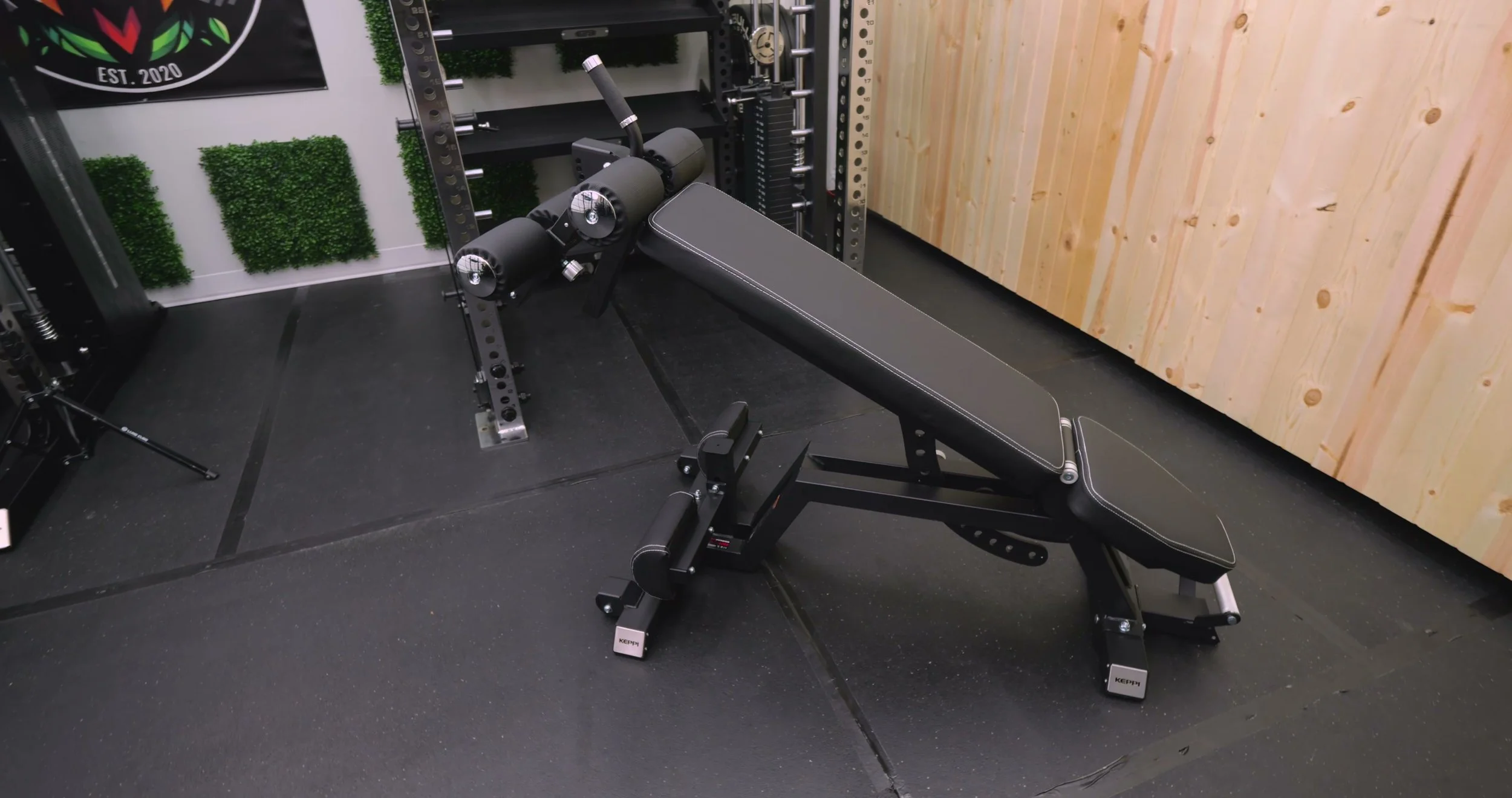
This product was in-house tested by Michael at The Jungle Gym Reviews.
If you want a fully loaded flat/incline/decline bench with real features (upright storage, grippy vinyl, knurled handle, decline leg roller attachment, and removable curl pads) without spending big-bench money, the 6000 is tough to beat when you can get it under ~$350 shipped. The main tradeoff is it still feels like a budget bench in a couple places—most notably the leg roller angle adjustment hardware—and decline positioning can make the bench feel like it wants to tip if you’re not careful getting in and out. For most home gym users, the overall stability and functionality are more than good enough.
Quick Specs
Price: ~$350 out the door (typically with coupons + free shipping )
Discount Code : JUNGLEGYM (5–6% off)
Bench Type: Flat / Incline / Decline (FID) adjustable bench
Back Pad Angles: 0° to 85°
Seat Pad Angles: +30° to -37.5°
Pad Thickness: ~2.5” to 2.75”
Seat Gap: ~1.5”
Floor to Top of Pad Height: Just over 17”
Back Pad Length: 34”
Back Pad Width: 11.4”
Seat Pad Length: 13.5”
Bench Weight: ~80–90 lb (your estimate)
Attachment Port Outer Size: 1.6” x 1.6” (OD)
Upright Storage: Yes (kickstand + back pad pop-pin lock)
Notable Included Features: Decline leg roller attachment, removable elbow pads for curls, knurled handle, wheels, grippy feet
Where to Buy / Check Price
Check current price and availability on the official product page.
My Real-World Experience
Keppi had a lot of success with their 5000 bench, and the 6000 feels like a direct response to what people asked for—more adjustability, more built-in features, and a more “complete” package without pushing into premium bench pricing.
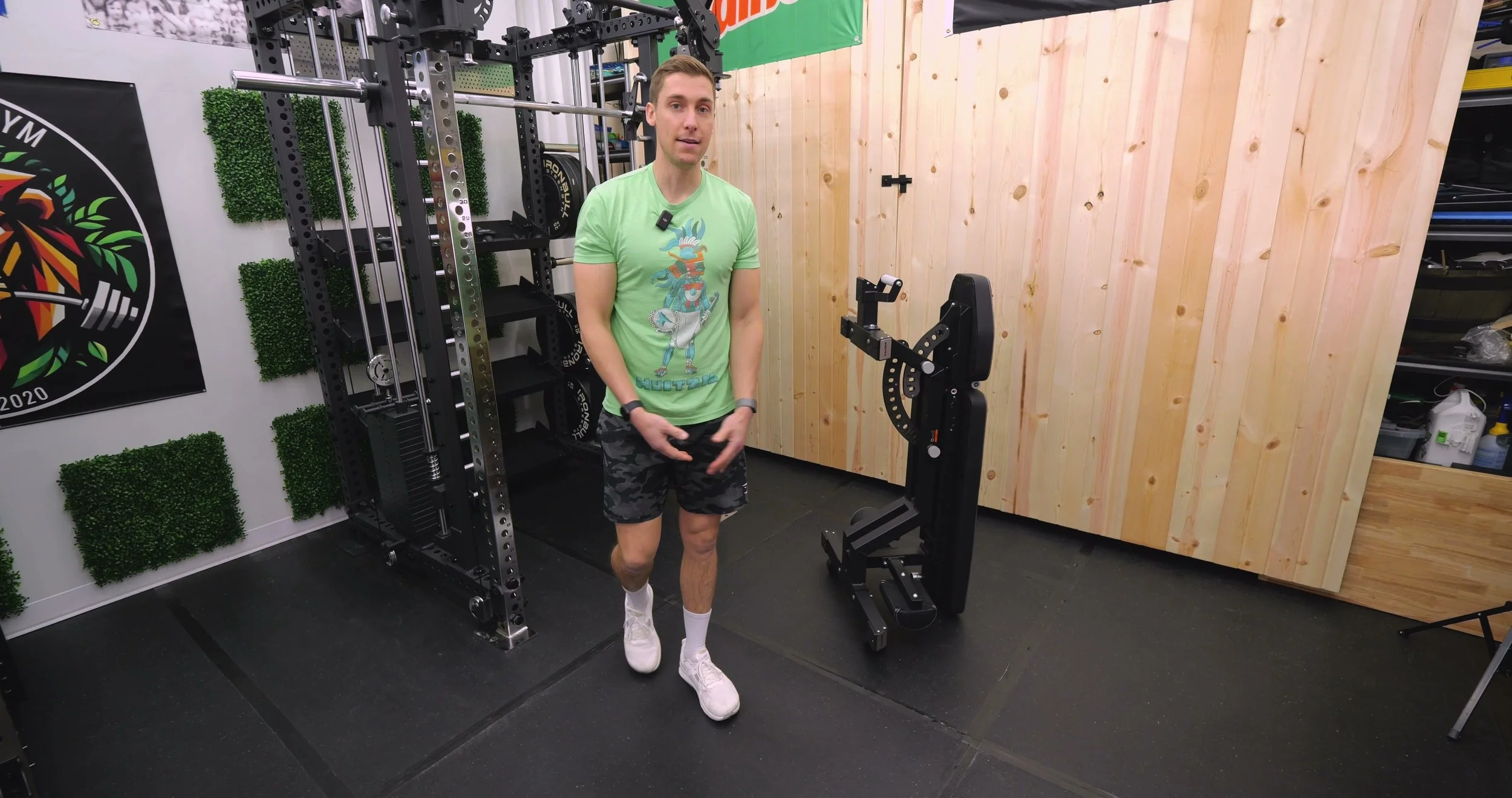
The first thing you notice is the storage and day-to-day usability. I had it sitting in upright storage mode, and it’s genuinely secure there. There’s a built-in kickstand and a nameplate, and the back pad locks in using a pop-pin system, so once it’s vertical it doesn’t feel sketchy. For a home gym where you’re constantly moving stuff around and reclaiming floor space, that matters.
The big functional upgrade over the 5000 is that this is a true FID bench using a pop-pin system. The back pad goes up to 85 degrees and down to flat. The seat pad has a huge range too—up to 30 degrees incline and down to -37.5 degrees. When you set it for decline, the seat can drop all the way into that -37.5° position, which gives you a nearly flat pad for decline sit-ups. I don’t think many people are doing decline bench at that aggressive an angle, but it’s still nice that the bench can create a proper decline “lane” for ab work.
I’ll also call out what Keppi did with the decline leg roller attachment, because this is where they clearly heard feedback. There’s a multi-angle bracket, and once you set it and lock it in, you’ve got both a pop pin and a threaded knob to eliminate wobble. That’s a big improvement versus a basic spring pin design that can feel questionable under load.
That said, the leg roller angle adjustment itself is the most “budget-feeling” part of the whole bench. It’s a small threaded bolt you’re sitting there turning, instead of a faster pop-pin style mechanism like the rest of the bench. I don’t love it. Functionally it works, and I find it most comfortable in the all-the-way-down position anyway, but it’s the one part that reminds you this isn’t a $600–$800 bench.
The rest of the bench surprised me, honestly. When Keppi sent it, I didn’t expect to like it. Budget benches are everywhere, and a lot of them are “fine” but not impressive. The 6000 has been better than expected.
It’s a shorter bench than some long FID benches, and I actually see that as a pro. It’s easier to move in tight spaces. The wheelbase is short, the whole unit is in that ~80–90 pound range (my estimate), and you can pivot it around without fighting it. The feet are textured and grippy—plastic, not rubber—but there’s enough friction that it doesn’t feel like it wants to slide around.
The handle is knurled. It’s not aggressive like a Rogue Ohio Power Bar, but it’s also not a cheap rubber handle. It feels secure in hand, which makes it easier to move the bench around without it feeling “toy-ish.”
Stability-wise, in incline there’s no real wobble. It’s not one of those ultra-heavy, super-dense “big boy benches,” but I’ve had no real problems with it feeling unsafe or sloppy during pressing. And it stores upright without feeling like it’s going to tip.
The pad is thick—roughly 2.5 to 2.75 inches—and it’s on the softer side. I find that comfortable. If you’re a heavy presser who wants an ultra-dense pad for maximum stability, you might prefer something firmer. But for the average home gym person, I actually think this is the right blend: supportive, comfortable, and not rock-hard.
The vinyl is grippy and feels thicker than the 5000. It keeps you from sliding when you’re sweaty, both for presses and for side-supported work like dips. That’s a real quality-of-life upgrade.
One thing people will ask about is the seat gap. The 5000 had a zero-gap design. The 6000 has about a 1.5-inch gap, and for me it’s been a non-issue. Once you’re inclining, it basically disappears. At 6’2”, with my butt centered on the seat and my head near the top of the back pad, I’ve got plenty of clearance for benching.
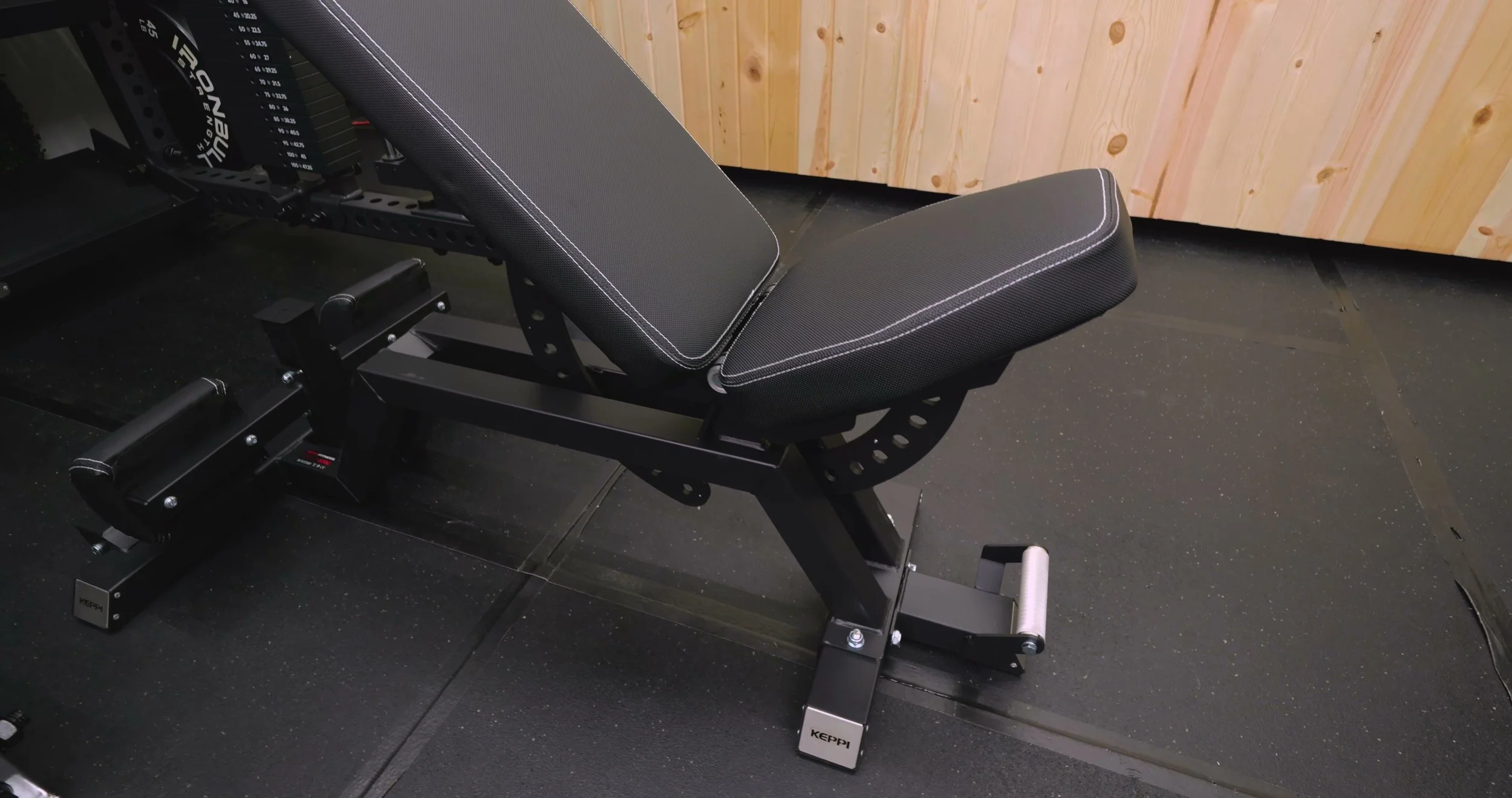
The curl pads are another “extra” that actually works. They mount via keyholes on the frame: hooks go in, slide down into the detent, and now you’ve got elbow support for curls. You can move them around depending on height and what you’re doing. I’ve liked them most for seated curls—comfortable, stable, and they don’t fall out.
When you’re done, they store right on the bench in keyholes on the frame. They don’t interfere with upright storage and they don’t become floor clutter. That’s exactly how accessories should work in a home gym.
Now for the biggest downside I’ve run into: decline movements can create a lever effect where the bench feels like it wants to lift over the back feet, depending on how you get in and how much weight you’re moving. When I’m positioned toward the end doing decline sit-ups or decline bench, it can feel like it might tip if you’re careless. The bench itself has been fine during sets, but you need to be mindful getting in and out—especially if you’re lifting heavy.
One more important compatibility note: I measured the attachment port outer size at 1.6” x 1.6”. That means a lot of popular leg developer style attachments (like REP’s newer leg curl attachment, Griffin/Down Motion style attachments, or the Freak Athlete ABX Leg Developer) likely won’t fit without an adapter. If you’re buying this bench specifically hoping to run a wider ecosystem of attachments, understand that port size up front.
Training Use Cases
This bench is strongest as a “do everything” home gym bench when you want real versatility without spending premium money.
It makes the most sense for:
Flat benching and incline pressing
Seated shoulder work (back pad up to 85°)
Decline sit-ups using the leg roller attachment
Curl variations using the removable elbow pads
It’s also useful if your gym is tight on space, because the upright storage is legitimately practical.
Tradeoffs and Limitations
The compromises are straightforward:
The leg roller angle adjustment bolt feels more budget than the rest of the bench.
The attachment port is small (1.6” x 1.6” OD), so popular add-ons likely won’t fit without an adapter.
In decline setups, the bench can feel like it wants to tip depending on entry/exit and loading—be mindful.
Value and Alternatives
At around $350 shipped, this bench packs in features you usually don’t see bundled at that price point—especially upright storage, the leg roller setup, and the curl pads.
The real question is whether you want:
A feature-heavy bench at a budget price (this), or
A heavier, denser, more “forever bench” feel (usually at a much higher price)
For most home gym owners who want maximum function per dollar, the 6000 lands in a sweet spot.
Who Should Buy This
Home gym owners who want one bench to cover flat, incline, and decline without spending premium money
Anyone who values upright storage and easy maneuverability in a small space
People who like grippy vinyl and a softer, thicker pad feel
Who Should Skip It
Heavy pressers who strongly prefer a very dense, ultra-stable pad feel
Anyone planning to run common leg developer attachments without adapters (port size is a limitation)
People who want decline work to feel completely “no-thought-required” (you need to be mindful of tipping behavior)
Final Verdict
For the price, the Keppi Weight Bench 6000 is hard to argue with. It’s loaded with useful features, it stores upright securely, it moves easily in tight spaces, and it’s been far better than I expected for a sub-$350 bench. If you understand the attachment port limitation and you’re mindful on decline setups, it’s one of the strongest budget bench values I know right now.
Affiliate Disclosure
This article may contain affiliate links. If you buy through them, The Jungle Gym Reviews may earn a small commission at no extra cost to you.