Kensui Fitness Adjustable FID Bench Max Review
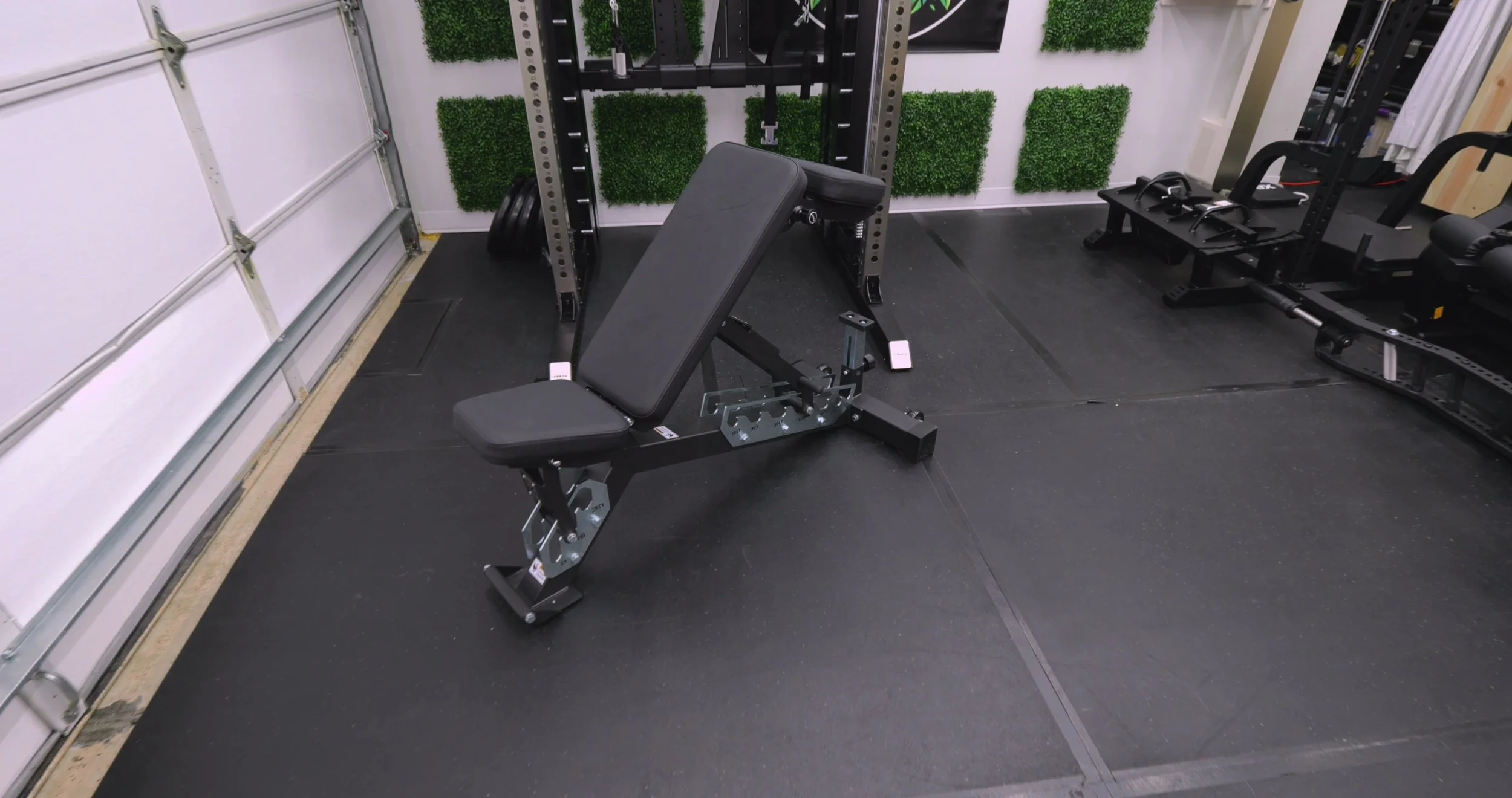
This product was in-house tested by Michael at The Jungle Gym Reviews.
The Kensui FID Bench Max is built around one standout idea: the folding chest pad / headrest that turns a normal adjustable bench into a more versatile home-gym tool without increasing footprint. It does a lot right—grippy premium-feeling padding, stable ladder-style angles, upright storage, and a true decline option via an adjustable post. The biggest tradeoff is value and execution at the details: at $750, I expect “no compromises,” and this bench has a few—no attachment port, an upright-storage stability issue tied to hinge tension, and a chest-pad locking setup that feels underbuilt compared to the best implementation I’ve used. If you want this exact feature set and you care most about padding feel plus decline, it’ll work. If you want maximum capability-per-dollar and a more confidence-inspiring chest pad system, I’d hesitate.
Quick Specs
Type: Adjustable FID bench (flat, incline, decline)
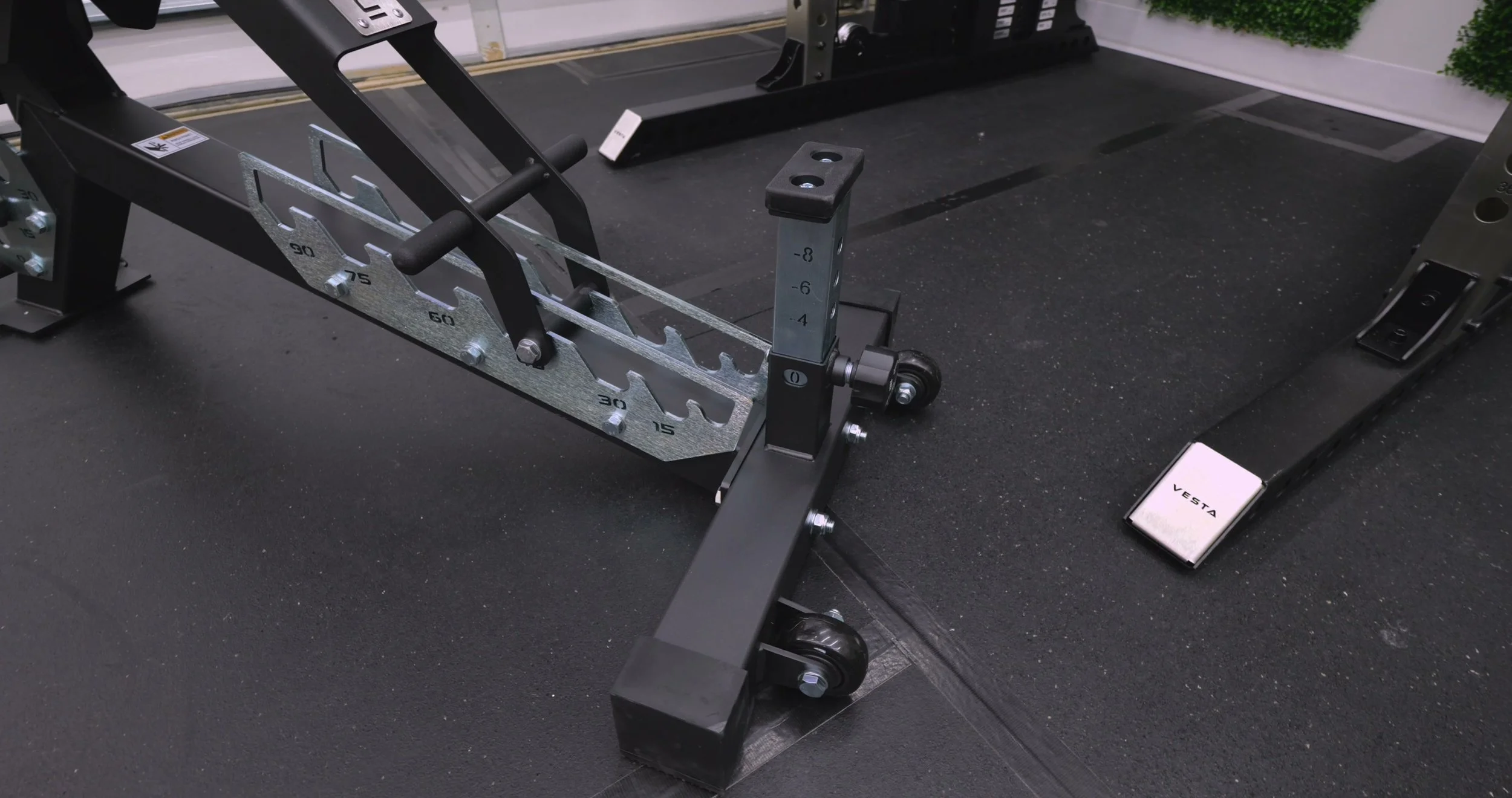
Back Pad Angles: 0–90° in 15° increments (15, 30, 45, 60, 75, 90)
Decline Angles: -4°, -6°, -8° (adjustable decline post)
Bench Weight: ~90 lb
Pad Width (Back Pad): 11 in
Seat Width: ~7 in (tapers)
Pad Gap: ~1.25 in
Folding Chest/Head Pad: 4 locking heights
Upright Storage: Yes (UHMW foot + wheels)
Price Mentioned: $750
Where to Buy the Kensui Fitness Adjustable FID Bench Max
Check current pricing and availability, especially since benches in this category often move around with promos.
My Real-World Experience
The best part of this bench is exactly what Kensui is selling: the folding chest pad / headrest. In a home gym, that’s a real quality-of-life upgrade because it gives you two useful modes.
Head/shoulder clearance mode: With the pad folded up, I can sit back a little further, and it feels more natural for certain presses, especially when I want my head out of the way. It reminds me of the feel you get on a shoulder press bench with a shorter back pad—more clearance without needing a different bench.
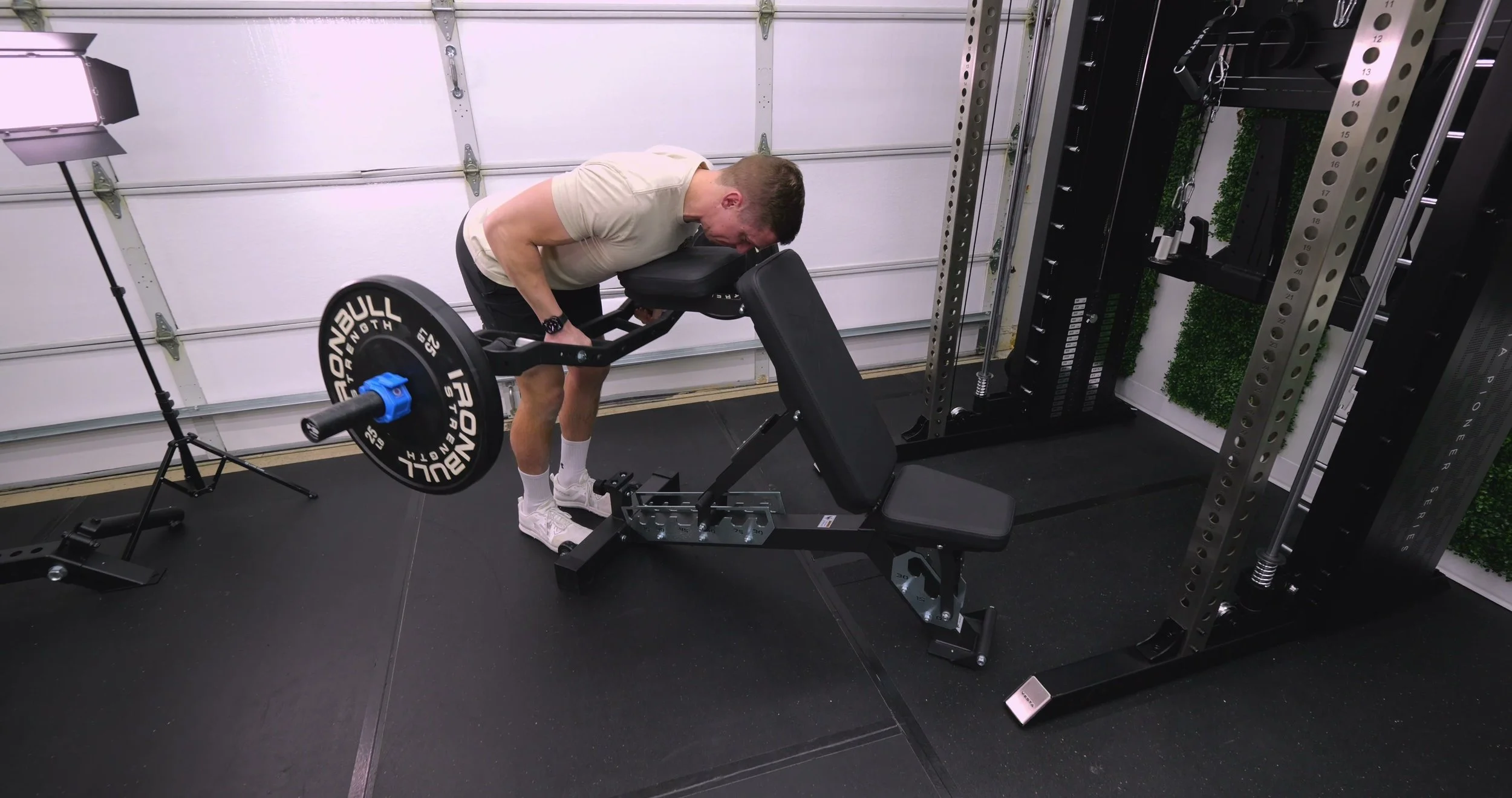
Chest-supported utility mode: Fold it the other way and it becomes a built-in chest support pad. That’s the big use case. Chest-supported rows are the obvious one, but it also opens up a bunch of “bench-as-a-station” setups you normally need a rack attachment for.
The padding is also a high point. The vinyl is grippy and dense in a good way, and it feels premium. There’s also a subtle taper/angle on the outer edges of the pads, which I actually like because it feels better against my back than a hard 90-degree edge. For my frame, the back pad width at 11 inches feels right.
The bench is stable in use. Ladder-style benches usually are, and this one follows that pattern. It feels planted, and the decline post doesn’t add weird wobble when it’s set to flat and tightened down.
Where things start to crack is the stuff that matters more at $750 than it would at $400–$500.
Training Use Cases
This bench makes the most sense if you care about:
Chest-supported rows without a dedicated rack pad
Pressing with more head/shoulder clearance (barbell, dumbbells, Smith machine work)
Standard incline work with simple, repeatable ladder angles
Light decline pressing/fly work (the -4/-6/-8 degrees are enough to noticeably change the stimulus)
It’s less compelling if your bench is your “hub” for an attachment ecosystem (leg extension/curl, decline leg roller, etc.) because that’s exactly what’s missing here.
Tradeoffs & Limitations
Here are the specific compromises that matter in real use:
1) No attachment port
At $750, I want an attachment port—period. In a home gym, that’s what turns a bench into a long-term platform (decline leg roller, leg extension/curl, etc.). This bench doesn’t have it, and that’s a hard miss for the category.
2) Upright storage can be finicky
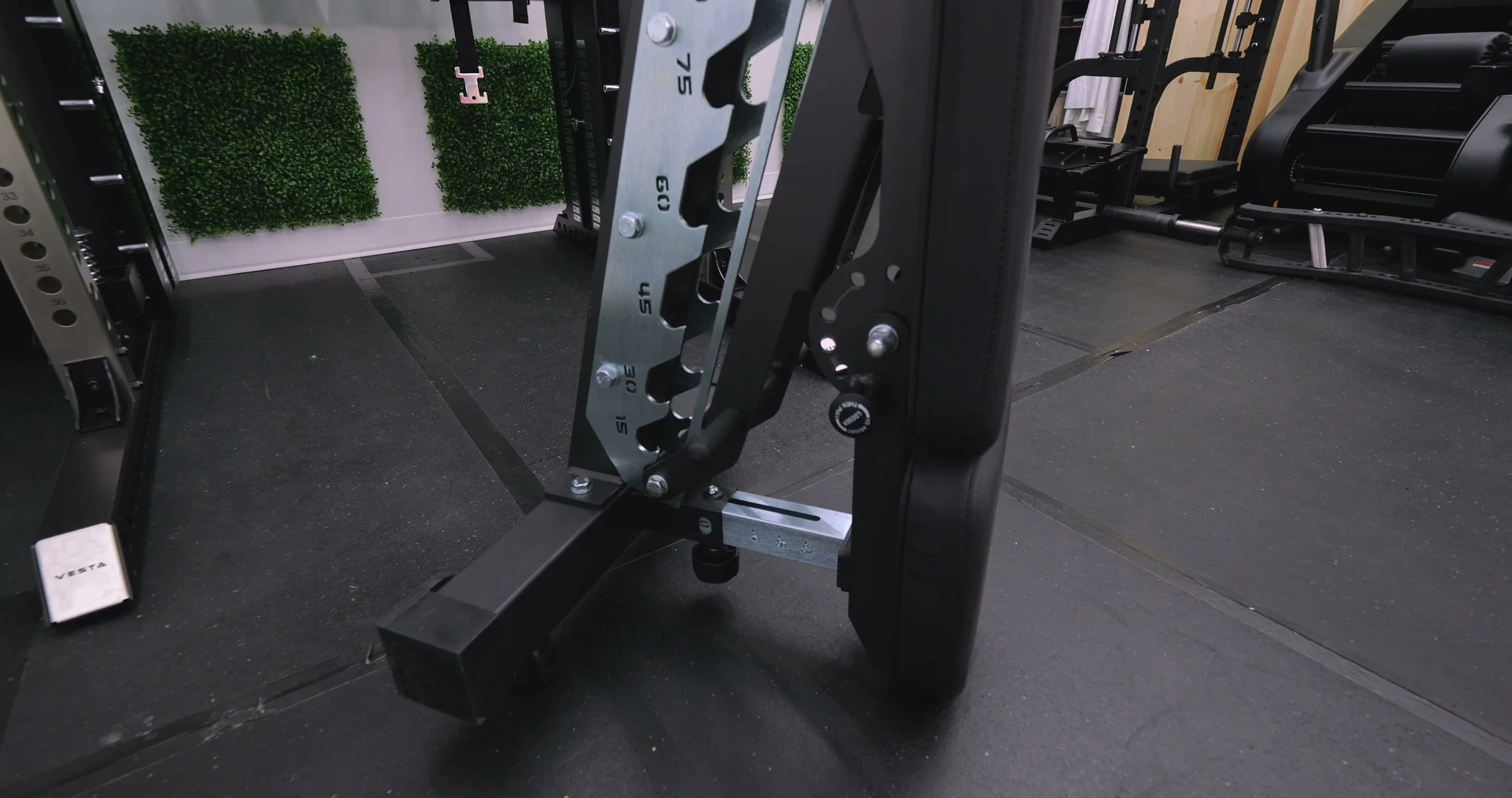
It upright stores, but it’s not as “set it and forget it” as most benches with a proper floor-catch/stop bracket. Here, whether it stands reliably depends on hinge tension and the balance/friction on the wheels. If that hinge bolt is a little loose, it won’t confidently stay upright. If it’s too tight, it affects how smoothly the back pad and seat adjust. So you end up dialing in a “sweet spot” instead of it just working.
3) The chest pad locking design doesn’t inspire maximum confidence
Functionally it works, but compared to the best implementation I’ve used, the locking feels like the weak link. It’s a single pop-pin style lock with a simpler bracket setup, and when I think about loading up heavier chest-supported rows, I’d rather have a more robust, more fully captured design.
None of this means it’s unsafe in normal use—it means at this price point, I expect a design that feels bulletproof in the exact scenarios that make this feature worth paying for.
Value & Alternatives
In this category, the bench it naturally invites comparison to (based on the same “folding pad” concept) is the Freak Athlete ABX, because:
It delivers similar “headrest/chest pad” functionality
It’s cheaper (as you noted)
It offers an attachment port ecosystem that matters a lot in home gyms
Its chest pad locking/structure feels more confidence-inspiring
Where the Kensui can win is padding feel and built-in decline angles via the post. If those two things are your priority, that’s the argument for it. But if you’re zooming out and asking, “What bench gives me the most capability for the money?” it’s tough to justify $750 here.
Who Should Buy This
You specifically want the folding chest pad / headrest concept
You care a lot about premium padding feel and grippy vinyl
You want a simple decline option for pressing/fly work
You don’t care about adding bench attachments later
Who Should Skip It
You want an attachment ecosystem (leg extension/curl, decline leg roller, etc.)
You need upright storage to be rock-solid and bump-proof
You plan to load heavy chest-supported work and want the most confidence-inspiring chest-pad lock design
You’re deciding purely on value per dollar in this feature tier
Final Verdict
The Kensui FID Bench Max has a genuinely useful idea with the folding chest pad / headrest, and the padding/build feel matches the “premium” positioning. But at $750, the missing attachment port and the upright-storage/locking-design compromises are hard to ignore. For most home gyms, I think there are better overall buys unless you specifically value the Kensui’s padding feel and decline post enough to pay for it.
Affiliate Disclosure
Some links may be affiliate links. If you buy through them, I may earn a small commission at no extra cost to you.