DefiPlate Weight Plates Review
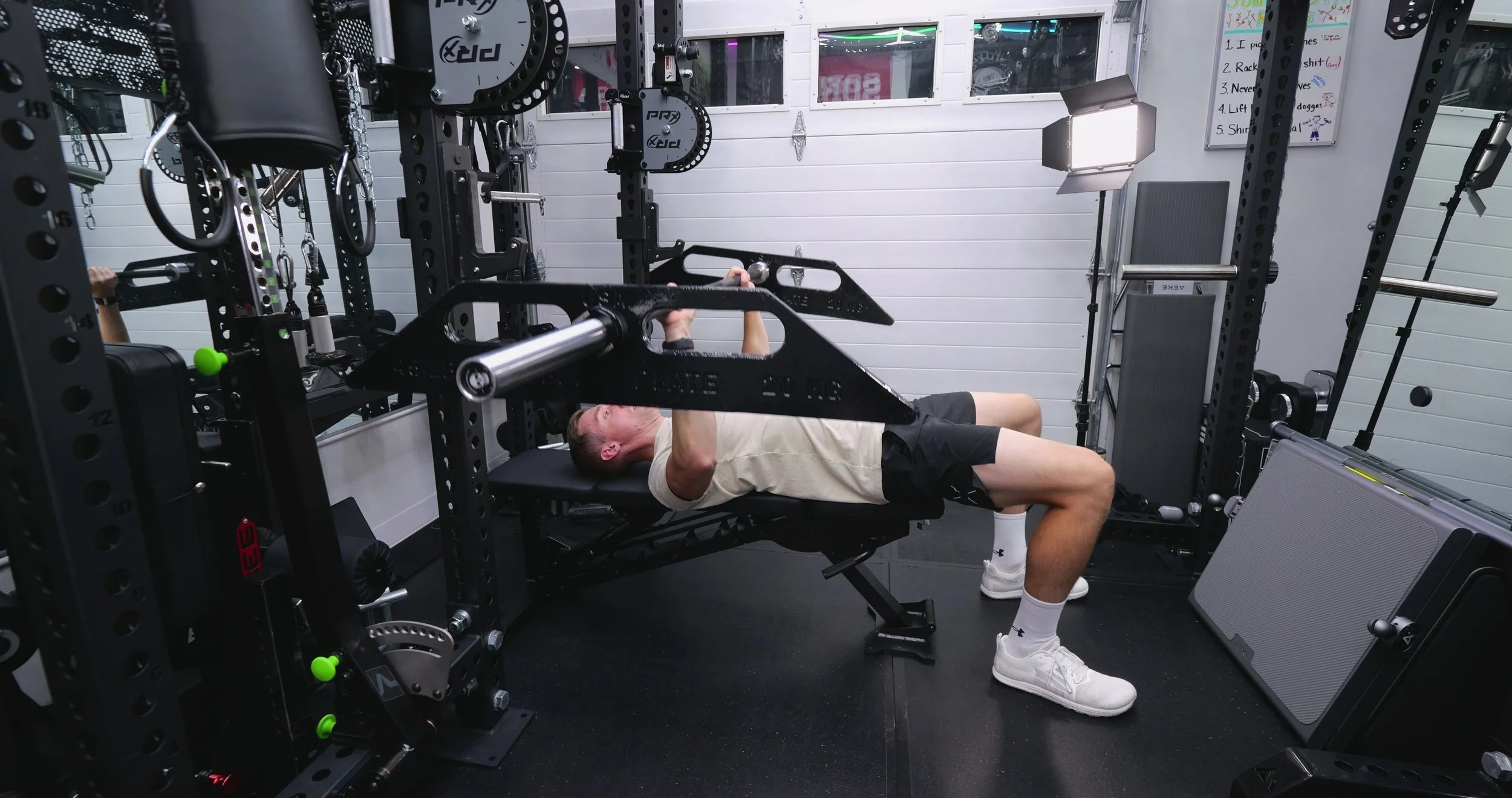
This product was in-house tested by Michael at The Jungle Gym Reviews.
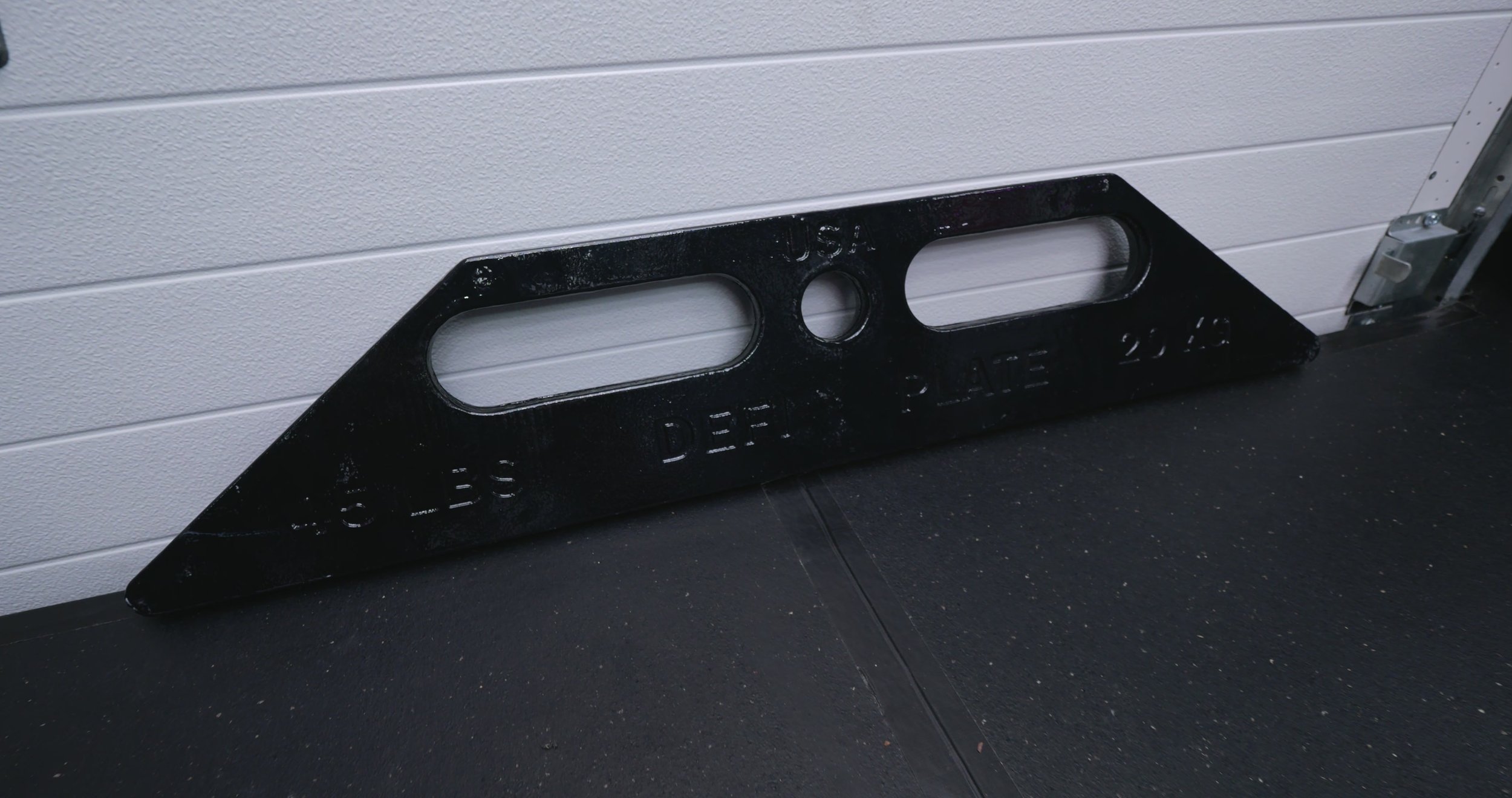
I certainly haven’t seen plates like this before, and probably neither have you. These are DefiPlates—a creative take on a 45-pound weight plate that’s intentionally not round.
A DefiPlate is a trapezoid-shaped, made-in-the-USA plate designed to add a new dimension of variety to barbell training. The shape introduces instability (left-to-right leverage) and also acts like a built-in deficit for certain lifts because the bar sits lower than it would with a standard round 45. On top of that, the cutouts double as handles, so you can use the plate itself for a bunch of movements you simply can’t replicate with normal plates.
I connected with Jake, the owner and creator of DefiPlate, at Home Gym Con this year, and he let me borrow a pair for this review. There’s real appeal here for experienced lifters who want to challenge stability, clean up bar path, and add variety—but there are also major cost and practicality considerations that make these overkill for most home gym owners.
Quick Specs
Price: ~$800 new per pair; ~$600 used per pair (plus ~$100 shipping mentioned)
Weight: 45 lb per plate
Made In: USA (Michigan)
Design: Trapezoid / non-round plate
Primary Purpose: Deficit + instability + handle-based versatility
Notable Size: ~39 inches long (storage / rack clearance consideration)
Where to Buy / Check Price
This is a niche specialty product, and availability/pricing may vary depending on batches and whether you buy new or used.
What Makes DefiPlates Different
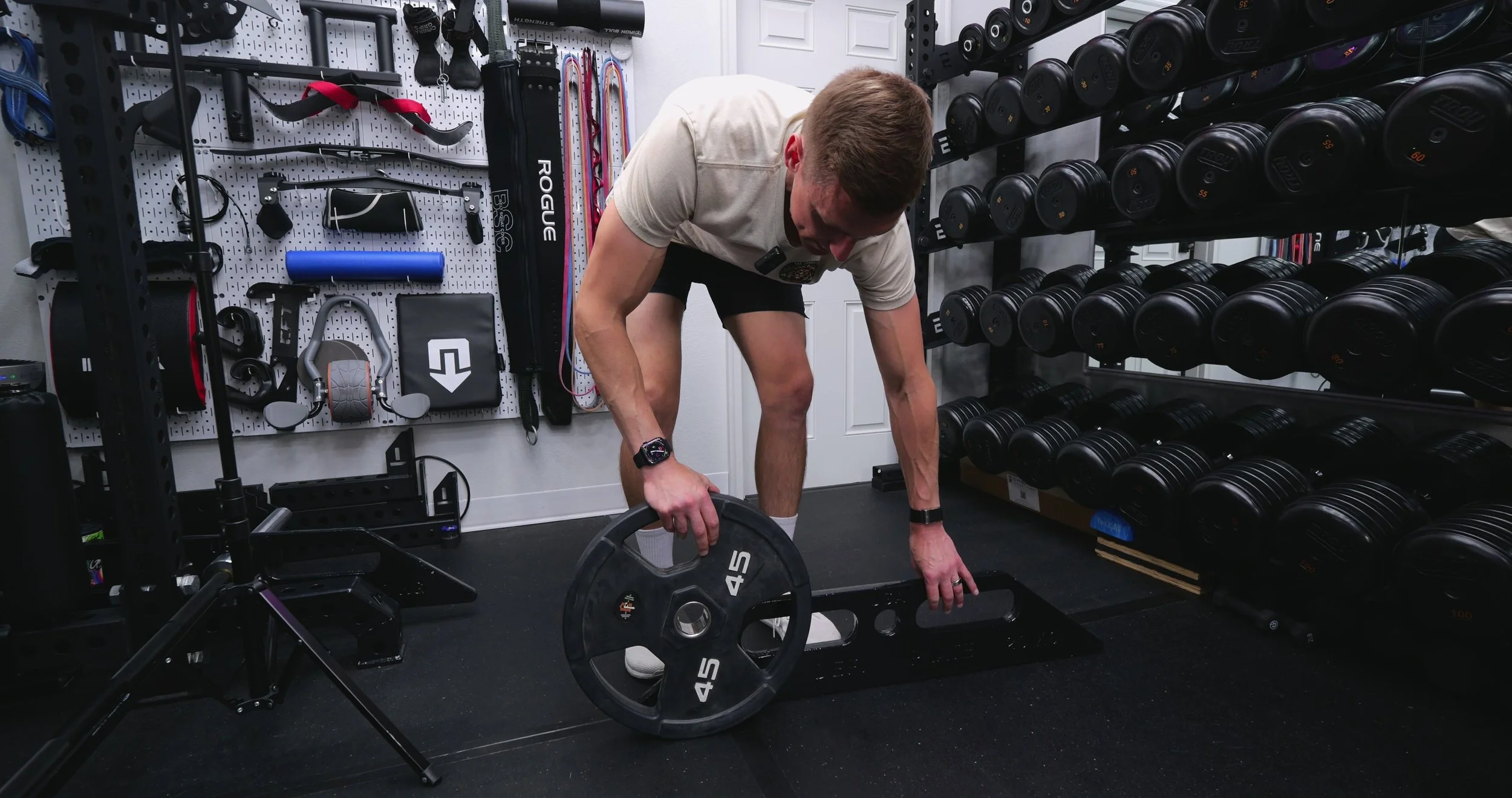
1) They’re built for deficits
Because of where the bar mounts inside the plate, the bar starts lower than it would with a standard 45. In practice, that means:
Deficit deadlifts become “built in”
RDLs and certain pulls can get more range of motion without needing a platform
Rows from a lower position can be easier to set up without plates hitting the floor
There’s also a small “real-world” detail Jake mentioned that I agree with: you can’t really roll the bar into position the way some people do on round plates. Between the deficit and the lack of easy roll, it can make deadlifts feel more honest (and harder).
2) They introduce instability (in a useful way)
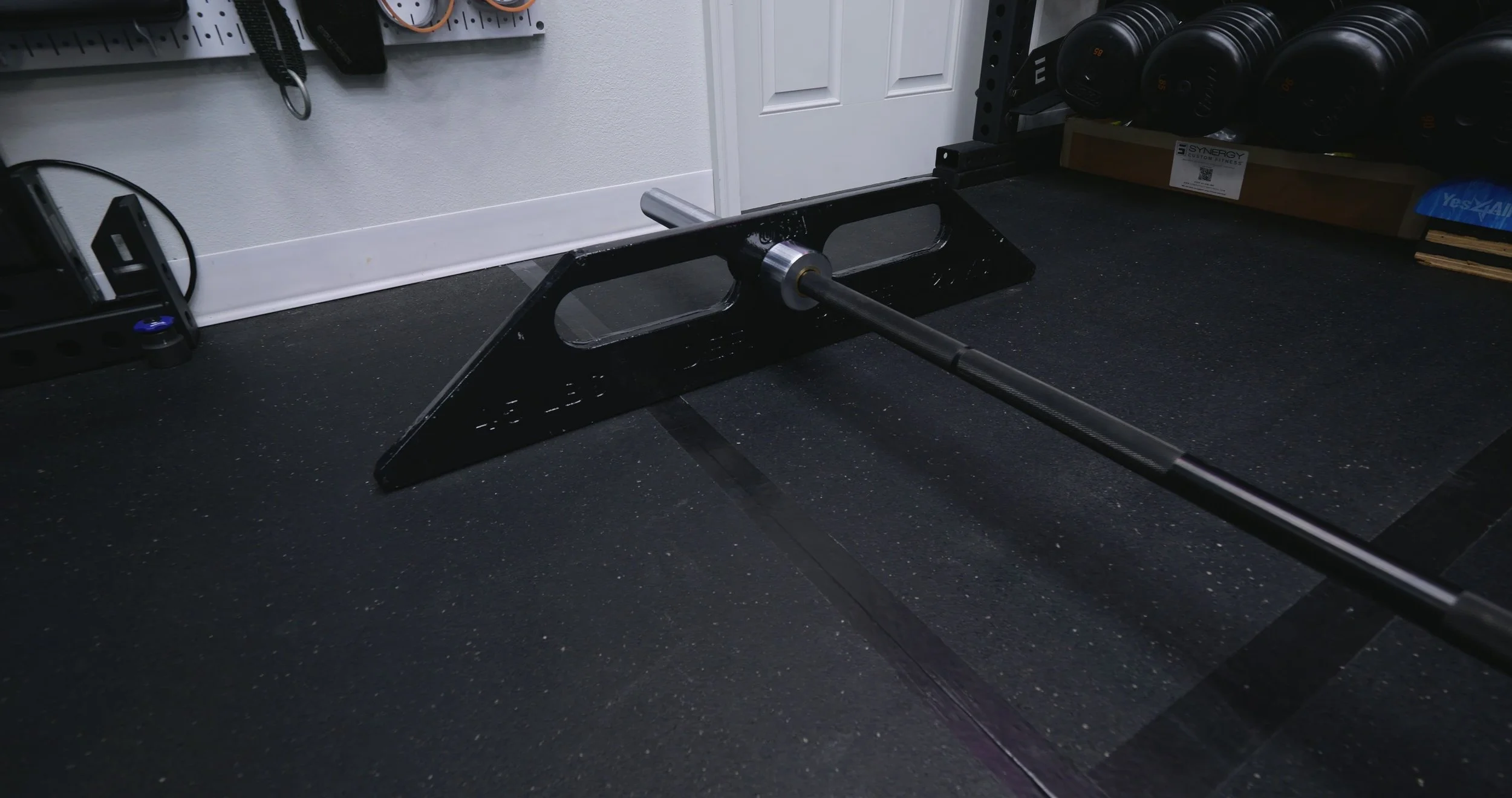
Because the plate is a trapezoid, it naturally wants to “tip” and create a lever effect. It doesn’t feel like chaotic wobble—more like you have to actively control the bar path and stabilize the load.
If you’ve ever used a bamboo bar, this is different. Bamboo is more about small-muscle stabilization and oscillation. This is more about bar path discipline and controlling the “downforce” created by the uneven geometry.
3) They can be used like a standalone implement
Those cutouts aren’t just aesthetic, they’re real handles. That opens up a bunch of plate-only options:
Carries
Upright row variations (I actually like these a lot)
Rows (even from the floor, depending on your setup)
Curls (yes, you can get creative)
Other oddball strongman-style movements
It’s the first “plate” I’ve used that feels like it’s trying to be both a plate and a training implement.
My Real-World Experience
I’m going to be blunt: I didn’t expect to like DefiPlates as much as I did.
The biggest surprise for me was bench press. The shape forces you to pay attention—if your bar path drifts, you’ll feel it immediately. It’s not that it’s dangerous (assuming you train intelligently); it’s that it gives you feedback you don’t get from normal plates. It nudges you toward cleaner, more controlled reps.
The deficit side is also legit. For pulls and hinge patterns, it can replace the need for a separate platform in some cases. If you’re trying to get more ROM on certain movements without stacking mats/steps/plates under your feet, this is a clean way to do it.
That said—this is not a “must-have” product. This is a fun, specific tool that shines when you already have the basics covered and you’re intentionally adding training variety.
Downsides and Who Should Skip These
1) Price is the #1 problem
From what I’ve seen and discussed:
~$800 new per pair
~$600 used per pair
~$100 shipping mentioned
That’s a hard pill to swallow. For $600–$900 all-in, you can buy a lot of other equipment and get more “core gym utility.”
If these were priced like normal 45s, it would be a no-brainer for most people. At the current price, I think it’s a specialty purchase for a very specific buyer.
2) Storage and space considerations
These are long—around 39 inches—so:
They take more side-to-side real estate on plate storage
They can create clearance issues on short racks or racks with rear storage
You also have to be mindful on bench/rack setups: the width and shape can hit storage posts or crossmembers depending on your rack depth (especially if you’re working with a shorter 16” style rack setup).
3) Not for beginners
This is clearly aimed at lifters who:
Understand safe setup and progression
Can control instability
Want intentional variety, not “random difficulty”
If you’re new to barbell training or you’re still dialing in basic form, there are cheaper, safer ways to build skill.
Pros
Built-in deficit for pulls/hinges
Adds meaningful instability to challenge control and bar path
Handle cutouts enable creative standalone movements
Made in USA (Michigan) with a cool small-business story
Doesn’t roll—easy to stand/store safely against a wall
Cons
Very expensive relative to what it is
Storage footprint is awkward vs normal plates
Clearance issues possible on certain rack setups
Overkill unless you have a specific training goal/use case
Verdict
DefiPlates are one of the most creative “plate” products I’ve seen in a long time. They do what they claim: add instability, add deficit ROM, and add a whole new category of training variety.
But the pricing makes this a niche tool, not a mainstream recommendation. If you’re a strongman, an experienced lifter who loves specialty implements, or someone who’s specifically chasing instability + deficit training, these could be awesome. For the average home gym owner, it’s hard to justify versus what else you can buy with the same money.
Affiliate Disclosure
Some links may be affiliate links. If you buy through them, I may earn a small commission at no extra cost to you.