Beyond Power Voltra I Review
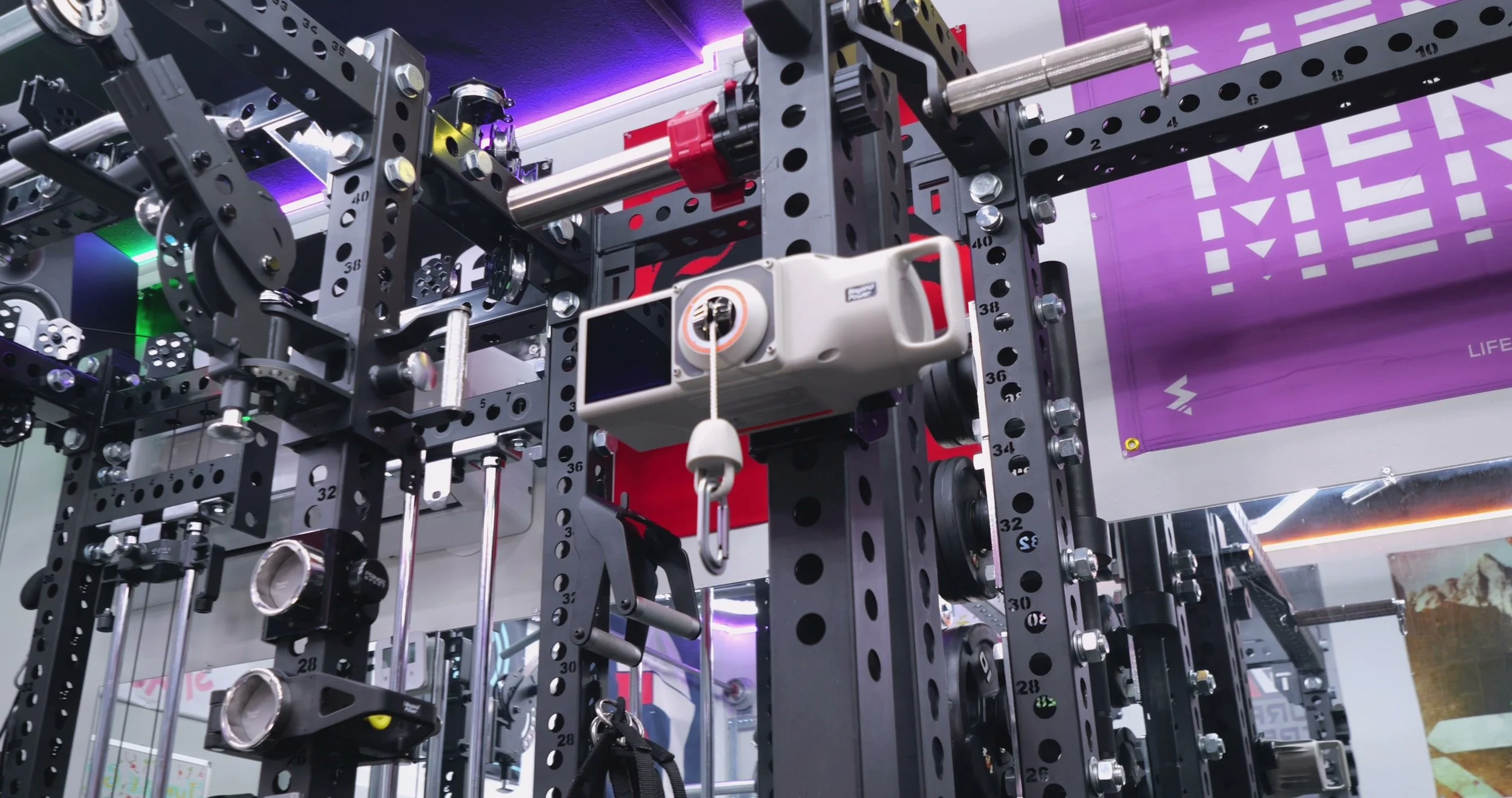
This product was in-house tested by Michael at The Jungle Gym Reviews.
The Voltra 1 delivers an impressive range of resistance modes and a full 5–200 lb cable experience in a package small enough to move anywhere in your gym—or take with you. The biggest tradeoff is price and long-term uncertainty compared to purely mechanical systems. It’s best for home gym owners who enjoy experimenting, value flexibility, and want smart training modes beyond traditional lifting. If you’re budget-focused or want equipment that will be maintenance-free for decades, you may want to wait.
Quick Specs
Resistance Range: 5–200 lb (1 lb increments)
Resistance Type: Motor-driven cable
Cable Length: ~8.5 ft
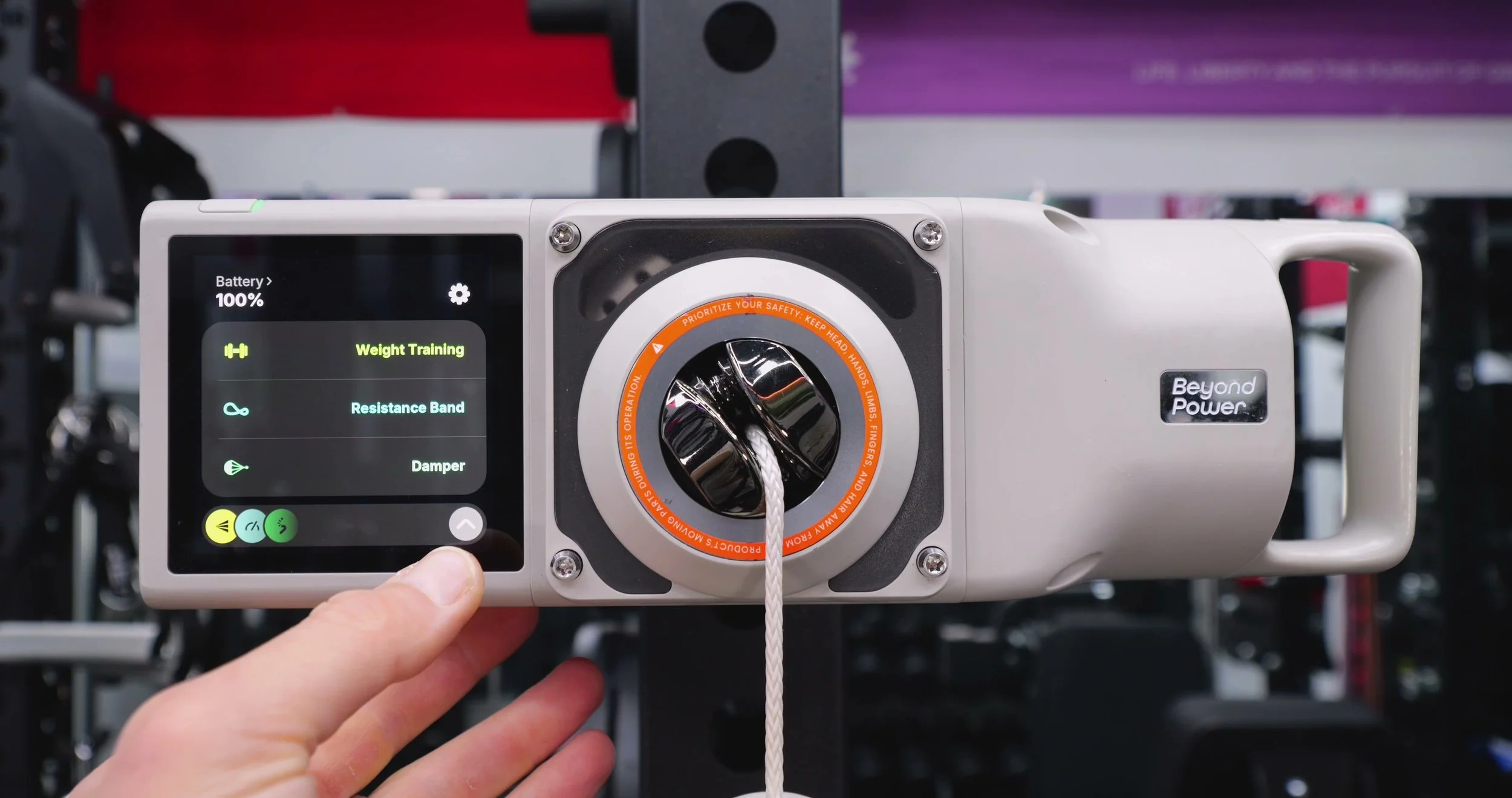
Modes: Weight Training, Resistance Band, Damper, Isometric, Isokinetic, Custom Curves
Power: Internal rechargeable battery
Battery Life (observed): ~5–7 days with regular use
Display: Integrated touchscreen with haptic feedback
Connectivity: Wi-Fi and Bluetooth
Mounting Options Mentioned: Sliding rack mount, hitch-pin rack mounts, strap mount, pull-up bar mount
Orientation: Vertical or horizontal mounting with auto-rotating display
Price: ~$2,199
Where to Buy the Beyond Power Voltra 1
Pricing, mounts, and warranty options can change, so it’s worth checking current availability directly from Beyond Power:
My Real-World Experience
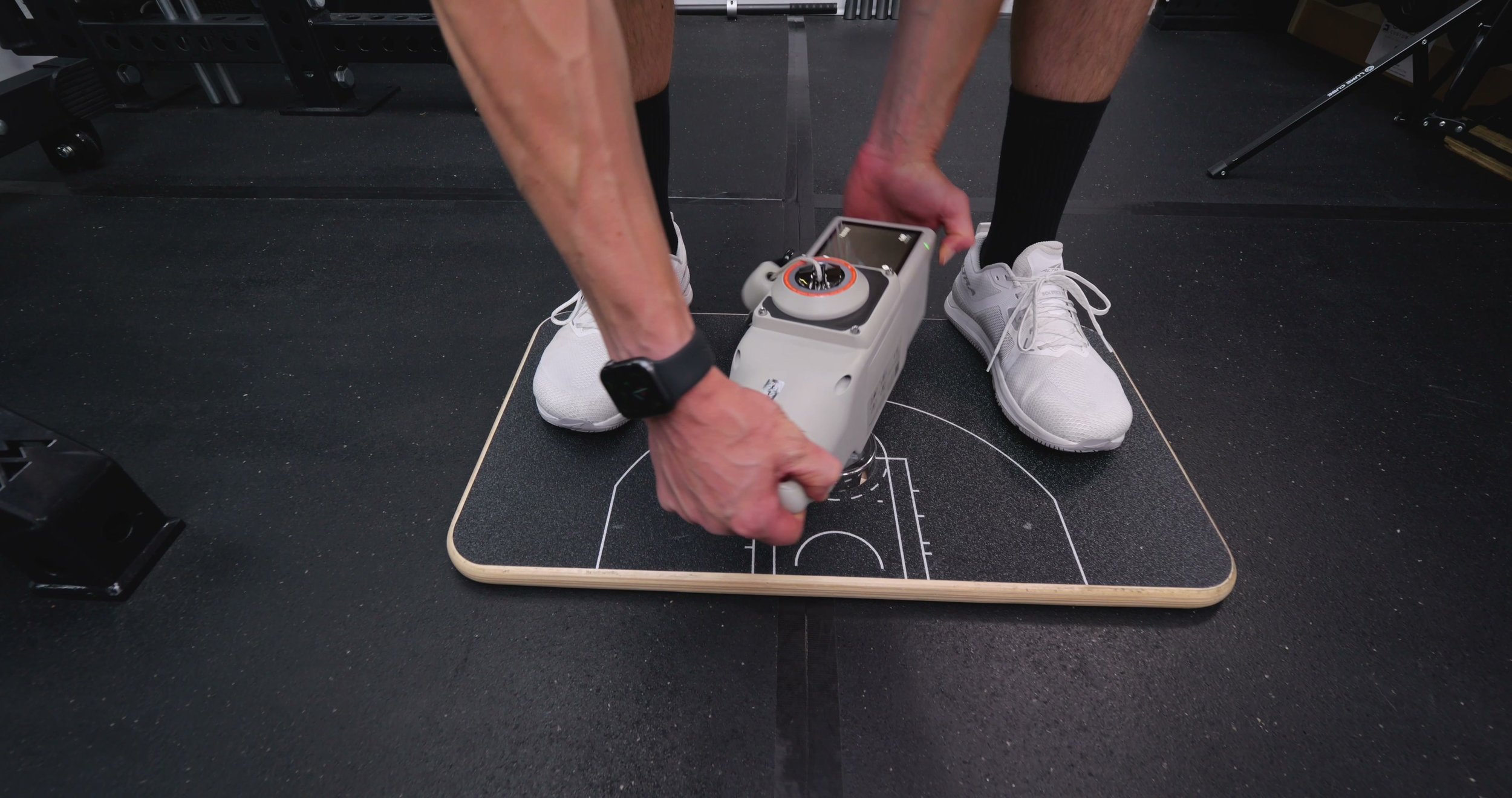
Physically, the Voltra 1 is shockingly small—about half the size of a size-12 shoebox. Inside is a direct-drive motor that replaces an entire weight stack. In use, it feels much more like a premium commercial cable than I expected, not a “tech gadget.”
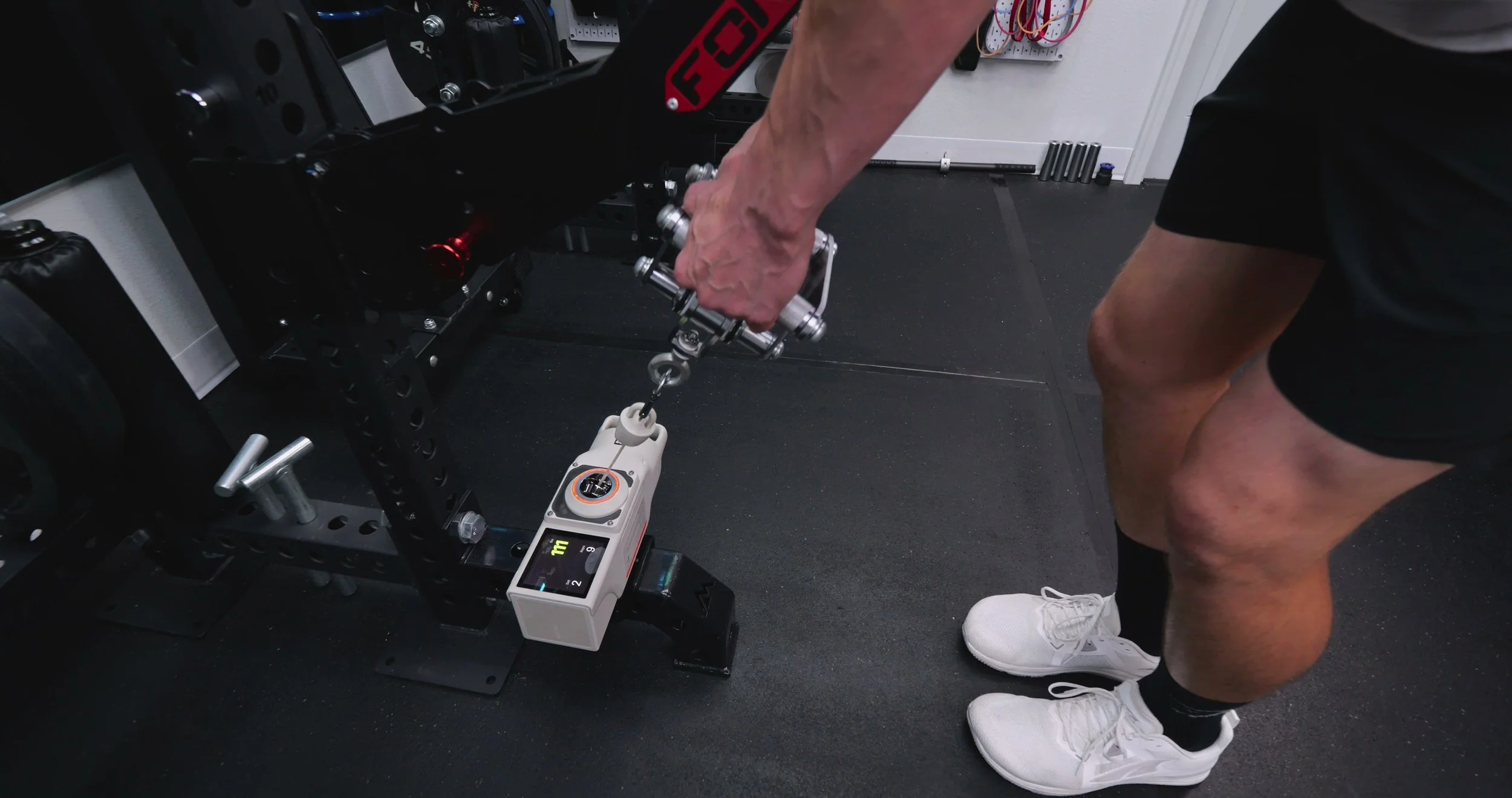
I use it mostly like a traditional single-stack cable system—but with way more freedom. I can mount it high, low, or anywhere in between, rotate it horizontally or vertically, and pull in any direction. Triceps pushdowns, curls, belt-squat-style movements, rows, presses—it all works exactly how you’d expect, just without a fixed column.
Battery life has been a pleasant surprise. I expected to charge it constantly, but in reality I’m charging it roughly once every five to seven days. That’s with about 15 working sets per day across multiple exercises. It automatically goes to sleep, so I basically leave it mounted and forget about it.
The interface is one of the strongest parts. The scroll wheel, haptic feedback, quick-jump buttons, and programmable “Smart Pins” make adjusting weight faster than moving a selector pin on a stack. It’s intuitive enough that you don’t think about the tech once you’re training.
Traditional strength training
In Weight Training mode, the cable feel is excellent—smooth, responsive, and predictable. You can layer in chains, reverse chains, or eccentric overload to change the strength curve in ways mechanical systems simply can’t.
Band and variable resistance work
Resistance Band mode does exactly what it claims: it mimics elastic resistance without actual bands. This is useful for rehab, warm-ups, or accommodating resistance work without setup hassle.
Rehab, testing, and controlled output
Isokinetic and Isometric modes are where this separates itself from normal gym equipment. You can cap movement speed, measure force output, and track imbalances or recovery trends over time. Most home gym owners won’t need this—but it’s powerful if you know how to use it.
Creative and experimental setups
Because it mounts almost anywhere, you can connect it to lever arms, leg machines, or even build ultra-wide cable fly setups by running two units side-by-side. This is where hobbyists and tinkerers will get the most value.
Tradeoffs & Limitations
The biggest limitation is price. At around $2,200, it costs more than many single-stack cable columns—even before mounts.
Long-term durability is the other unknown. This is electronic equipment with a motor, battery, and software. Ten years from now, a mechanical stack will almost certainly still work. With the Voltra, you’re betting that batteries, motors, and firmware support hold up—or that replacements remain available.
Heat management and electronics are also considerations. I’ve used it in hot, humid conditions without shutdowns, but it does get warm to the touch. It’s not fragile—but it’s still tech.
Value & Alternatives
From a raw dollars-to-steel perspective, a plate-loaded or selectorized cable column is cheaper and simpler. But those systems are usually 2:1, fixed in place, and limited in resistance profiles.
The Voltra’s real value is density of capability: one small device replaces a stack, bands, chains, and specialized rehab tools—all while being movable. If you’re buying it instead of multiple pieces, the value case improves quickly.
Who Should Buy This
Home gym owners who enjoy smart tech and experimentation
Lifters who want variable resistance modes without extra hardware
People short on space who still want a full cable experience
Users comfortable with electronics and future upgrades
Who Should Skip It
Budget-focused lifters who just want basic cables
Anyone who wants purely mechanical, decades-long durability
Users who dislike software, screens, or charging devices
Final Verdict
The Voltra 1 isn’t a replacement for every cable system—but it’s a glimpse at where home gyms are heading. If you value flexibility, smart resistance, and creative setups, it’s already compelling. If you prioritize simplicity and long-term mechanical certainty, waiting a few years is reasonable. For me, it’s earned a permanent place in my gym.
Affiliate Disclosure
Some links may be affiliate links. If you purchase through them, I may earn a small commission at no additional cost to you.